Humidifier vs Dehumidifier: Which One Does Your Home Need?
A humidifier adds moisture to dry air; a dehumidifier pulls it out of damp air. A hygrometer and EPA's 30% to 50% range tell you which one you need.
By Clean Air Guides editorial teamUpdated 6 min read
In this article
A humidifier adds moisture to dry air, and a dehumidifier takes moisture out of damp air. They solve opposite problems, so the right one depends on a single number: your indoor relative humidity. If a hygrometer shows your home staying below about 30%, you need a humidifier. If it stays above 50% to 60%, especially with musty smells or condensation, you need a dehumidifier.
Humidifier vs dehumidifier at a glance
| Humidifier | Dehumidifier | |
|---|---|---|
| What it does | Adds water vapor, raises humidity | Removes water vapor, lowers humidity |
| How it works | Mist, wick evaporation or steam | Usually cold coils that condense water from the air |
| Typical season | Winter, with the heat on | Summer and humid months, or year-round in basements |
| Signs you need it | Readings under 30%, dry skin, static | Readings over 50% to 60%, musty smell, condensation, mold |
| What you empty | Fill a tank with water | Empty a bucket or run a drain hose |
| Main risk if misused | Too much moisture, a dirty tank | Few, but it adds some heat to the room |
What a humidifier does
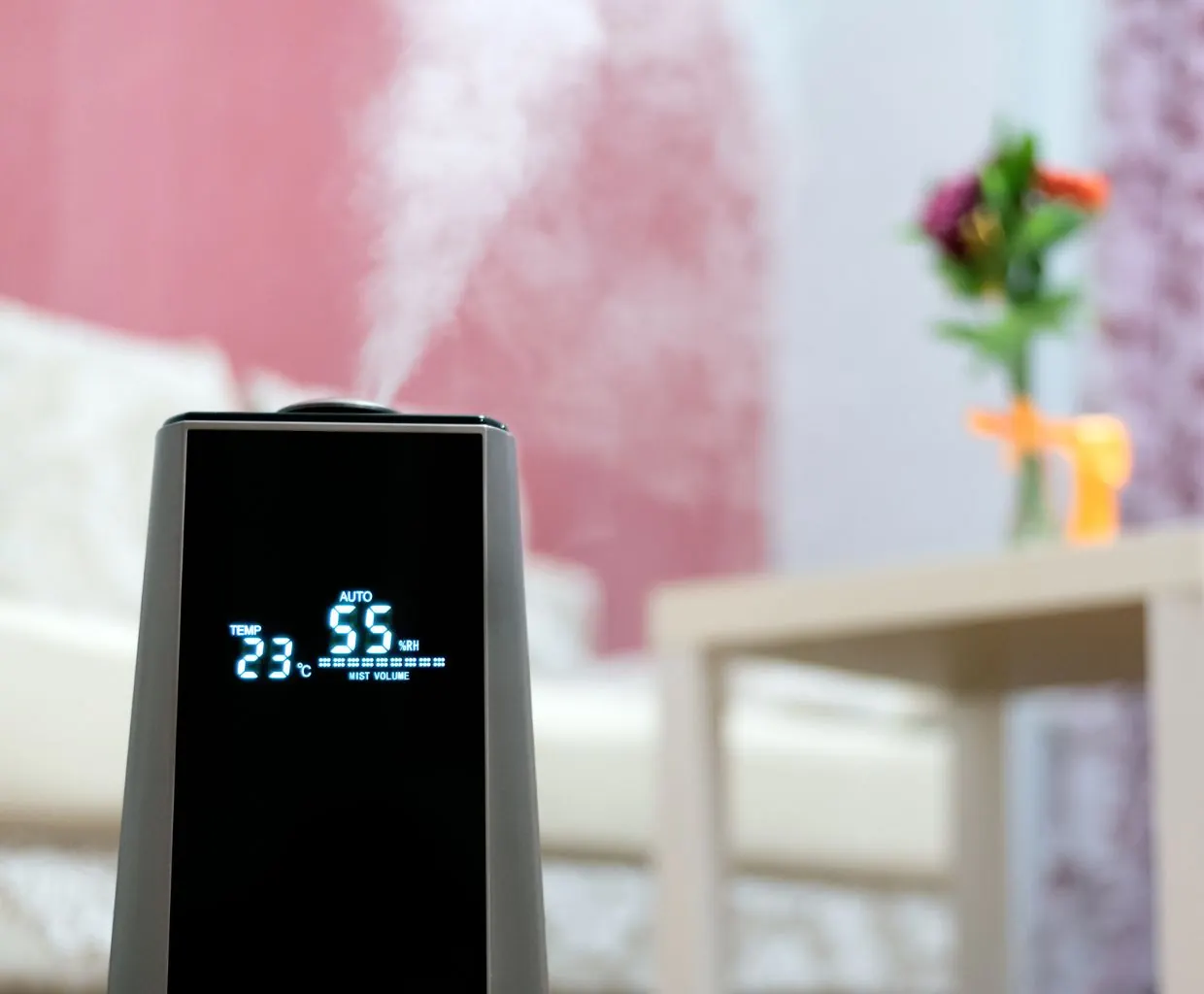
A humidifier turns water from a tank into vapor or fine mist. EPA describes the main types: ultrasonic and impeller units make a cool mist, evaporative units blow air through a wet wick, and steam units boil the water. All of them raise the humidity in a room; the differences are in white dust, noise, power use and upkeep. Our explainer on what a humidifier does goes through each type.
The catch is that a humidifier needs care. CPSC says bacteria and fungi often grow in humidifier tanks and can be released in the mist, and EPA says not to humidify above 50%.
What a dehumidifier does
A dehumidifier pulls water out of the air. Most portable models work like a small air conditioner: a fan draws room air across cold coils, water vapor condenses on them and drips into a bucket or drain. The University of Minnesota’s household humidity fact sheet notes two practical quirks. In cool spaces the coils can frost up, so a dehumidifier removes less water in winter than in summer. And the electricity it uses ends up as heat: the fact sheet puts it at about 1,000 BTU for every pint of water removed. That’s why a room with a dehumidifier running feels a little warmer.
EPA recommends air conditioners and dehumidifiers, when needed, to keep indoor humidity below 60%. Our guide on how to reduce humidity in your house covers the free fixes too, like exhaust fans and venting the dryer outside.
How to know which one you need
Don’t guess from how the air feels. Our guide on how to check humidity in your house explains where to put it. Then compare:
- Below 30%: too dry. A humidifier helps. EPA and CPSC both recommend 30% to 50%.
- 30% to 50%: you’re in the recommended range. You don’t need either.
- Above 50%: EPA says not to humidify past this point, so turn off any humidifier.
- Above 60%: CPSC warns that moisture may build up and condense on surfaces where bacteria and fungi grow, and EPA’s mold course lists 60% as a moisture problem. This is dehumidifier territory.
Other clues point the same way. Musty smells, mildew in closets, damp basement walls and water beading on cold pipes all mean too much moisture. Static shocks, dry skin and gaps opening in wood floors in winter mean too little. Condensation on windows is trickier: in a cold snap, windows can fog even at moderate humidity, so check the reading before you buy anything. Our dew point calculator shows at what surface temperature your room air will condense.
Seasons and climate
Most homes in cold climates swing between the two problems. In winter, cold outdoor air holds little water, and the UMN fact sheet explains that air leaking out of a heated home carries moisture with it, so indoor air dries out. NDSU Extension recommends 30% to 40% indoor humidity in winter, because higher levels raise the risk of condensation on windows and other cool surfaces. In summer, NDSU says indoor humidity should stay below 65% to limit mold.
Humid climates and basements are different. A basement can be damp all year because its walls and floor touch cool soil. EPA’s Indoor airPLUS spec for new homes calls for basement and crawlspace dehumidifiers to be set to hold humidity at or below 60%. In our view, a basement that smells musty is the most common reason to buy a dehumidifier, and it’s a better buy than any gadget that only masks the smell.
Mold and dust mites: why damp air matters
Mold and dust mites are the main reasons to keep humidity from creeping up:
- Mold. EPA says the key to mold control is moisture control. It recommends keeping humidity below 60%, ideally 30% to 50%, and fixing leaks. A dehumidifier helps hold that line, but it won’t remove mold that’s already growing; EPA says that has to be cleaned up and the water problem fixed.
- Dust mites. EPA’s mold course says low humidity may discourage dust mites. In a 17-month study in Ohio homes, keeping humidity below 51% through humid summers cut live mites from 401 to 8 per gram of dust, and allergen levels ended up more than 10 times lower than in the humid homes. Most of the low-humidity homes used a dehumidifier plus air conditioning. Our guide to dust mites and humidity covers that study in more detail.
That’s why we’d be careful with a humidifier in an allergy household: it can help with dry air, but pushing past 50% feeds the very things that trigger symptoms. If you have asthma or allergies, talk to your doctor about the right range for you.
Note: Neither machine cleans the air. To capture dust, pollen or mold spores already floating around, you need an air purifier. See air purifier vs dehumidifier for how those two compare.
Can you use both?
Yes, just not in the same room at the same time, where they’d cancel each other out. A common setup in cold climates is a dehumidifier in a damp basement year-round and a humidifier in a dry bedroom during the heating season. Another is a humidifier in winter and a dehumidifier (or the air conditioner) in summer.
If you do run both, give each one a humidistat target and let them switch themselves off. We’d set the humidifier to 40% to 45% and the dehumidifier to 50%, so there’s a gap between them and neither runs against the other.
Our take
We’d let the hygrometer decide. Under 30% for days at a time, buy a humidifier; our ideal indoor humidity guide explains how to set it. Over 60%, or any musty smell, buy a dehumidifier and look for the moisture source. In between, you don’t need either one.
Frequently asked questions
What is the difference between a humidifier and a dehumidifier?
A humidifier adds water vapor to the air and raises the humidity. A dehumidifier removes water vapor, usually by passing air over cold coils so the moisture condenses into a bucket or drain, and lowers the humidity.
How do I know if I need a humidifier or a dehumidifier?
Measure with a hygrometer. EPA recommends keeping indoor humidity between 30% and 50%. If your home stays below about 30%, a humidifier helps; if it stays above 50% to 60%, a dehumidifier is the tool.
Which is better for mold?
A dehumidifier. EPA says the key to mold control is moisture control and recommends air conditioners or dehumidifiers when needed to keep humidity below 60%. A humidifier adds moisture, so it can make a mold problem worse if it pushes humidity too high.
Is a humidifier or dehumidifier better for allergies?
It depends on your humidity and your allergy. Dust mites and mold thrive in damp air, so a dehumidifier helps in a humid home, while a humidifier only makes sense if your air is very dry. Talk to your doctor about what's right for your symptoms.
Can you run a humidifier and a dehumidifier at the same time?
Not in the same room: they would just cancel each other out and waste power. Some homes do use both in different places, such as a dehumidifier in a damp basement and a humidifier in a dry bedroom in winter.
Related guides
Guides
Air Purifier vs Dehumidifier: Particles vs Moisture, and Which One You Need
An air purifier filters particles; a dehumidifier pulls moisture out of the air. Here's which one helps with mold, allergies and damp basements, and when you need both.
6 min read
Guides
How to Reduce Humidity in Your House: 10 Steps That Work
Measure first, then vent moisture outdoors, run the AC or a dehumidifier and cut indoor moisture sources until humidity stays between 30% and 50%.
7 min read
Guides
Dust Mites and Humidity: Why Keeping It Below 50% Matters
Dust mites live on moisture from the air. Keeping indoor humidity below 50% is the best-supported way to cut their numbers; here's how to get there.
6 min read
Guides
Dew Point vs Humidity: What Each Number Tells You at Home
Dew point tells you how much water vapor is in the air. Relative humidity tells you how close the air is to saturation at its current temperature.
10 min read