A portable air purifier pulls room air through a filter and blows it back out cleaner. Whether it helps depends on three things: whether your problem is particles or gases, whether the purifier moves enough air for your room, and whether you’ll actually run it. Every guide in this section is built on published data (AHAM-verified CADR, ENERGY STAR and CARB listings, manufacturer manuals) rather than marketing claims; how we research explains the rules we follow.
Start with the problem you want to solve
Different problems need different filters, so pick the guide that matches yours:
- Allergies, pets and dust. Pollen, dander and dust are particles, which a true HEPA filter handles well. See the best air purifier for allergies, the best air purifier for pets and the best air purifier for dust.
- Smoke and odors. Smoke particles need high smoke CADR; the smell and gases need activated carbon. Compare the best air purifier for smoke, the best air purifier for odor and the best air purifier for VOCs and formaldehyde.
- Mold and damp rooms. A purifier can catch airborne spores, but the EPA is clear that only fixing the moisture stops mold. Read the best air purifier for mold and, for below-grade rooms, the basement air purifier guide.
- A specific room. Noise and size limits differ by room: see the best air purifier for a bedroom, a baby’s room, a bathroom, small spaces and large rooms. For a salon, see our salon air purifier guide; for every room at once, the best whole house air purifiers.
- A budget or a brand. Start with the best HEPA air purifiers under $100 or the best Honeywell air purifiers, or read a single-model overview such as the Levoit Core 300, the Levoit Core 600S, the Blueair 311i Max, the IQAir HealthPro Plus or the Coway Airmega AP-1512HH. For a heavy carbon filter, see the Austin Air HealthMate review. For AirDoctor’s claims set against third-party ratings, see the AirDoctor air purifier review.
Which filter for which problem
| Problem | What actually helps | What to look for |
|---|
| Pollen, dust, pet dander | Filtering airborne particles | True HEPA and enough smoke CADR for the room |
| Smoke (tobacco, cooking, wildfire) | Particles plus gases | High smoke CADR; activated carbon for the smell; CARB certification |
| Odors and VOCs | Adsorbing gases | A substantial carbon filter (HEPA alone does nothing for gases) |
| Mold spores | Fixing the moisture first | HEPA for airborne spores, a dehumidifier for the dampness |
| Settled dust | Cleaning surfaces and the source | A purifier helps only with what’s still in the air |
| Radon | Soil depressurization | Not an air purifier job (EPA) |
If smoke is your concern this season, our guide to wildfire smoke indoors covers the EPA’s clean-room advice alongside purifier sizing.
The four numbers that matter
1. Smoke CADR. The Clean Air Delivery Rate, in cubic feet per minute, is measured by AHAM for smoke, dust and pollen. Smoke particles are the smallest, so smoke CADR is the one to compare. AHAM’s rule of thumb is a smoke CADR of at least two-thirds of the room’s floor area; the room size printed on the box equals smoke CADR × 1.55. Our CADR explainer covers the details, the air purifier size calculator turns your room into a target CADR, and the air changes per hour calculator checks a purifier you already own.
2. A true HEPA filter. The DOE definition is at least 99.97% efficiency at 0.3 µm. The EPA notes that there’s no single definition for consumer products, which is why CADR (a measurement of the whole unit) is a better comparison than the filter’s label.
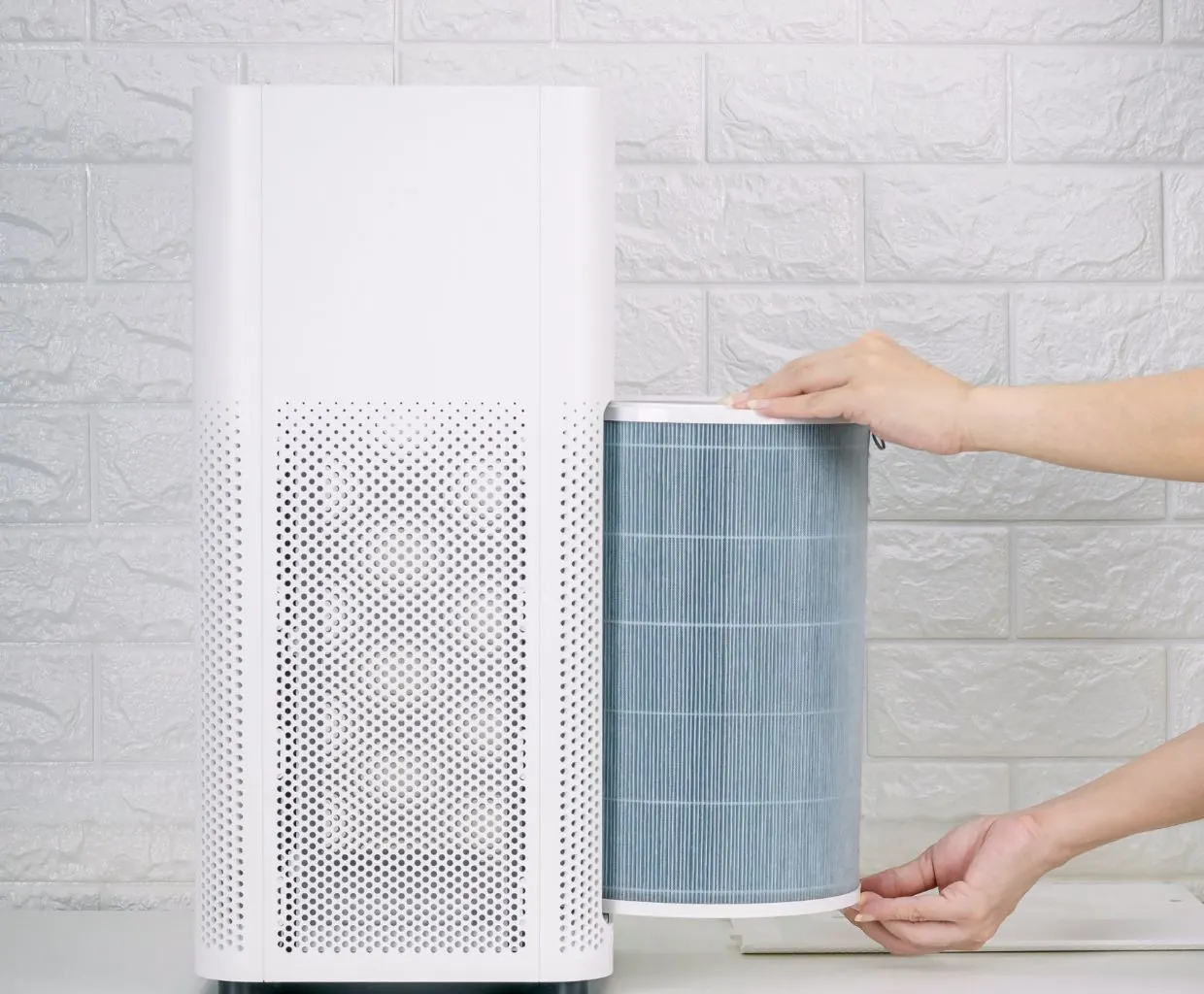
3. Activated carbon, if you care about smells or gases. HEPA filters can’t capture gases. The EPA says gas filters need enough sorbent to work, thin carbon-dusted layers saturate quickly, and no CADR-style rating exists for gases. Our HEPA vs carbon filter guide explains what to look for.
4. Ozone. The EPA advises against purifiers that intentionally make ozone. Electrostatic precipitators, ionizers and some UV and plasma units can emit it. Prefer models that are CARB-certified (50 ppb or less) and, if there’s an ionizer, one you can switch off. See ionic air purifiers, filterless air purifiers and the possible air purifier side effects. UV lamps get their own guide:
Running costs: electricity and filters
The sticker price is only the start. ENERGY STAR estimates that a standard room air cleaner running around the clock uses about 394 kWh a year, while certified models are more than 50% more efficient. Use the air purifier electricity cost calculator with your model’s wattage and your own rate, and read do air purifiers use a lot of electricity for typical figures. Filters are the other recurring cost: check how often to change an air purifier filter for each brand, and whether a model with washable filters actually saves money. Levoit owners can match a replacement in our Levoit air purifier filter guide. If a Levoit shows a red light, Levoit air purifier red light explains what it means and how to reset it.
Placement and daily use
The EPA’s placement advice is short: put the purifier in the room where you spend the most time and don’t block its airflow. Manuals add specifics, typically 8 to 18 inches from walls, and closing the door keeps the purifier working on the room it was sized for. In our view, placement is the cheapest upgrade there is. Our guide on where to put an air purifier has the full set of rules, and how long to run an air purifier covers running it overnight, 24/7 and on auto mode.
What an air purifier can’t do
The EPA says no air cleaner removes every pollutant, and filtration doesn’t replace controlling sources and ventilating. A purifier won’t remove settled dust from surfaces, won’t fix the moisture behind mold, and won’t lower radon, which the EPA says to fix with soil depressurization instead. If you’re not sure a purifier is the right tool, read do air purifiers work and how to improve indoor air quality first.