Dust Mites and Humidity: Why Keeping It Below 50% Matters
Dust mites live on moisture from the air. Keeping indoor humidity below 50% is the best-supported way to cut their numbers; here's how to get there.
By Clean Air Guides editorial teamUpdated 6 min read
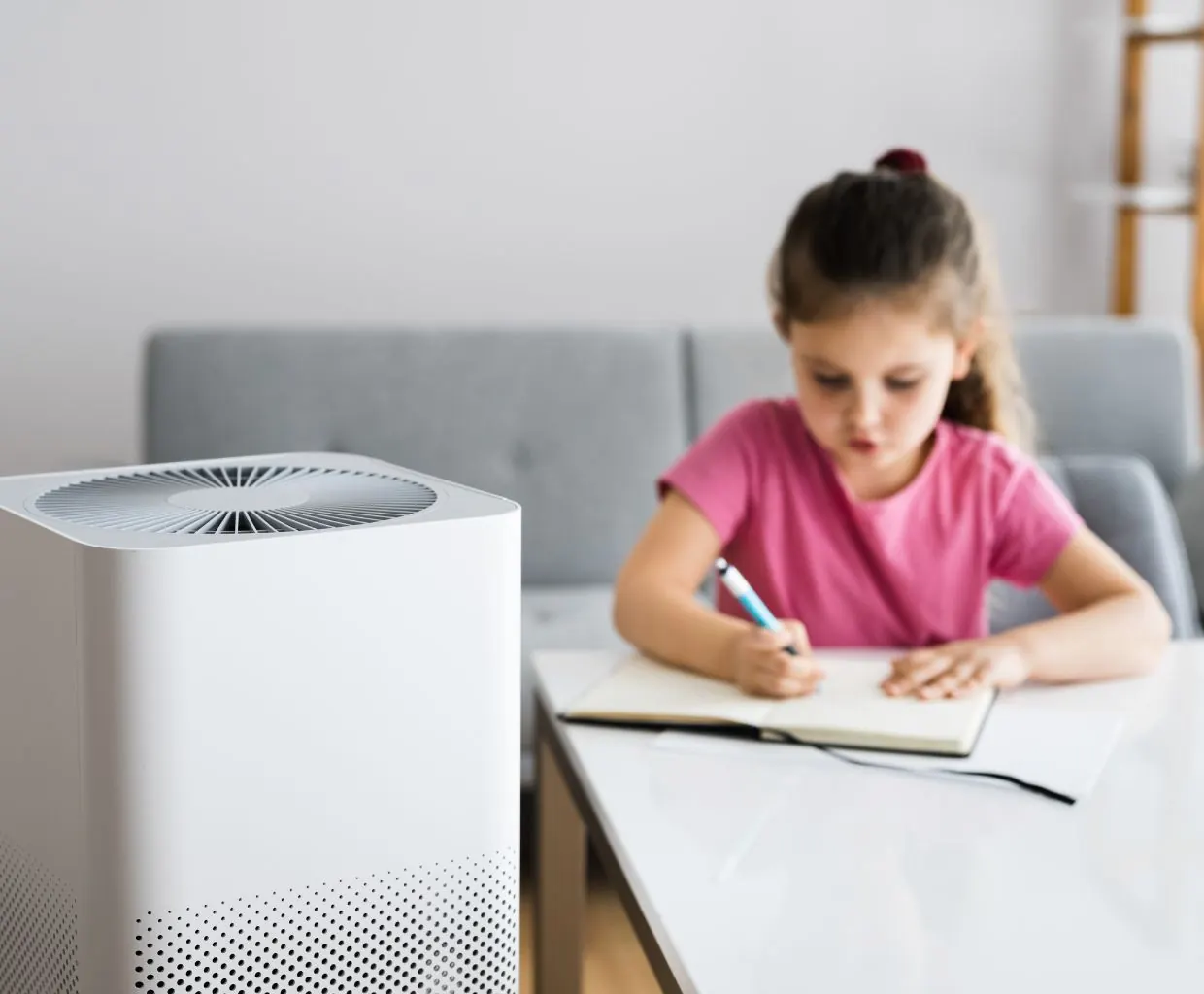
Dust mites depend on humid air, so humidity is the main lever you have against them. The American Lung Association says humidity is the most important factor in whether a home has high dust-mite levels and advises keeping it below 50%. In a 17-month study, homes held below 51% relative humidity saw live mites fall from 401 to 8 per gram of dust. An air purifier helps with other airborne allergens, but for mites, moisture control and laundry do most of the work.
Why dust mites need humid air
EPA describes dust mites as tiny bugs, too small to see, that feed on human skin flakes. They live in mattresses, pillows, carpets, upholstered furniture, bedcovers, clothes, stuffed toys and other fabric items.
They don’t drink water. According to the American Lung Association, mites absorb moisture from the air, so they can’t survive in very dry areas and thrive in warm, humid settings. That makes relative humidity (RH), not cleanliness alone, the deciding factor for how many mites a home can support.
Why it matters for health: EPA says body parts and droppings from dust mites can trigger asthma in people allergic to them, and the American Lung Association calls mites one of the major indoor asthma triggers. Milder reactions can include a runny nose, watery eyes and sneezing. If you suspect a dust mite allergy, talk to your doctor or an allergist; the steps below support medical advice, they don’t replace it.
What the research shows: the 17-month Ohio study
The best-known evidence comes from Arlian and colleagues, published in the Journal of Allergy and Clinical Immunology in 2001. They followed homes in Ohio through humid summers. Some were kept below 51% RH; most of those used a high-efficiency dehumidifier plus air conditioning. The others stayed humid.
| Measure | Homes kept below 51% RH | Humid homes |
|---|---|---|
| Live mites per gram of dust | Fell from 401 to 8 | Peaked at 500 to 1,000 |
| Der 1 mite allergen (µg per gram of dust) | Fell from 17 to 4 | Peaked at 40 to 70 |
| Allergen after 17 months | More than 10 times lower than in humid homes | (comparison group) |
Two details are easy to miss. First, the low-humidity homes didn’t get there by accident: they ran equipment through the humid season, so the result reflects humidity held down for months, not a dehumidifier switched on for a weekend. Second, the homes were in Ohio, where summers are humid, so the hard part was keeping indoor air dry during the muggiest months. We’d treat humidity control as a season-long habit, starting before summer humidity builds, rather than a one-time fix. Mite allergen also lingers in dust and fabrics, so the cleaning steps further down still matter while the numbers fall.
Older building research points the same way. A 1988 University of Minnesota publication, citing a 1985 ASHRAE study, says mites increase at 50% RH or more and fungi at 60% or more. In our view, that makes 50% the number to remember.
What humidity to aim for
The agencies agree on a range rather than a single number:
| Source | Recommendation |
|---|---|
| EPA (mold and moisture guide) | Below 60%, ideally 30% to 50% |
| EPA (humidifier fact sheet) | Don’t humidify above 50% |
| American Lung Association (dust mites) | Keep your home below 50% |
| CPSC | 30% to 50% if possible; above 60%, moisture can condense on surfaces |
| NDSU Extension (winter) | 30% to 40% |
EPA’s Mold Course adds that low humidity may also discourage pests such as cockroaches and dust mites.
The season changes the challenge. In summer, humid outdoor air is the problem, and NDSU Extension’s general ceiling of 65% for mold is too loose for mites; the 50% line from the American Lung Association is the one to hold. In winter, when a humidifier is more likely to be running, NDSU recommends 30% to 40%, noting that humidity above about 40% raises the chance of condensation on windows and other cool surfaces. So for most homes, the winter job is not overdoing the humidifier, and the summer job is pulling moisture out. For a dust mite allergy, we’d aim for the low-to-mid 40s or below in summer, without dropping under 30%, where EPA’s range ends. Our guide to ideal indoor humidity covers the seasonal details.
How to measure humidity accurately
You can’t manage what you don’t measure. EPA notes that hygrometers sold at hardware stores measure humidity. Choose a digital one: NDSU Extension warns that mechanical hygrometers are frequently off by more than 20%.
- Put one in the bedroom, where mite exposure is highest; the American Lung Association says most exposure happens during sleep.
- Check a second room, such as a basement or living room, in summer.
- Compare readings over several days, not just one moment.
Our step-by-step guide on how to check humidity in your house covers placement and accuracy, and the relative humidity calculator helps if you only know temperature and dew point.
How to lower humidity for dust mites
EPA recommends using air conditioners and/or dehumidifiers when needed to keep humidity down. That matches what worked in the Ohio study. Practical steps:
- Run the air conditioner in humid months, as the low-humidity homes in the Ohio study did.
- Add a dehumidifier in damp rooms and basements, set to hold RH below 50%.
- Vent moisture outdoors with bathroom and kitchen exhaust fans.
- Watch for condensation. EPA’s Mold Course says condensation can be a sign of high humidity; see our guide to condensation on windows.
For the full list, read our guide on how to reduce humidity in your house. If you’re choosing between machines, our air purifier vs dehumidifier comparison explains what each one can and can’t do.
Important: In winter, a humidifier can push a bedroom back into mite territory. EPA says not to humidify above 50%, and Mayo Clinic notes that condensation from high humidity can trigger the growth of dust mites and mold. Set the humidistat at or below 50% and confirm with a hygrometer. Our guide to running an air purifier and humidifier together covers this setup.
What an air purifier can and can’t do
A HEPA air purifier captures airborne particles, but dust mite allergen behaves differently from pet dander or pollen. The American Lung Association says that, unlike pet allergens, mite allergens generally don’t remain airborne. They settle into dust and cling to bedding, upholstery and carpets.
That’s why a purifier is a supporting tool here, not the fix. Since the allergen sits mostly in bedding, upholstery and carpet, and the American Lung Association says most exposure happens during sleep, the bed is where to focus. Humidity control, hot-water washing and allergen-proof covers all aim there. EPA’s technical guidance is consistent: controlling sources is usually the most effective way to address indoor air pollution, and no air cleaner removes everything. A purifier can still be worthwhile in a bedroom if you also react to pollen, pet dander or airborne dust, which our best air purifier for allergies guide covers. We’d buy the hygrometer and fix the humidity first.
Cleaning habits that work alongside humidity control
EPA and the American Lung Association recommend:
- Wash bedding weekly in hot water (the American Lung Association says at least 120°F) and dry it completely.
- Use dust-proof or allergen-proof covers on mattresses and pillows.
- Choose washable stuffed toys and wash them in hot water.
- Vacuum carpets and fabric furniture weekly with a HEPA-filter vacuum; EPA says people with asthma or allergies should leave the room while it’s done.
- Dust often with a damp cloth.
- Consider hard flooring: the American Lung Association says carpet should be replaced by hard-surfaced flooring, especially if someone is allergic to mites.
Tip: If dust keeps coming back no matter how often you clean, our guide to why your house is so dusty looks at the other sources, from outdoor air to HVAC filters.
Frequently asked questions
What humidity kills dust mites?
No source gives a single humidity that kills them outright, but the American Lung Association says mites can't survive in very dry areas and recommends keeping your home below 50%. In a 17-month Ohio study, homes held below 51% saw live mites fall from 401 to 8 per gram of dust.
Why does humidity matter so much for dust mites?
Dust mites don't drink; they absorb moisture from the air. That's why the American Lung Association calls humidity the most important factor in whether a house has high dust-mite levels.
Does an air purifier get rid of dust mites?
Not on its own. The American Lung Association says dust mite allergens generally don't stay airborne; they settle into bedding, upholstery and carpets. Humidity control, weekly hot-water washing and HEPA vacuuming target where they live.
Does a dehumidifier help with dust mites?
It can. Most of the low-humidity homes in the Ohio study used a high-efficiency dehumidifier plus air conditioning, and their allergen levels ended up more than 10 times lower than in humid homes.
Is it OK to use a humidifier if I'm allergic to dust mites?
If your air is very dry in winter, keep the humidifier's target at or below 50%, as EPA advises, and check with a hygrometer. Talk to your doctor if you have dust mite allergy or asthma.
What humidity should I keep in a bedroom for dust mite allergy?
EPA recommends 30% to 50% indoors, and the American Lung Association advises below 50% for dust mites. Somewhere in the 30s to mid-40s keeps you inside both.
Related guides
Guides
Air Purifier vs Dehumidifier: Particles vs Moisture, and Which One You Need
An air purifier filters particles; a dehumidifier pulls moisture out of the air. Here's which one helps with mold, allergies and damp basements, and when you need both.
6 min read
Guides
How to Reduce Humidity in Your House: 10 Steps That Work
Measure first, then vent moisture outdoors, run the AC or a dehumidifier and cut indoor moisture sources until humidity stays between 30% and 50%.
7 min read
Guides
Why Is My House So Dusty? Causes and Fixes That Work
Most house dust blows in, gets tracked in or is shed indoors. Here is where yours likely comes from and the fixes in the order that pays off most.
8 min read
Guides
Condensation on Windows Inside: Why It Happens and How to Stop It
Water on the inside of your windows means the glass is colder than the room air's dew point. When it's normal, when humidity is too high and how to fix it.
7 min read