Ideal Indoor Humidity: What Level to Aim For in Every Season
Aim for 30–50% relative humidity, and lower in a cold snap. What the EPA and others say, how to read a hygrometer and when to run a humidifier.
By Clean Air Guides editorial teamUpdated 7 min read
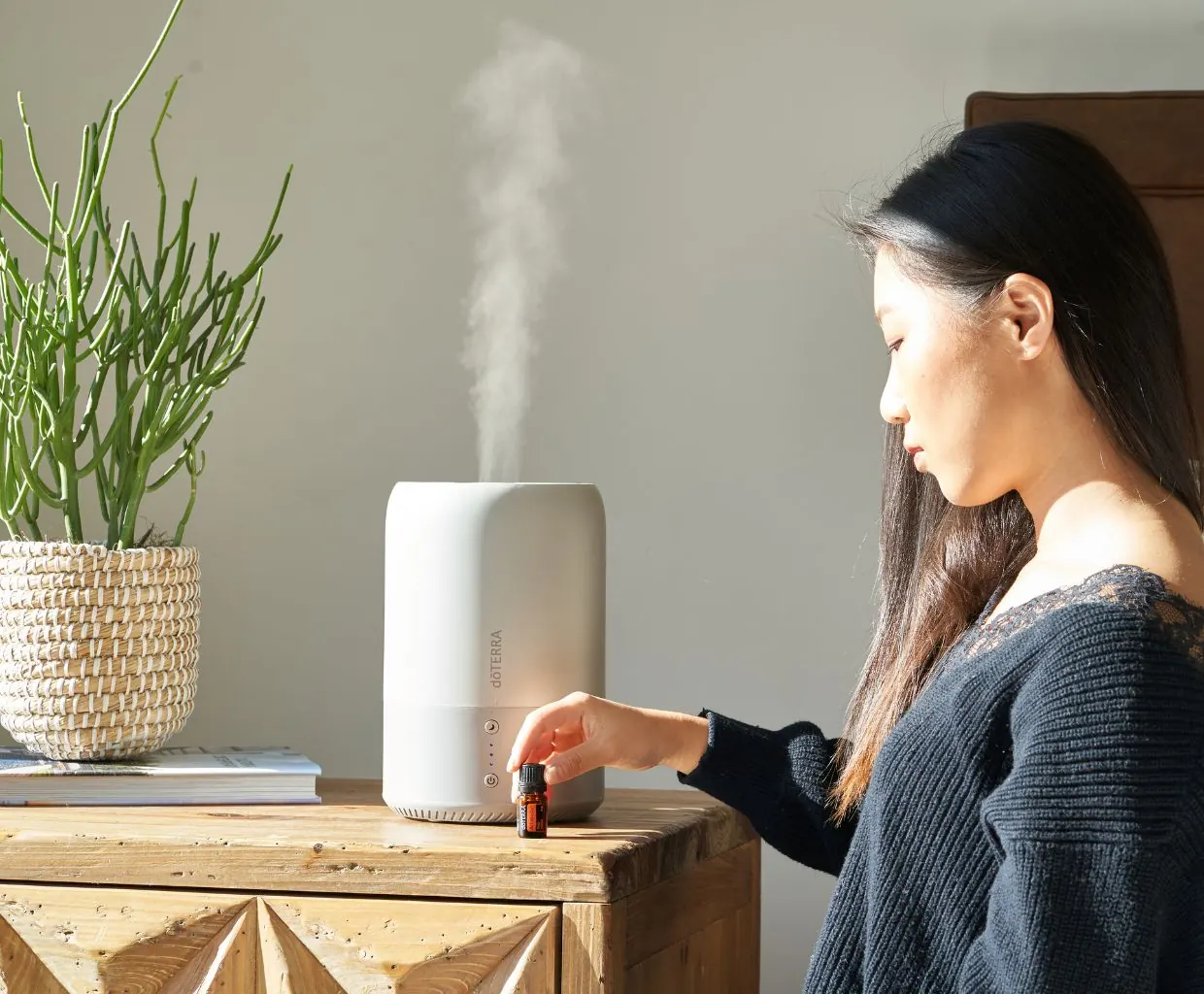
For most homes, the ideal indoor humidity is between 30% and 50% relative humidity (RH). That’s the range the EPA, the Consumer Product Safety Commission (CPSC) and Mayo Clinic all give. Keep it below 60% to limit mold, don’t push a humidifier past 50%, and go lower in a cold snap if your windows start to drip. A hygrometer tells you where you are. Your windows tell you when you’ve gone too far.
Tip: Not sure how much humidity your windows can take tonight? Enter your room temperature and humidity in our dew point calculator. Any surface colder than the dew point it shows will collect water.
What the official sources say
Agencies don’t all quote the same number, which is why you’ll find different answers online. Here’s what each one says and why:
| Source | Recommendation | Context |
|---|---|---|
| EPA mold guide | Below 60%, ideally 30–50% | Mold and moisture control |
| EPA humidifier fact sheet | Don’t humidify above 50% | Running a humidifier |
| CPSC | 30–50% if possible; problems above 60% | Safety alert on dirty humidifiers |
| Mayo Clinic | 30–50% | Home humidifier use |
| MedlinePlus (NIH) | Set the unit to 40–50% | Humidifier use, including for children |
| NDSU Extension | 30–40% in winter; below 65% in summer | Cold-climate homes |
| EPA Indoor airPLUS | 40–60% most of the year | Construction spec for new homes |
Most of these agree on 30% to 50%. Even the EPA’s own pages differ. The mold guide gives a 60% ceiling with 30–50% as the ideal, while the humidifier fact sheet makes 50% a hard limit whenever you add moisture, because higher humidity may encourage biological growth. MedlinePlus gives a narrower setting (40–50%) for a humidifier. The 40–60% figure comes from EPA’s Indoor airPLUS spec, a builder certification for new homes, not consumer advice. Even that spec recommends that a ducted humidifier’s controls cap RH at 40% and be set lower if windows or ductwork condense.
In our view, 30–50% is the right target for most homes, with about 40% as a sensible winter ceiling in cold climates.
Why not higher: dust mites and mold
Dust mites. The American Lung Association says humidity is the most important factor in dust mite levels, because mites absorb moisture from the air instead of drinking. It advises keeping your home below 50%. A 17-month study of Ohio homes (Arlian et al., 2001) backs this up. In homes kept below 51% RH through humid summers, live mites fell from 401 to 8 per gram of dust and mite allergen (Der 1) fell from 17 to 4 µg/g. Humid homes peaked at 500 to 1,000 mites per gram. After 17 months, allergen levels were more than 10 times lower in the drier homes. Most of those homes used a high-efficiency dehumidifier plus air conditioning.
Mold. The EPA’s rule is simple: the key to mold control is moisture control. The CPSC warns that above 60%, moisture can build up and condense on surfaces where bacteria and fungi settle and grow. If you’re already dealing with musty rooms, our guide to the best air purifier for mold explains why fixing the moisture comes first.
Why not lower: signs the air is too dry
Mayo Clinic notes that low humidity can cause dry skin, while high humidity makes a home feel stuffy. The EPA’s Indoor airPLUS spec adds that buildings can get very dry in winter, and that humidifying can improve comfort and reduce cracking in wood floors, furniture and musical instruments.
If your hygrometer keeps reading below 30% for days at a time, you’re under every range in the table. That’s the clearest sign you need a humidifier. It usually happens during the heating season.
Winter: let your windows set the limit
Cold air holds little moisture, and windows are usually the coldest surface in a heated room. Water condenses on any surface colder than the room air’s dew point. In a 70 °F room at 40% RH, the dew point is about 44.6 °F, so any glass colder than that will fog. As it gets colder outside, the glass cools down too, and the humidity it can handle drops.
A University of Minnesota Extension fact sheet (Cloud and Bates, 1974) gives allowable indoor humidity to minimize window condensation in homes with double windows:
| Outdoor temperature | Allowable indoor RH |
|---|---|
| 20 °F | 35–40% |
| 10 °F | 30–35% |
| 0 °F | 25–30% |
| −10 °F | 20–25% |
| −20 °F | 15–20% |
National Research Council Canada calculated the absolute maximum before condensation for a 70 °F room (Hutcheon, 1960). At 0 °F outside, that’s 41% with double windows in wind (49% with no wind) and only 12% with single glazing in wind. Those are theoretical limits, so we’d use the Minnesota “allowable” figures as the safer guide.
Better glazing buys you headroom. NDSU Extension says that at about 40% RH, double-pane windows should start to show condensation once it drops below 0 °F outside, while triple-glazed windows should stay clear until it’s closer to −40 °F.
The Minnesota authors’ practical advice still works today: “window condensation must be your measure of a tolerable moisture level.” A little condensation along the bottom edge of the glass is the compromise point. If water runs onto the sill, turn the humidifier down or off. To check your own windows, measure the glass with an infrared thermometer and enter it in the dew point calculator to see the highest humidity it can take.
How to measure indoor humidity
The EPA and CPSC both point to a hygrometer, sold at hardware stores. Some humidifiers also have a built-in humidistat. Neither is precise. NDSU Extension says mechanical (dial) hygrometers are frequently off by more than 20 percent. Built-in sensors have their own problems. Levoit’s manual for the Classic 300S says the reading can be wrong if the room is larger than the unit’s range or if mist has built up on the sensor.
Some practical habits:
- Put the hygrometer at about the height where you sit or sleep, across the room from the humidifier, not in its mist.
- Give it time to settle after you move it, and watch the trend over a day rather than one reading.
- Cross-check it against your windows. If the gauge says 35% but the glass is streaming, trust the glass.
We’d buy a separate hygrometer even if your humidifier has a display, because you want a reading from the other side of the room. Browse indoor hygrometers on Amazon.
When to turn a humidifier on
Turn it on when your hygrometer stays below 30% or the air feels dry, which usually means the heating season. We’d start with a humidistat setting of about 40% (within the 40–50% MedlinePlus suggests) and raise it only if your windows stay dry. In a bedroom you can expect a change within an hour or two; our guide on how long it takes a humidifier to work shows the math.
When to turn it down or off
The EPA lists clear signals, and we’d treat each one as a reason to act the same day:
- Above 50%. Don’t humidify past this level.
- Condensation on windows, walls or pictures. Move the humidifier, lower the humidistat or run it less.
- A damp area around the unit. Turn the output down or run it on and off. Don’t let carpets, drapes or tablecloths get damp.
- Respiratory symptoms you link to the humidifier. Stop using it and contact a doctor.
If the room turns hazy, the output is too high for the space. See why a humidifier makes a room foggy.
When to stop using a humidifier for the season
Put it away once the heating season is over and your hygrometer stays in the 30–50% range with the humidifier off. In summer the problem usually flips: NDSU advises keeping indoor humidity below 65% to limit mold, and the EPA recommends air conditioning or a dehumidifier when needed.
Before storing it, follow the EPA’s end-of-season steps. Clean it, make sure every part is dry, throw out used demineralization cartridges or filters, and store it somewhere dry. The CPSC adds that you should clean it again after summer storage. Our guide on how to clean a humidifier has the full routine, and what kind of water to use in a humidifier explains why distilled water means less scale and white dust next winter.
Frequently asked questions
What is the ideal indoor humidity?
Between 30% and 50% relative humidity for most homes. The EPA, the CPSC and Mayo Clinic all give that range, and the EPA adds that humidity should stay below 60%.
Is 60% humidity too high indoors?
Yes, for most homes. The EPA says to keep indoor humidity below 60%, and the CPSC warns that above 60% moisture can condense on surfaces where bacteria and fungi grow. If you run a humidifier, the EPA says not to go above 50%.
What humidity is too high in winter?
It depends on how cold it is outside and on your windows. A University of Minnesota table for homes with double windows allows 35–40% at 20 °F outside but only 25–30% at 0 °F and 15–20% at −20 °F.
How accurate are home hygrometers?
Not very. NDSU Extension says mechanical hygrometers are frequently off by more than 20 percent. Treat any reading as approximate and use condensation on your windows as a reality check.
When should I turn my humidifier off?
When your hygrometer reads above 50%, when water condenses on windows, walls or pictures, or when the area around the humidifier gets damp. Those are the EPA's signals to turn it down, move it or run it less.
What humidity should I set my humidifier to?
MedlinePlus suggests setting a humidifier to 40–50%. In cold weather, start at about 40% and lower it if your windows start to fog.
Related guides
Humidifiers
Should You Close the Door When Using a Humidifier?
Closing the door makes a humidifier work faster but raises the risk of overshooting and wet windows. When to close it, and safe settings for the night.
5 min read
Humidifiers
Why Is My Humidifier Making the Room Foggy? Causes and Fixes
A little mist above the nozzle is normal. A haze that fills the room means too much output, air near its dew point or tap-water minerals. Here's the fix.
6 min read
Humidifiers
How Long Does It Take for a Humidifier to Work? A Rough Estimate
In a closed bedroom, a typical humidifier raises the humidity noticeably in about an hour. A whole house takes far longer. Here's the math.
6 min read
Humidifiers
Best Humidifiers for Large Rooms in 2026: Output, Wicks and Whole-House Options
Six humidifiers for rooms over 500 sq ft, picked from maker specs and manuals, plus when a whole-house unit on your furnace makes more sense.
13 min read
Free tool
Dew Point Calculator: Will Your Windows Fog Up?
Enter the temperature and relative humidity to get the dew point, then check whether a window, wall or pipe will collect condensation.
Free calculator