Air Purifier vs Dehumidifier: Particles vs Moisture, and Which One You Need
An air purifier filters particles; a dehumidifier pulls moisture out of the air. Here's which one helps with mold, allergies and damp basements, and when you need both.
By Clean Air Guides editorial teamUpdated 6 min read
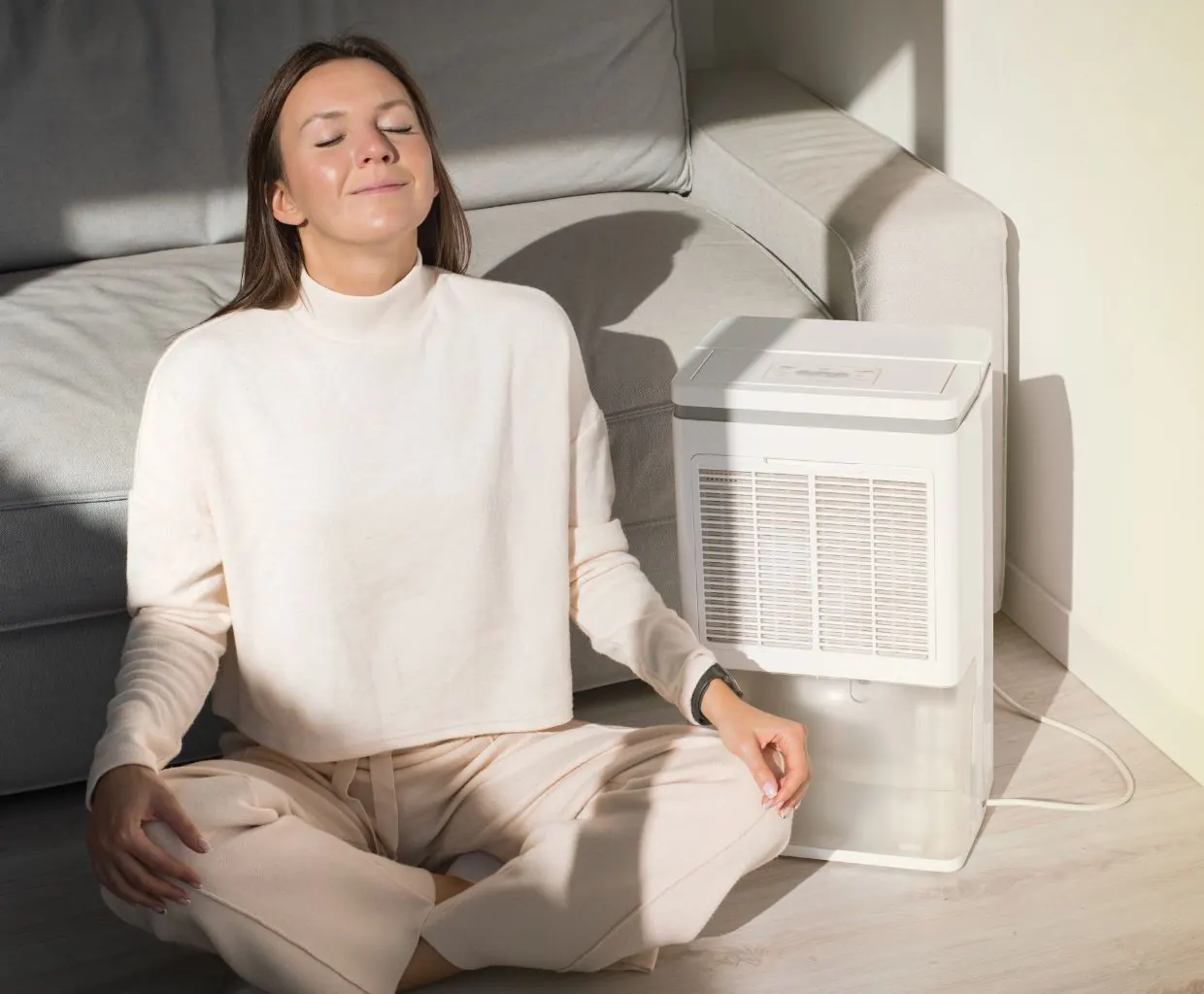
An air purifier and a dehumidifier solve different problems. A purifier pulls air through filters to capture particles such as pollen, pet dander, dust and smoke, but leaves the humidity where it was. A dehumidifier pulls water vapor out of the air, which is what controls mold and dust mites, but it isn’t rated to remove particles. If your home feels damp, smells musty or fogs its windows, start with a dehumidifier; if your problem is airborne allergens or smoke, start with a purifier.
Air purifier vs dehumidifier at a glance
| Air purifier | Dehumidifier | |
|---|---|---|
| What it does | Captures airborne particles; a carbon filter also adsorbs some gases | Removes moisture to lower relative humidity |
| Number to compare | CADR (cfm) and AHAM room size | Capacity and coverage on the maker’s spec sheet |
| Helps with | Pollen, pet dander, dust, smoke, airborne mold spores | Damp air, condensation, conditions that let mold and dust mites thrive |
| Doesn’t help with | Humidity, mold growing on surfaces, radon | Smoke, pollen or dander already in the air |
| Target to watch | Enough CADR for the room | Humidity below 60%, ideally 30% to 50% (EPA) |
What an air purifier does
A portable purifier is a fan pushing air through filters. EPA says most are rated by CADR (Clean Air Delivery Rate) for smoke, dust and pollen, which stand for small, medium and large particles. A true HEPA filter, by the US Department of Energy definition, captures at least 99.97% of 0.3-micron test particles. For gases and odors it needs activated carbon; EPA says HEPA filters alone can’t control them.
What a purifier can’t do is change the moisture in the air. It also has limits with mold: EPA says some air cleaners can remove airborne mold spores and moldy odors, but they won’t prevent mold growth or rid a house of mold. If you want the full picture of what filters can and can’t do, see our explainer do air purifiers work.
To size one, use the air purifier size calculator. AHAM’s rule of thumb is a smoke CADR of at least two-thirds of the room’s floor area, so a 300 sq ft room needs about 200 cfm.
What a dehumidifier does
A dehumidifier lowers relative humidity. That matters because moisture, not airborne spores, is what lets mold grow. EPA’s guidance is direct:
- The key to mold control is moisture control.
- Keep indoor humidity below 60%, ideally between 30% and 50%, using air conditioners or dehumidifiers when needed.
- Dry water-damaged areas and items within 24 to 48 hours to prevent mold growth.
EPA’s Mold Course lists humidity around 60% as a moisture problem and says condensation, when warm humid air meets a cold surface, can be a sign of high humidity. CPSC adds that above 60%, moisture may build up and condense on surfaces where bacteria and fungi can settle and grow. If you see water on windows or cold walls, our dew point calculator shows at what surface temperature condensation starts for your room.
A dehumidifier isn’t an air cleaner, though. AHAM’s CADR test covers room air cleaners, so a dehumidifier gives you no verified number for how much smoke, pollen or dust it removes. Size it from the manufacturer’s capacity and coverage figures for your space.
Which one helps with your problem?
Mold and musty smells
Start with the moisture. In our view, a dehumidifier plus fixing the water source (leaks, condensation, poor drainage) is the real fix, and a purifier is the follow-up for the spores and odors still in the air. EPA says a moldy patch under about 10 sq ft can usually be cleaned by the homeowner; larger areas need more involved remediation. Killing mold isn’t enough, because dead mold can still cause allergic reactions, so it has to be removed. Our picks for the best air purifier for mold cover the purifier side.
Allergies
It depends on the allergen. Pollen and pet dander are airborne particles, so a HEPA purifier is the tool. Dust mites are different: they depend on humidity. In a 17-month Ohio study, homes kept below 51% humidity through humid summers saw live mites fall from 401 to 8 per gram of dust, and mite allergen fell from 17 to 4 µg/g. Most of those low-humidity homes used a high-efficiency dehumidifier plus air conditioning. EPA also notes that low humidity may discourage dust mites and cockroaches.
So for dust mite allergy in a humid climate, a dehumidifier does work a purifier can’t. For pollen season or pets, the purifier matters more. If you have allergies or asthma, talk to your doctor about which triggers matter most for you.
Basements
Basements are usually the dampest room in a house, and they’re where both devices earn their keep. EPA’s Indoor airPLUS program, which certifies new homes, requires basement and crawlspace dehumidifiers to be set to hold humidity at or below 60%. We’d run the dehumidifier first, then add a purifier if the space is used as living space or still smells musty.
Radon is a separate problem that neither humidity control nor filtration addresses. EPA doesn’t recommend air cleaning to reduce radon risk; it recommends testing and fixing the home at 4 pCi/L or higher. Our basement air purifier guide covers radon testing alongside purifier picks.
Odors
A purifier with real activated carbon is the tool for odors. A dehumidifier helps indirectly: EPA’s technical summary notes that carbon adsorption works better at lower temperature and humidity, and drier air also slows the mold and mildew that cause many musty smells. Our HEPA vs carbon filter guide explains what carbon can and can’t remove.
Dry winter air
Neither. If your hygrometer reads below 30%, you need moisture added, not removed. Our air purifier vs humidifier comparison covers that case.
When you need both
In our view, you need both when the air is damp and you’re reacting to airborne particles. Typical cases:
- A humid basement used as a bedroom, playroom or office.
- A home with mold history and someone with allergies or asthma.
- Humid summers plus pets or pollen season.
Because they do different jobs, running them in the same room is fine. Keep a hygrometer nearby. NDSU Extension notes that mechanical hygrometers are frequently off by more than 20%, so a digital one is worth it. Aim for 30% to 50% humidity, and don’t push it much lower than you need.
For the purifier half, a mechanical unit with a washable pre-filter and carbon is a good fit for damp, dusty spaces. Two current options from our research database, both CARB-certified as mechanical (no ionizer):
- Levoit Vital 200S-P: AHAM-listed 250 smoke CADR, about 388 sq ft, washable pre-filter and activated carbon. Check the Levoit Vital 200S-P on Amazon
- Coway Airmega Mighty2 AP-1512N: 240 smoke CADR per Coway, washable pre-filter and a combined carbon and HEPA filter Coway rates for up to a year. Check the Coway Mighty2 on Amazon
What about 2-in-1 purifier dehumidifiers?
They exist, but we’d usually buy two separate devices. The best-known example, the Afloia Q10, paired a small H13 HEPA purifier with a thermoelectric mini dehumidifier. Afloia rated it for 108 to 161 sq ft of purifying and about 215 sq ft of dehumidifying, published no CADR, and its own manual gives conflicting dehumidifying figures. It now appears discontinued. Our Afloia Q10 review has the details.
Watch the wording when you shop: many 2-in-1s, including Afloia’s current Kilo Pro and Miro Pro, are purifier and humidifier combos, which add moisture, the opposite of what a damp room needs. Those are covered in our guide to air purifier humidifier combos.
Which should you buy first?
Measure before you buy. If a hygrometer shows humidity above 60%, or you see condensation and musty smells, a dehumidifier comes first. If humidity is in the 30% to 50% range and you’re sneezing at pollen, dander or smoke, a purifier comes first. If both are true, we’d get both, and keep the dehumidifier running in the dampest room.
Frequently asked questions
Is a dehumidifier or an air purifier better for mold?
A dehumidifier, if the air is damp. EPA says the key to mold control is moisture control and recommends keeping humidity below 60%, ideally 30% to 50%. An air purifier can remove airborne spores and moldy odors but won't stop mold from growing.
Does an air purifier reduce humidity?
No. An air purifier moves air through filters and leaves the moisture in it. To lower humidity you need a dehumidifier or air conditioning, which EPA recommends when needed.
Does a dehumidifier clean the air?
Not in the way a purifier does. It removes water vapor, which helps limit mold growth and dust mites, but it has no CADR rating for removing smoke, pollen or dust from the air.
Can I run an air purifier and a dehumidifier in the same room?
Yes. They do different jobs: one removes particles, the other removes moisture. In a damp basement or a humid bedroom with allergies, running both is a sensible setup.
What humidity should I set a basement dehumidifier to?
EPA's Indoor airPLUS program requires basement and crawlspace dehumidifiers to be set to hold humidity at or below 60%. EPA's consumer guidance says ideally 30% to 50%.
Are 2-in-1 air purifier dehumidifiers worth it?
We'd usually skip them. The best-known one, the Afloia Q10, appears discontinued, its manual gives conflicting dehumidifying figures, and Afloia rated it for only about 215 sq ft of dehumidifying.
Related guides
Guides
How to Reduce Humidity in Your House: 10 Steps That Work
Measure first, then vent moisture outdoors, run the AC or a dehumidifier and cut indoor moisture sources until humidity stays between 30% and 50%.
7 min read
Guides
Dust Mites and Humidity: Why Keeping It Below 50% Matters
Dust mites live on moisture from the air. Keeping indoor humidity below 50% is the best-supported way to cut their numbers; here's how to get there.
6 min read
Guides
Do Air Purifiers Work? What They Remove, What They Can't and When They're Worth It
Yes, for particles in the air: smoke, pollen, pet dander and dust. Here's what EPA and AHAM say purifiers can and can't do, and how to size one so it works.
7 min read

Guides
How to Improve Indoor Air Quality: 9 Steps in the Order That Works
Cut pollution at the source, bring in outdoor air, then filter what's left. Nine EPA-based steps, from humidity and mold to purifiers and radon.
7 min read