Best Basement Air Purifiers in 2026: Musty Smells, Mold and Radon Facts
Five basement air purifiers sized for open floor plans, plus what to do first about humidity, mold and radon, which no purifier removes.
By Clean Air Guides editorial teamUpdated 8 min read
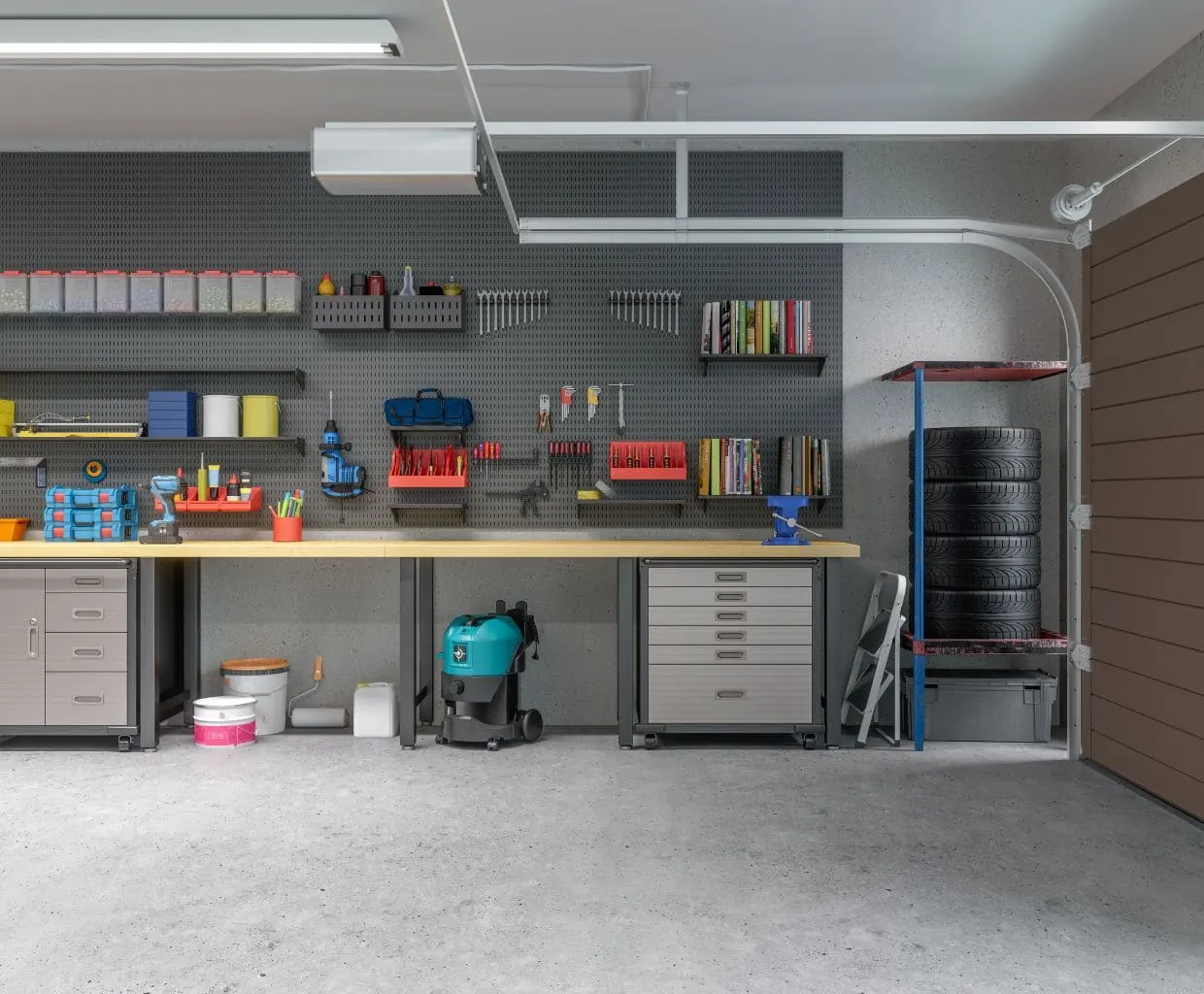
Our picks at a glance
- Top pickCheck price
Best overall for open basements
An AHAM-listed 394 smoke CADR, carbon pellets for musty odors and ENERGY STAR certification.
- CADR 394 smoke (AHAM)
- 606 sq ft
- ENERGY STAR
- Check price
Best without an ionizer
Dual HEPA + carbon filters, no ionizer and 0.00 ppb ozone on its ENERGY STAR record.
- CADR 376 smoke (ENERGY STAR)
- 583 sq ft
- No ionizer
- Check price
Best for very large basements
The top of AHAM's measurable range for smoke CADR, rated for 930 sq ft.
- CADR 600 smoke (AHAM)
- 930 sq ft (AHAM)
- H13 HEPA + carbon
- Check price
Best for persistent musty odor
About 15 lb of activated carbon and zeolite, far more sorbent than typical purifiers.
- ~15 lb carbon + zeolite
- 250 cfm airflow (high)
- No AHAM CADR
- Check price
Best for a finished basement room
Sized for a basement bedroom, office or den, with a washable pre-filter.
- CADR 250 smoke (AHAM)
- 388 sq ft (AHAM)
- Washable pre-filter
Prices change often; Amazon shows the current price. As an Amazon Associate, Clean Air Guides earns from qualifying purchases.
A basement air purifier can cut airborne dust, mold spores and some of the musty smell, but it can’t fix the dampness behind them, and it does nothing for radon. Get the humidity below 60% first, test for radon, then pick a purifier with enough CADR for the whole open space and a real carbon filter for odors. For most open basements, our pick is the Levoit Core 600S-P.
Fix the basement before you buy a purifier
Humidity: aim for below 60%
Basements tend to be the dampest part of a house, and moisture is what feeds mold. EPA’s advice is to keep indoor relative humidity below 60%, ideally between 30% and 50%. A hygrometer tells you where you are; if the reading stays high, run a dehumidifier. The dehumidifier size calculator shows the capacity ENERGY STAR recommends for your floor area. Our air purifier vs dehumidifier guide explains which one fixes which problem. Keeping humidity lower also helps with dust mites: in an Ohio study, homes kept below 51% humidity saw live mites fall from 401 to 8 per gram of dust over 17 months.
Watch for condensation on cold walls, windows and cold-water pipes. EPA says to dry wet surfaces quickly and reduce the moisture source, for example by insulating cold pipes, adding ventilation or raising the temperature. The dew point calculator shows how cold a surface can get before water forms on it, and our guide to ideal indoor humidity covers the targets in more detail.
Mold: remove it, don’t just filter it
EPA puts it plainly: the key to mold control is moisture control. Its advice comes down to four points:
- Clean it up and fix the water problem, or the mold will likely come back.
- Dry water-damaged areas and items within 24 to 48 hours.
- Size up the job. A moldy patch under about 10 sq ft can usually be cleaned by the homeowner; larger areas need more involved remediation.
- Remove it, don’t just kill it. Dead mold can still cause allergic reactions, and EPA doesn’t recommend routine use of bleach.
An air purifier fits in after that. EPA says some air cleaners can remove moldy odors and airborne spores and fragments, but they won’t prevent mold growth or rid a house of mold. Our best air purifier for mold guide goes deeper.
Radon: test, don’t filter
Radon is a soil gas, which is why EPA’s preferred fix works beneath the slab rather than in the room air. EPA estimates it causes about 21,000 lung cancer deaths a year in the US, and it’s the leading cause of lung cancer among non-smokers. EPA does not recommend air cleaning to reduce radon risk. Instead:
- Test with a DIY kit or a professional. The average indoor level is 1.3 pCi/L.
- Fix the home if the result is 4 pCi/L or more, and consider fixing between 2 and 4 pCi/L.
- The most effective fix, according to EPA, is active soil depressurization: a fan pulls air from under the slab and vents it above the roofline.
How we chose
We don’t test purifiers. Our sources are the AHAM Verifide directory, the ENERGY STAR and CARB lists, and manufacturer pages and manuals, checked in October 2026. Basements are often one large open room, so we favored high smoke CADR, a real carbon stage for musty odors, no advertised ionizer, and CARB certification. Every pick is currently sold.
Basement air purifiers compared
| Model | Smoke CADR | Room size | Odor stage | Ionizer |
|---|---|---|---|---|
| Levoit Core 600S-P | 394 (AHAM) | 606 sq ft | Carbon pellets | None advertised |
| Coway Airmega 400 | 376 (ENERGY STAR) | 583 sq ft | Honeycomb carbon (x2) | No |
| Medify MA-112 PRO | 600 (AHAM) | 930 sq ft | Carbon composite with pellets | No |
| Austin Air HealthMate HM400 | Not published | No AHAM rating | ~15 lb carbon + zeolite | No |
| Levoit Vital 200S-P | 250 (AHAM) | 388 sq ft | Activated carbon | No |
The best air purifiers for basements
Levoit Core 600S-P
Best for: most open basements up to about 600 sq ft.
AHAM lists a smoke CADR of 394, dust 398 and pollen 433, for 606 sq ft. The filter has a pre-filter, a main particle filter and activated carbon that Levoit describes as a “high concentration of carbon pellets”. It has a laser PM2.5 sensor with Auto mode, an app, and ENERGY STAR certification. AHAM measured 65.6-67.3 W at full speed, and Levoit lists 26-55 dB. It costs around $300.
The trade-off: filters run around $60 to $80 depending on the version (Original, Toxin Absorber, HEPA-Grade or Smoke Remover), and the Smoke Remover is rated for 6-12 months. Levoit advertises no ionizer, but CARB lists one variant (LAP-C601S-WUSR) as “Electronic”, and ENERGY STAR measured 2 ppb of ozone for it versus 0.00 for the WUS version.
Our pick: Best overall for open basementsLevoit Core 600SSee today's price, ratings and delivery options
Check priceCoway Airmega 400
Best for: basements where you want zero question marks about ozone. If anyone in the house has asthma, this is the one we’d pick.
ENERGY STAR lists a smoke CADR of 376, dust 384 and pollen 409, for 583 sq ft, with ozone at 0.00 ppb. It draws air through both sides, each with a washable pre-filter and a Max2 filter that combines honeycomb activated carbon with HEPA. Coway lists 22-52 dB(A) and 66 W; ENERGY STAR estimates 366 kWh a year. CARB classes it as Mechanical.
The trade-off: a set of two filters is around $130, replaced yearly per Coway’s spec table (its product copy says 6-12 months). It’s big and heavy at 24.7 lb. Coway’s own CADR figures (328/328/400) are lower than ENERGY STAR’s.
Our pick: Best without an ionizerCoway Airmega 400See today's price, ratings and delivery options
Check priceMedify MA-112 PRO
Best for: big, open basements of 900 sq ft or more.
AHAM lists the MA-112 PRO at a smoke and dust CADR of 600 and pollen 450, the top of what AHAM’s test can measure, for 930 sq ft. It uses a pre-filter, H13 HEPA material and an active carbon composite layer with carbon pellets. CARB lists it as Mechanical, with no ionizer. Medify publishes 24.6 dBA on speed 1 up to 58.1 dBA on speed 4.
The trade-off: running cost. Medify rates it at 160 W, and the filter set (around $140) lasts about 3,000 hours, or 4-5 months. The original MA-112 is discontinued and the PRO is its successor, so check the model name before you buy. We’d only choose it when the space is too big for the Levoit or Coway.
Our pick: Best for very large basementsMedify MA-112 PROSee today's price, ratings and delivery options
Check priceAustin Air HealthMate HM400
Best for: a stubborn musty smell after the moisture is under control. In our view, it’s the strongest odor option here, if you can live without a CADR.
Odor removal depends on how much sorbent a filter holds, and EPA notes that thin carbon layers saturate quickly. Austin Air’s filter holds about 15 lb of activated carbon plus zeolite (the weight is for the whole blend), behind two pre-filters and 60 sq ft of medical-grade HEPA. Austin Air lists 250 cfm on high and 125 cfm on medium. The filter is rated for up to 5 years and costs around $395. CARB lists it as Mechanical; Austin Air says it emits no ozone or ions. For more on carbon, see HEPA vs carbon filters.
The trade-off: there’s no AHAM CADR, since Austin Air doesn’t publish one, so you can’t size it like the others; Austin Air only says it suits “larger interior spaces”. It’s expensive (around $845), draws up to 147 W at startup, has no sensor or auto mode, and Austin Air lists “less than 50 to 65 decibels” depending on speed.
Our pick: Best for persistent musty odorAustin Air HealthMate HM400See today's price, ratings and delivery options
Check priceLevoit Vital 200S-P
Best for: a finished basement bedroom, office or den with the door closed.
AHAM lists a smoke CADR of 250, dust 254 and pollen 289, for 388 sq ft, at a measured 52.4 W. A washable pre-filter catches lint and hair, followed by a main particle filter and activated carbon. CARB lists it as Mechanical. Levoit lists 23-54 dB.
The trade-off: AHAM lists the main filter as “HEPA-Type”, so we don’t call it true HEPA. Filters are around $50 to $65 and last 6-12 months. It’s too small on its own for a large open basement.
Our pick: Best for a finished basement roomLevoit Vital 200SSee today's price, ratings and delivery options
Check priceSizing a purifier for an open basement
Use the AHAM rule of thumb: smoke CADR at least two-thirds of the floor area in square feet, with an 8 ft ceiling. Basements break that rule in two ways:
- They’re often one big room. A 1,000 sq ft open basement needs a smoke CADR of about 667. That’s more than any single unit can be rated for under AHAM’s current test (600 maximum), so use two purifiers at opposite ends. Their air changes add up, as the CDC notes when combining strategies.
- Ceilings can be lower or higher than 8 ft. Scale the area by your ceiling height divided by 8. With a 7 ft ceiling, that 1,000 sq ft basement counts as 875 sq ft, so about 583 cfm is enough.
The air purifier size calculator does this math for any ceiling height.
Tip: If your furnace and ductwork are in the basement, a MERV 13 filter or an in-duct media air cleaner treats the whole house each time the fan runs. Compare the options in our guide to the best whole house air purifiers.
What a basement air purifier can’t do
It can’t dry the air, remove radon or remove mold growing on walls, joists or boxes. EPA says no air cleaner removes all pollutants and that filtration doesn’t replace controlling the source and ventilating. Think of the purifier as the last step after a dehumidifier, leak repairs and a radon test. Our guide on how to improve indoor air quality puts those steps in order.
Frequently asked questions
Will an air purifier get rid of a musty basement smell?
It can reduce it, if it has enough activated carbon. EPA says some air cleaners can remove moldy odors and airborne spores, but they won't stop mold growth. The smell comes back unless you fix the moisture that causes it.
Do I need a dehumidifier or an air purifier for my basement?
If the basement is damp, start with a dehumidifier. EPA recommends keeping indoor humidity below 60%, ideally 30% to 50%, to control mold. An air purifier then handles the airborne particles and odors that remain.
Does an air purifier help with radon?
No. EPA does not recommend air cleaning to reduce radon risk. Test your home, and fix it if the level is 4 pCi/L or more; EPA says the most effective fix is active soil depressurization.
What size air purifier do I need for a basement?
Use a smoke CADR of at least two-thirds of the floor area in square feet, assuming an 8 ft ceiling. A 900 sq ft open basement needs about 600 cfm, which is the top of AHAM's test range, so large basements often need two units.
How do I prevent mold in my basement?
Control moisture. EPA advises keeping humidity below 60%, drying water-damaged areas within 24 to 48 hours, fixing leaks, and drying condensation on walls and pipes quickly, for example by insulating cold-water pipes.
Related guides
Air Purifiers
Best Air Purifiers for Mold in 2026: Spores, Musty Odor and What to Fix First
An air purifier can catch airborne mold spores and musty odors, but it won't stop mold growing. Five HEPA + carbon picks, and the moisture fixes that come first.
8 min read
Air Purifiers
Best Air Purifiers for Smoke in 2026: Cigarette, Weed, Vape and Wildfire
Six purifiers for tobacco, cannabis, vape and wildfire smoke, chosen by verified smoke CADR and carbon, plus how to size one for a smoke event.
11 min read
Air Purifiers
Best Air Purifiers for Large Rooms in 2026: Verified CADR for 500+ sq ft
Six air purifiers with enough verified clean air for living rooms and open plans of 500 sq ft or more, plus how to size one and when two units beat one.
11 min read
Air Purifiers
Best Air Purifiers for Odor Elimination in 2026: Kitchen, Pet and Smoke Smells
Five carbon-filter purifiers for cooking, pet, garbage and smoke smells, plus why a range hood and source control beat any purifier.
8 min read