How to Improve Indoor Air Quality: 9 Steps in the Order That Works
Cut pollution at the source, bring in outdoor air, then filter what's left. Nine EPA-based steps, from humidity and mold to purifiers and radon.
By Clean Air Guides editorial teamUpdated 7 min read

To improve indoor air quality, work in the order the EPA recommends: first remove or reduce the sources of pollution, then bring in more outdoor air, and only then clean the air with filters and purifiers. Add two checks almost everyone skips: keep humidity between 30% and 50%, and test for radon. The nine steps below follow that order.
The short version
| Step | What to do | Why |
|---|---|---|
| 1 | Control sources (smoke, fumes, dust, moisture) | The EPA’s most effective, most economical fix |
| 2 | Ventilate: windows, exhaust fans | Dilutes what you can’t remove |
| 3 | Keep humidity at 30–50% | Limits mold and dust mites |
| 4 | Fix moisture and mold | Mold comes back if the water problem stays |
| 5 | Upgrade the HVAC filter to MERV 13 | Cleans the whole house when the fan runs |
| 6 | Add a HEPA purifier sized by CADR | Catches fine particles in the rooms you use most |
| 7 | Use activated carbon for gases and odors | HEPA does not remove gases |
| 8 | Avoid ozone generators and ozone-emitting gadgets | Ozone is a lung irritant |
| 9 | Test for radon | Leading cause of lung cancer among non-smokers |
1. Control the sources
The EPA says the most effective way to improve indoor air is usually to eliminate individual sources of pollution or reduce their emissions, and that this is often cheaper than ventilating more. Examples from the EPA: sealing or enclosing materials such as asbestos, and adjusting gas stoves to emit less.
Practical source control at home:
- Ventilate whenever you use products that release pollutants, such as paints, solvents and strong cleaners (EPA’s “Care for Your Air” guide).
- Keep dust down at the source: doormats, shoes off, damp cleaning. Our guide to why your house is so dusty covers this step by step.
- Consider a carbon monoxide alarm, which the EPA also recommends.
We’d start here before buying anything that plugs in.
2. Bring in outdoor air
Ventilation dilutes the pollutants you can’t remove. The EPA’s suggestions:
- Open windows and doors when the weather allows, or run window or attic fans.
- Run a window air conditioner with its vent control open.
- Use kitchen and bathroom exhaust fans that vent outdoors. They remove pollutants from that room and add outdoor air to the house.
- Ventilate as much as possible during short, high-pollution activities such as painting and cooking.
The exception is when the outdoor air is worse, for example during wildfire smoke. Then keep windows shut and lean on filtration. Some newer homes use mechanical ventilation systems and heat recovery ventilators to bring in outdoor air.
Note: “Stuffy” air is a ventilation problem, not an oxygen problem you can fix with gadgets. A humidifier adds water vapor, not oxygen, and plants are no substitute for fresh air (see below).
3. Keep humidity between 30% and 50%
The EPA recommends indoor humidity below 60%, ideally between 30% and 50%. High humidity encourages mold, and the EPA notes low humidity also discourages dust mites. A hygrometer from a hardware store tells you where you stand. Our pick for a first air-quality purchase is exactly that: it costs little and tells you whether you need a humidifier, a dehumidifier or neither.
- Too humid: run the air conditioner or a dehumidifier, and use exhaust fans when showering and cooking.
- Too dry: a humidifier helps, but the EPA says not to humidify above 50% and to clean portable units every third day.
Our ideal indoor humidity guide covers seasonal targets and when to turn a humidifier on. If you need a hygrometer, compare digital indoor hygrometers on Amazon.
4. Fix moisture and mold
The EPA’s rule is simple: the key to mold control is moisture control. If you find mold, clean it up and fix the water problem, or it will likely come back. Dry water-damaged materials within 24 to 48 hours to prevent growth. Killing mold isn’t enough because dead mold can still cause allergic reactions, so it has to be removed, and the EPA does not recommend routine use of bleach.
Patches under about 10 sq ft can usually be cleaned by the homeowner. Larger areas need a professional. Air purifiers can catch airborne spores and musty odors but won’t stop mold growing; see the best air purifier for mold for what they can and can’t do.
5. Upgrade your HVAC filter to MERV 13
If you have forced-air heating or cooling, the EPA recommends a filter rated at least MERV 13, or as high as your system can handle. Ask an HVAC technician first, because higher-efficiency filters can restrict airflow in systems not built for them. Remember that the filter only cleans air while the fan runs, and manufacturers typically recommend replacing it every 60 to 90 days. For thicker in-duct options, see our guide to whole-house air purifiers.
6. Add a portable HEPA purifier, sized by CADR
A portable air purifier cleans one room, so put it where you spend the most time, usually the bedroom. Size it by its smoke CADR (Clean Air Delivery Rate). The EPA’s chart, for 8 ft ceilings:
| Room area | Minimum smoke CADR |
|---|---|
| 100 sq ft | 65 cfm |
| 200 sq ft | 130 cfm |
| 300 sq ft | 195 cfm |
| 400 sq ft | 260 cfm |
| 500 sq ft | 325 cfm |
| 600 sq ft | 390 cfm |
For other sizes or taller ceilings, use our air purifier size calculator. CADR on the box is measured at top speed, so a unit with headroom can do the job more quietly. We’d size for the room’s real ceiling height, not just its floor area.
7. Use activated carbon for gases and odors
HEPA filters only capture particles. The EPA says particle-only air cleaners cannot control gases or chemical odors; for those you need activated carbon or another gas-removing filter. Carbon handles many hydrocarbons and odors but is weak against formaldehyde and ammonia, and thin carbon layers saturate quickly. There is also no CADR-style rating for gas removal. Our guide to HEPA vs carbon filters explains the difference, and the best air purifier for VOCs covers units with more carbon. For chemical fumes, ventilation and source control still come first.
8. Avoid ozone generators
Some devices sold as air cleaners make ozone on purpose. The EPA says ozone is generally ineffective at cleaning indoor air at levels that are safe to breathe, doesn’t remove particles like dust and pollen, and can damage the lungs; relatively low amounts can cause chest pain, coughing and throat irritation. Ionizers, electrostatic precipitators, some UV lights and plasma units may also emit ozone.
California requires indoor air cleaners sold there to be certified by CARB as emitting no more than 0.050 ppm (50 ppb) of ozone. We’d pick a CARB-certified purifier wherever you live. Our guide to air purifier side effects covers the details.
9. Test for radon
Radon is a radioactive gas, and the EPA’s fix for it works by keeping soil gas from under the house out of your living space. The EPA estimates it causes about 21,000 lung cancer deaths a year in the US and calls it the leading cause of lung cancer among non-smokers. Its guidance:
- Test your home; do-it-yourself kits are available. You can find radon test kits on Amazon or at hardware stores.
- Fix the home if radon is 4 pCi/L (150 Bq/m³) or higher, and consider fixing it between 2 and 4 pCi/L. The average indoor level is 1.3 pCi/L.
- Air purifiers are not a fix. The EPA recommends source control, most often active soil depressurization: a fan pulls air from under the slab and vents it above the roofline. Call a qualified radon mitigation professional.
What about houseplants and “oxygen-producing” plants?
Plants are nice to live with, but they are not an air-cleaning system. The EPA’s technical summary says potted plants have been shown to be ineffective and impractical for removing pollutants, because there is no active airflow and you would need an unfeasible number of plants. A 2020 review of 12 chamber studies put a number on it: to match the pollutant removal that ordinary outdoor air exchange already provides, you would need 10 to 1,000 potted plants per square meter (about 11 sq ft) of floor space.
The same goes for oxygen. Fresh air comes in through ventilation, which is step 2. If a room feels stale, open a window or run an exhaust fan rather than adding plants or a humidifier.
Frequently asked questions
What is the most effective way to improve indoor air quality?
The EPA says it is usually source control: removing or reducing what pollutes the air in the first place. Ventilation comes next, and air cleaners are a supplement, not a replacement.
Do air purifiers improve indoor air quality?
A HEPA purifier with enough CADR for the room can reduce airborne particles such as smoke, dust, pollen and pet dander. It does not remove gases unless it has a substantial carbon filter, and the EPA says no air cleaner removes all pollutants.
Do houseplants improve indoor air quality?
Not in a measurable way. The EPA calls potted plants ineffective and impractical for removing pollutants, and a review of chamber studies estimated you would need 10 to 1,000 plants per square meter of floor to match ordinary air exchange.
Does a humidifier increase oxygen in a room?
No. A humidifier adds water vapor, not oxygen. It helps when the air is too dry, but the EPA advises against humidifying above 50% relative humidity.
What indoor humidity is best for air quality?
The EPA recommends 30% to 50% and keeping it below 60%. Higher humidity encourages mold and dust mites; very dry air is uncomfortable.
Should I test my home for radon?
Yes. The EPA recommends checking every home for radon, with a DIY kit or a professional, and fixing the home if radon is 4 pCi/L or higher. Air purifiers are not a radon fix.
Related guides
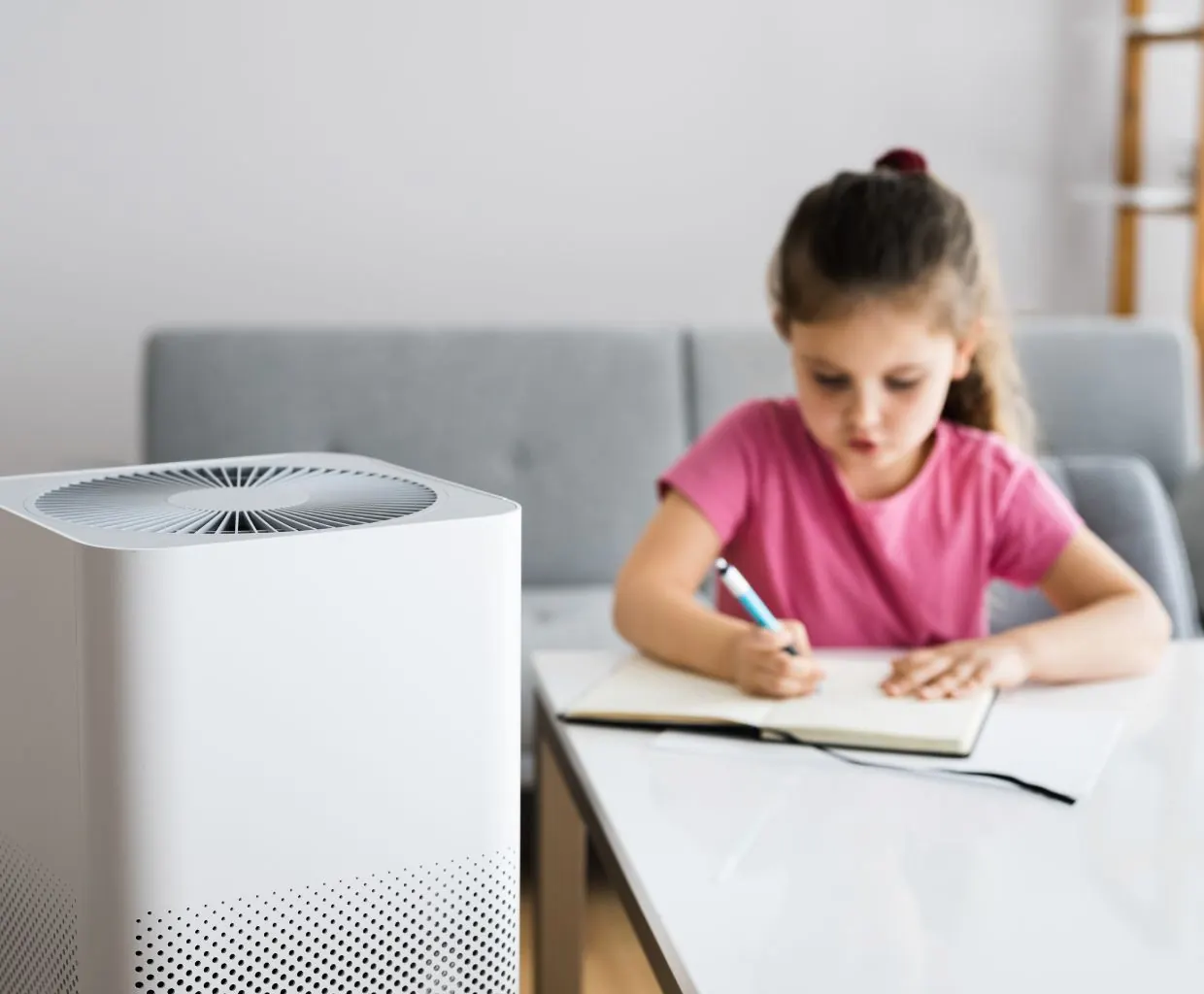
Guides
Why Is My House So Dusty? Causes and Fixes That Work
Most house dust blows in, gets tracked in or is shed indoors. Here is where yours likely comes from and the fixes in the order that pays off most.
7 min read
Guides
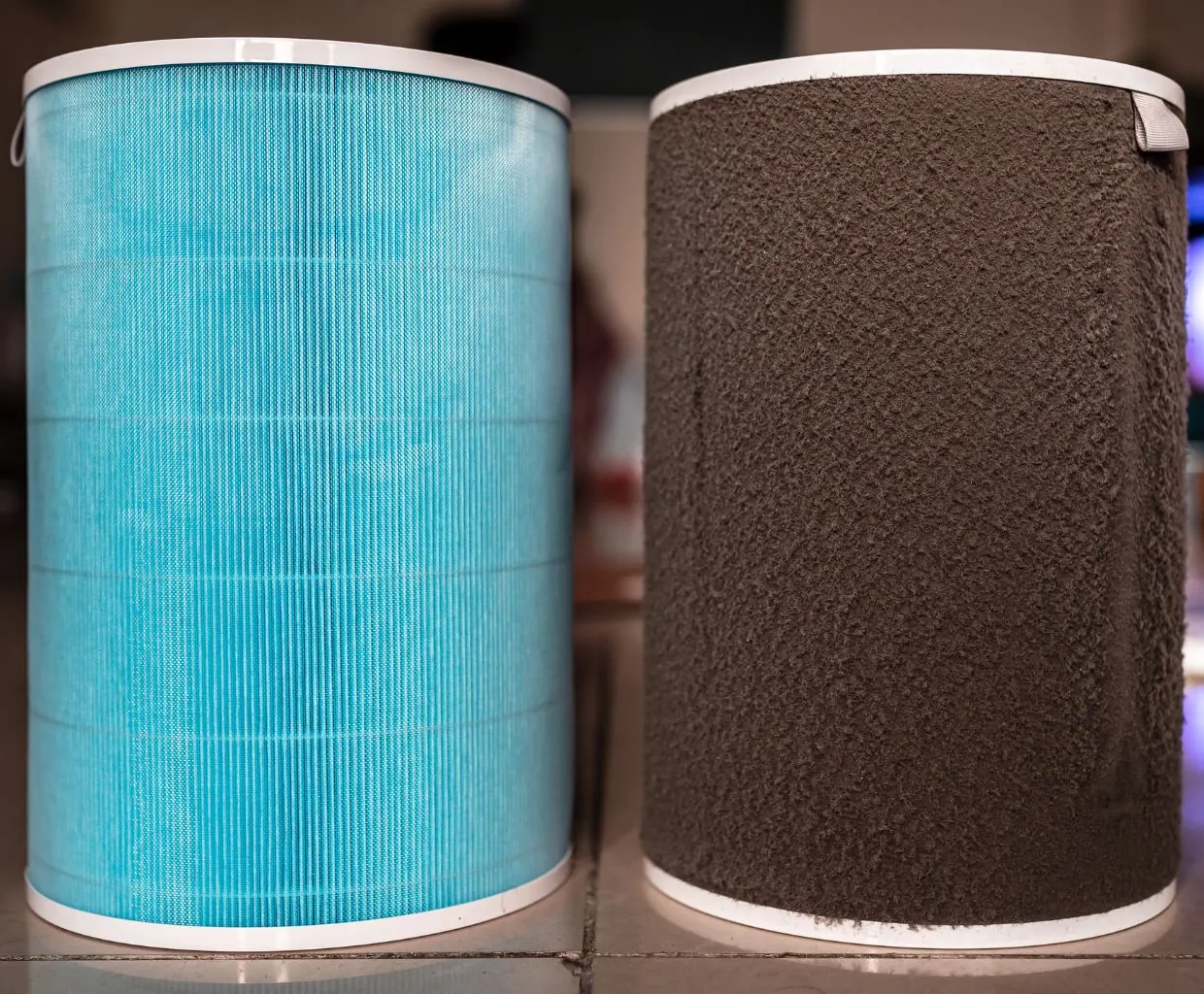
HEPA vs Carbon Filter: What Each One Removes (and Which You Need)
HEPA filters trap particles; activated carbon adsorbs gases and odors. Neither does the other's job. Here's what each removes and which you need.
6 min read
Guides
Air Scrubber vs Air Purifier: What's the Difference?
"Air scrubber" means a job-site HEPA machine or an in-duct HVAC gadget, depending on who is selling it. Here's how both compare with a home air purifier.
5 min read
Air Purifiers
Best Basement Air Purifiers in 2026: Musty Smells, Mold and Radon Facts
Five basement air purifiers sized for open floor plans, plus what to do first about humidity, mold and radon, which no purifier removes.
8 min read