HEPA vs Carbon Filter: What Each One Removes (and Which You Need)
HEPA filters trap particles; activated carbon adsorbs gases and odors. Neither does the other's job. Here's what each removes and which you need.
By Clean Air Guides editorial teamUpdated 6 min read
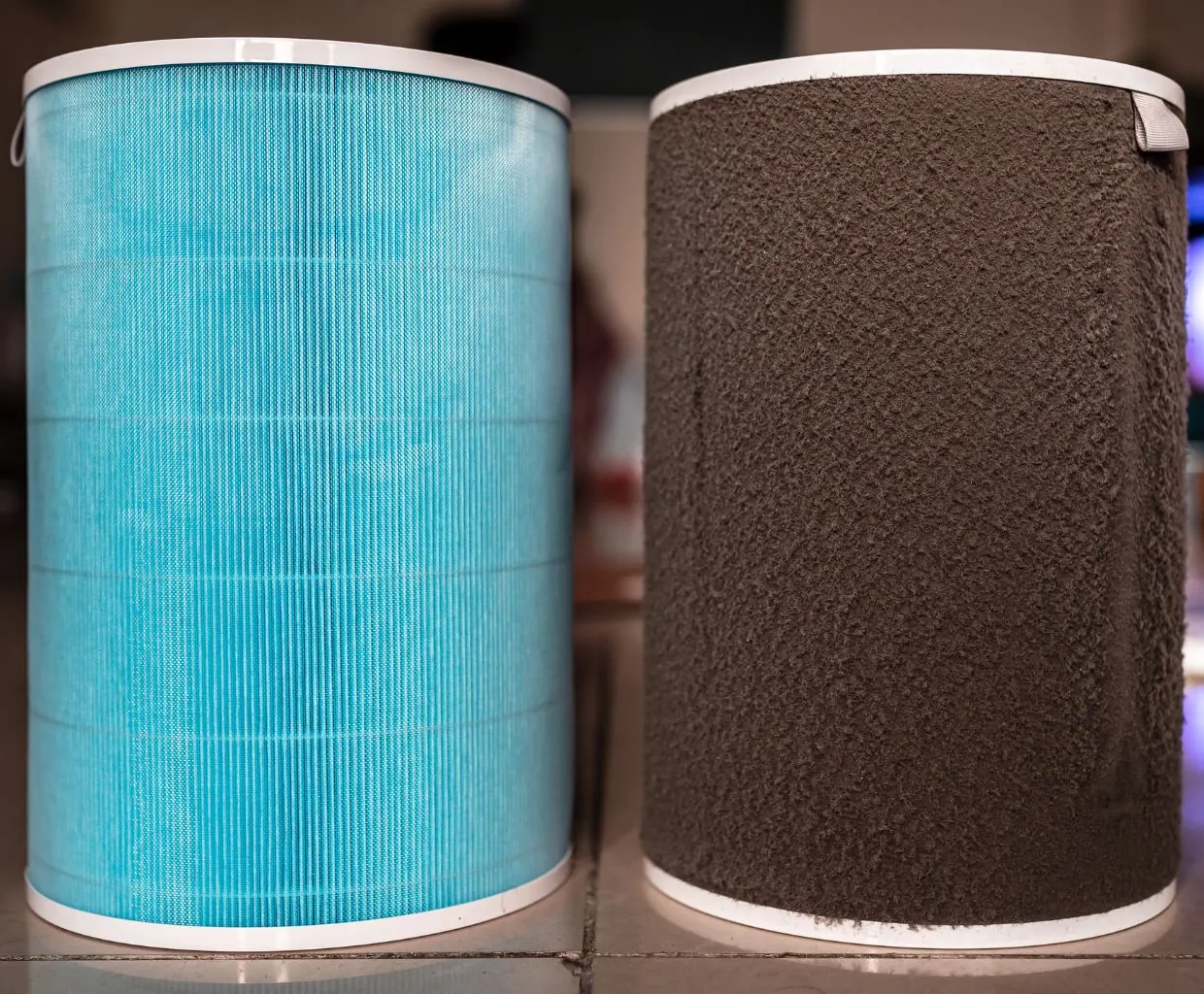
A HEPA filter traps particles: dust, pollen, pet dander, mold spores and the fine particles in smoke. An activated carbon filter adsorbs gases and odors, such as cooking smells and many volatile organic compounds (VOCs). They don’t overlap. The EPA says HEPA filters cannot remove gases or chemical odors, and carbon isn’t a particle filter. For allergies, HEPA does the heavy lifting; for odors and fumes, how much carbon a purifier holds matters more than the label; for smoke and pets, you want both.
HEPA vs carbon vs pre-filter at a glance
| HEPA filter | Activated carbon filter | Pre-filter | |
|---|---|---|---|
| Removes | Particles: dust, pollen, dander, mold spores, smoke particles | Many gases and odors: most hydrocarbons, many aldehydes and organic acids, ozone | Coarse debris you can see |
| Doesn’t remove | Gases, VOCs, odors | Particles; formaldehyde, ammonia, hydrogen sulfide and some other gases only poorly | Fine particles, gases |
| How it works | Dense, deeply pleated fiber media catches particles | Gas molecules stick to the carbon’s surface (adsorption) | Coarse mesh or panel media |
| Rated by | DOE: 99.97% at 0.3 µm; purifiers by AHAM CADR | No standard rating for gas removal | Usually not rated |
| Care | Replace; not washable | Replace when saturated | Vacuum or rinse if the maker says so |
What a HEPA filter is
The US Department of Energy defines a HEPA filter as a throwaway, extended-medium, dry-type filter in a rigid casing with a minimum efficiency of 99.97% against a 0.3 µm aerosol. The EPA uses the same definition and explains that 0.3 µm is the worst case: larger and smaller particles are captured more efficiently. HEPA filters have very deep pleats with much more surface area than ordinary pleated filters, which is how they catch fine and ultrafine particles so well.
“HEPA-type” is not HEPA
The DOE standard is written for industrial and government filters. For home products, the EPA notes there is no widely accepted definition of HEPA performance. HEPA-labelled home purifier filters are generally comparable to MERV 16 and usually remove 99% or more of the particle sizes measured, but they’re unlikely to match the HEPA filters used in healthcare and industry.
Terms like “HEPA-type,” “HEPA-like” or “HEPA-style” are marketing language. No federal definition ties them to the 99.97% at 0.3 µm level. We’d judge a purifier by its AHAM-verified CADR instead of the word on the filter, because CADR rates the complete unit, not just the filter material.
HEPA vs MERV
MERV ratings (1 to 16) are for HVAC and furnace filters under ASHRAE 52.2. Only MERV 11 and higher have to capture any of the smallest size range (0.3 to 1 µm):
| Rating | 0.3–1 µm | 1–3 µm | 3–10 µm |
|---|---|---|---|
| MERV 11 | 20% | 65% | 85% |
| MERV 13 | 50% | 85% | 90% |
| MERV 16 | 95% | 95% | 95% |
| HEPA (DOE) | 99.97% at 0.3 µm, the hardest size | higher | higher |
The EPA recommends MERV 13 or higher for home HVAC systems that can handle it. The EPA warns that higher-efficiency filters can reduce airflow in systems not designed for them, so ask an HVAC technician before going higher. That’s one reason HEPA mostly lives in portable purifiers. Our guide to whole-house air purifiers covers HVAC options.
What activated carbon removes, and what it doesn’t
Activated carbon is the most common gas filter in home air cleaners. According to the EPA, it can remove:
- most hydrocarbons
- many aldehydes and organic acids
- ozone (by chemical reaction on the carbon)
It is not especially effective against:
- formaldehyde and other low-molecular-weight aldehydes
- ammonia
- hydrogen sulfide
- sulfur oxides and nitrogen oxide
Carbon also has a fixed capacity. Once its surface fills up, pollutants “break through,” so it needs replacing. The EPA notes adsorption works better at lower temperature and humidity.
The amount of carbon matters
This is where many purifiers fall short. The EPA says gas filters must contain enough media to be effective, and that thicker media stays efficient longer. In EPA-cited tests, VOCs at 100 to 200 ppb broke through quickly even in 6-inch-deep carbon filters built for odor control. Thin carbon-impregnated layers saturate fast, have short service lives, can release what they captured, and usually have limited odor-removal ability.
There is no CADR-style rating for gases, and no authority sets a minimum carbon weight. Our advice: if odors or VOCs are your main problem, look for a purifier whose maker states a carbon weight and uses a real bed of granules, not a thin coated sheet. For specifics, see our guides to the best air purifier for VOCs and the best air purifier for odor elimination.
What a pre-filter does
A pre-filter is the coarse first layer, usually a mesh or a thin panel. The EPA describes low-efficiency panel filters (typically MERV 1 to 4) as having very low removal efficiency for most particle sizes, slightly better for large ones, and notes they’re commonly used as pre-filters for higher-efficiency filters. In a purifier, its job is to catch the biggest debris first so it doesn’t coat the HEPA pleats.
Filter order matters too. The EPA says gas filters should generally sit downstream of particle filters, so the particle filter keeps dust off the carbon. That’s why a typical purifier stacks pre-filter, then HEPA and carbon. Many purifiers ship with a washable pre-filter. If you want one you can clean, see our guide to air purifiers with washable filters.
Which filter do you need?
| Problem | HEPA | Carbon | Notes |
|---|---|---|---|
| Allergies (pollen, dust, dust mites) | Essential | Optional | Larger allergen particles settle fast, so cleaning matters too |
| Pets | Essential (dander) | Helpful (odor) | See our best air purifier for pets |
| Smoke (tobacco, wildfire) | Essential | Strongly recommended | Smoke is particles plus gases |
| Cooking and general odors | Helpful | Essential | More carbon = longer life |
| VOCs and chemical fumes | No effect on gases | Essential | Weak on formaldehyde; ventilate |
| Mold spores and musty smell | Spores | Musty odor | Fix the moisture first |
- Smoke: you need both. The EPA notes particle-only filters won’t remove the odor or many of the gas-phase carcinogens in tobacco smoke. Size the unit by smoke CADR with our air purifier size calculator, and see the best air purifier for smoke.
- Allergies: the EPA says larger allergen particles settle onto surfaces quickly, so a HEPA purifier works best alongside regular cleaning. A big carbon filter adds little for pure allergy relief.
- VOCs: in our view, carbon is a supplement here, not the fix. Ventilation and removing the source do more, especially for formaldehyde.
Replacing filters, and why HEPA isn’t washable
The DOE definition calls a HEPA filter “throwaway” and “dry-type.” Washing isn’t part of that design, so treat any filter sold as HEPA as a replaceable part unless its maker explicitly says otherwise. Carbon has a limited capacity, and the EPA says it needs regular replacement (or regeneration) to avoid breakthrough.
Why replacement matters:
- An overloaded filter cuts airflow and pushes more air around the filter instead of through it, the EPA notes, so follow the manufacturer’s replacement schedule.
- Used particle filters can themselves become a source of odors.
- When you swap filters, the EPA suggests avoiding drafts, wearing an N95 mask and gloves if you can, and sealing the old filter in a plastic bag for disposal.
We’d check the price and availability of replacement filters before buying a purifier, since they are a recurring cost on top of the purchase. For care steps on one popular brand, see how to clean a Honeywell air purifier.
Frequently asked questions
Is a HEPA filter or a carbon filter better?
Neither is better; they do different jobs. HEPA captures particles such as dust, pollen, pet dander and smoke particles, while activated carbon adsorbs gases and odors. For smoke, pets or cooking smells, you want both.
Does a HEPA filter remove odors?
No. The EPA says particle-only filters, including HEPA, cannot control gases or chemical odors. Odors need activated carbon or another gas-removing filter.
Does activated carbon remove dust and allergens?
Not in any meaningful way. Carbon is there to adsorb gases. Dust, pollen and dander are captured by the particle filter, which is why most purifiers put a HEPA filter and a carbon filter in the same unit.
Can you wash a HEPA filter?
No. The US Department of Energy defines a HEPA filter as a throwaway, dry-type filter, so washing it isn't part of the design. Replace it on the manufacturer's schedule; only pre-filters are usually washable.
Do I need a pre-filter?
It helps. A pre-filter is a coarse first stage that catches the biggest debris before it reaches the HEPA media. Many purifiers include one; follow the manual on whether to vacuum, rinse or replace it.
Does activated carbon remove formaldehyde?
Not well. The EPA lists low-molecular-weight aldehydes such as formaldehyde among the gases activated carbon is not especially effective against. Ventilation and source control matter most for formaldehyde.
Related guides

Guides
How to Improve Indoor Air Quality: 9 Steps in the Order That Works
Cut pollution at the source, bring in outdoor air, then filter what's left. Nine EPA-based steps, from humidity and mold to purifiers and radon.
7 min read
Guides
Why Is My House So Dusty? Causes and Fixes That Work
Most house dust blows in, gets tracked in or is shed indoors. Here is where yours likely comes from and the fixes in the order that pays off most.
7 min read
Guides
Air Scrubber vs Air Purifier: What's the Difference?
"Air scrubber" means a job-site HEPA machine or an in-duct HVAC gadget, depending on who is selling it. Here's how both compare with a home air purifier.
5 min read
Air Purifiers
Best Air Purifiers for VOCs and Formaldehyde in 2026: Heavy-Carbon Picks
Four purifiers with published carbon weights from 3.6 to about 15 lb, and why ventilation and source control still come first for chemical fumes.
8 min read