Best Air Purifiers for Odor Elimination in 2026: Kitchen, Pet and Smoke Smells
Five carbon-filter purifiers for cooking, pet, garbage and smoke smells, plus why a range hood and source control beat any purifier.
By Clean Air Guides editorial teamUpdated 8 min read
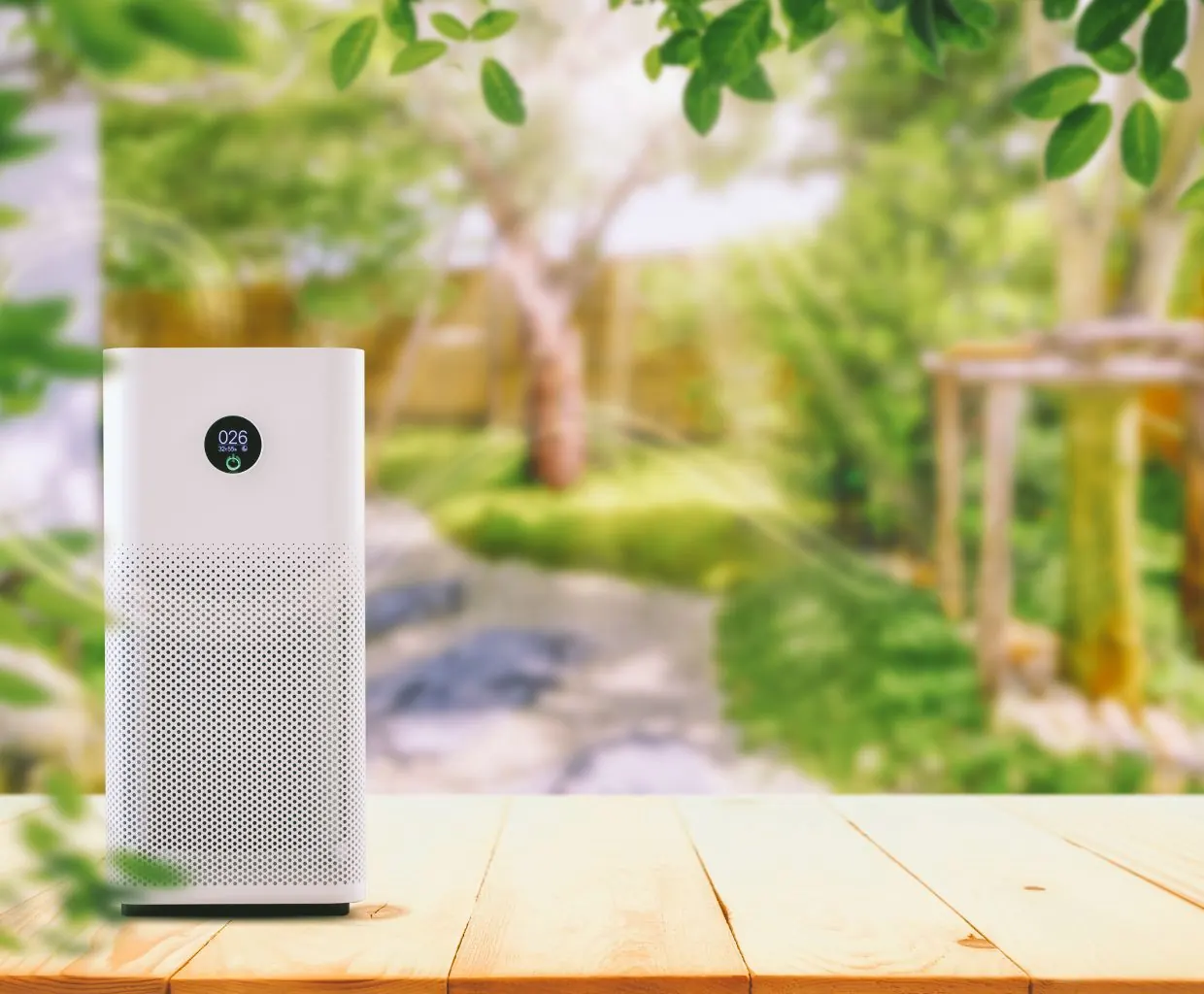
Our picks at a glance
- Top pickCheck price
Best for strong, persistent odors
About 15 lb of activated carbon and zeolite, the most odor-adsorbing media of any pick.
- ~15 lb carbon + zeolite
- 250 cfm airflow (maker)
- Filter up to 5 years
- Check price
Best for open kitchens and living rooms
Two carbon-plus-HEPA filters and a high ENERGY STAR CADR for big, open spaces.
- CADR 376 smoke (ENERGY STAR)
- 583 sq ft (4.8 ACH)
- No ionizer
- Check price
Best for pet odors
Levoit Vital 200S (Vital 200S-P)
A Pet Allergy carbon filter option, a washable pre-filter for fur and an AHAM-verified CADR.
- CADR 250 smoke (AHAM)
- 388 sq ft (4.8 ACH)
- Washable pre-filter
- Check price
Best value for medium rooms
A carbon-pellet filter and a CADR above 250 for around $200 on sale.
- CADR 253 smoke (maker, AHAM label)
- 392 sq ft (4.8 ACH)
- PlasmaWave can be switched off
- Check price
Best for small rooms
Toxin Absorber and Pet Allergy carbon filter options for a bedroom-sized unit under $100.
- CADR 139 smoke (AHAM)
- 222 sq ft (4.8 ACH)
- Carbon filter options
Prices change often; Amazon shows the current price. As an Amazon Associate, Clean Air Guides earns from qualifying purchases.
Odors are gases, so the purifier that helps most is the one with the most activated carbon, not the biggest HEPA filter. For strong, lingering smells our pick is the Austin Air HealthMate HM400, with about 15 lb of carbon and zeolite. For a big open kitchen and living area, the Coway Airmega 400 pairs carbon with a high particle CADR, and for pet smells the Levoit Vital 200S is the practical choice.
Expect a purifier to reduce odors, not erase them. Carbon fills up, and no filter keeps up with a smell that’s still being made. Removing the source and venting air outdoors come first.
How we chose
We don’t test purifiers. There’s no standard rating for odor removal, so we looked for models with a real activated carbon stage (and a published carbon weight where one exists), a verified particle CADR from AHAM, ENERGY STAR or the maker, current availability, and CARB certification. We excluded models with an ionizer that can’t be turned off and anything that makes ozone on purpose. Data was checked in October 2026; see how we research.
Odor purifiers compared
| Model | Carbon | Smoke CADR (source) | Room size at 4.8 ACH | Around |
|---|---|---|---|---|
| Austin Air HealthMate HM400 | ~15 lb carbon + zeolite | Not published | No rating | $850 |
| Coway Airmega 400 / 400S | Honeycomb carbon, 2 filters | 376 (ENERGY STAR) | 583 sq ft | $650-$750 |
| Levoit Vital 200S | Activated carbon; Pet Allergy option | 250 (AHAM) | 388 sq ft | $190 |
| Winix 5520 | Carbon pellets (AOC filter) | 253 (Winix, AHAM label) | 392 sq ft | $200-$260 |
| Levoit Core 300-P | Activated carbon; Toxin Absorber option | 139 (AHAM) | 222 sq ft | $90-$100 |
Only Austin Air publishes how much carbon is inside. The others describe a carbon layer without a weight.
The best air purifiers for odors
Austin Air HealthMate HM400
Best for: stale smoke, strong pet smells and musty odors that don’t go away.
Austin Air says the HealthMate filter contains approximately 15 lb of activated carbon plus mineral-based zeolite (that weight covers the whole blend). EPA notes that thin carbon layers saturate quickly and have limited odor-removal ability, so a deep sorbent bed like this is the closest thing to “more odor capacity” you can buy. A 60 sq ft medical-grade HEPA filter handles particles. There’s no ionizer, and Austin says the filter lasts up to 5 years.
The trade-off: no AHAM CADR or room-size rating (its FAQ gives 250 cfm on high), a top speed Austin describes as up to 65 decibels, 147 W at startup, and a price around $850 with a replacement filter around $395. It has a simple 3-speed dial, no sensor.
Our pick: Best for strong, persistent odorsAustin Air HealthMateSee today's price, ratings and delivery options
Check priceCoway Airmega 400
Best for: open-plan kitchens, family rooms and other large spaces.
The Airmega 400 has two Max2 filters, one on each side, each combining a honeycomb activated carbon layer with HEPA, plus washable pre-filters. ENERGY STAR lists it at 376 cfm smoke (about 583 sq ft) and 0.00 ppb ozone, and CARB lists it as Mechanical. Coway’s own page lists a lower 328 cfm. It runs 22 to 52 dB(A) and has a particle sensor with Auto mode; the 400S adds Wi-Fi.
The trade-off: no published carbon weight, a 24.7 lb body, and a price around $650 (400) or $750 (400S). The Max2 filter set is around $129, and Coway gives 6 to 12 months in its product copy.
Our pick: Best for open kitchens and living roomsCoway Airmega 400SSee today's price, ratings and delivery options
Check priceLevoit Vital 200S
Best for: homes with dogs or cats.
AHAM lists the Vital 200S at 250 cfm smoke and 388 sq ft. Levoit sells a Pet Allergy version of its carbon filter, plus Toxin Absorber and Smoke Remover versions, and the pre-filter is washable, which keeps fur from choking the carbon. CARB lists it as Mechanical. It’s around $190; our best air purifier for pets guide covers it in more detail.
The trade-off: AHAM lists the filter as “HEPA-Type,” no carbon weight is published, and the Pet Allergy filter is around $60 with a 6- to 12-month life for the standard filter.
Our pick: Best for pet odorsLevoit Vital 200SSee today's price, ratings and delivery options
Check priceWinix 5520
Best for: bedrooms and living rooms up to about 390 sq ft on a mid-range budget.
The 5520 replaced the discontinued 5500-2. Its Filter Q combines a True HEPA filter with an AOC carbon filter made of carbon pellets, behind a washable mesh pre-filter. Winix lists a smoke CADR of 253 cfm (labeled AHAM Verifide on its site) and 392 sq ft. It has Wi-Fi, dual sensors and Auto mode.
The trade-off: it has PlasmaWave, Winix’s ionizer. A dedicated button switches it off, and we’d keep it off; CARB lists the 5520 as Electronic. Unlike the old 5500-2, the carbon is not washable: replace Filter Q (around $50) about every 12 months. It’s rated at 65 W.
Our pick: Best value for medium roomsWinix 5520See today's price, ratings and delivery options
Check priceLevoit Core 300-P
Best for: small bedrooms, offices and dorm rooms.
The Core 300-P uses one cylindrical filter with a pre-filter, a particle layer and activated carbon. Levoit offers Toxin Absorber and Pet Allergy versions with its “ARC Formula” carbon, plus a Smoke Remover version. AHAM lists a closely matching model at 139 cfm smoke, and Levoit rates it for 222 sq ft. It’s around $90 to $100, with filters around $30 to $40.
The trade-off: this is a small purifier with a modest carbon layer and no published weight, so it suits light odors in one room. AHAM lists the filter as “HEPA-Type.” Levoit publishes no replacement interval, and CARB lists one variant (LAP-C302-WUSR) as Electronic even though Levoit advertises no ionizer.
Our pick: Best for small roomsLevoit Core 300-PSee today's price, ratings and delivery options
Check priceMatch the fix to the smell
Cooking and kitchen odors
A purifier is the backup plan in a kitchen. EPA’s cooking guidance says to turn on a range hood that vents outdoors whenever you cook and leave it on for 10 to 20 minutes after you finish, cook on the back burners when you can, and keep the grease filter clean. If you don’t have a vented hood, EPA suggests opening windows when outdoor air allows, using exhaust fans, and running a portable air cleaner that’s the right size for the space and doesn’t produce ozone.
For an open-plan kitchen, size the purifier for the whole connected space with our air purifier size calculator.
Garbage, litter box and drain smells
These are source problems. Empty and wash the bin, scoop the litter box daily, and clear the drain. A purifier can help with what drifts into the room, but EPA’s technical summary says activated carbon is not especially effective against ammonia, hydrogen sulfide and some other small gases, which are the kinds of compounds behind ammonia-like and rotten-egg smells. If one of those smells hangs around, the filter probably isn’t the answer.
Pet odors
Bathe and groom pets, wash bedding, and clean up accidents quickly. A purifier with a washable pre-filter and carbon handles the dander and the background smell. See best air purifier for pets.
Smoke odors
Smoke leaves both particles and gases, and residue settles on walls and fabrics and comes back off later. For tobacco, cannabis or wildfire smoke, see our best air purifier for smoke guide.
Musty smells
A musty smell often means mold or damp. EPA says some air cleaners can remove moldy odors and airborne spores, but they won’t stop mold growing; you have to fix the moisture and clean up the mold. See our best air purifier for mold guide, and for small damp rooms, our bathroom air purifier guide.
Chemical smells
New furniture, paint and solvents give off VOCs, which need more carbon than a typical purifier has. See our guide to the best air purifier for VOCs.
Air fresheners: masking vs removing
Plug-in, spray and wall-mounted air fresheners don’t remove odor molecules; they add a stronger scent so you notice the original smell less. EPA lists air fresheners among the household products that release volatile organic compounds, so a freshener adds chemicals to the air rather than taking any out. If a smell needs covering up every day, it’s worth finding the source. A carbon filter or an open window actually removes odor; a freshener only hides it.
Getting the most from a carbon filter
- Run it continuously, not just when you notice a smell. Odors build up in fabrics and come back off them, and CADR is measured on the highest speed, so a purifier on low delivers much less clean air than the box suggests.
- Close the room off. A purifier sized for one room can’t keep up with a smell that keeps drifting in from the rest of the house.
- Ventilate first, filter second. EPA’s general advice is to remove the source, then bring in fresh air; a purifier handles what’s left. When outdoor air is clean, an open window clears a smell faster than any filter.
- Watch the replacement schedule. Carbon that’s full stops adsorbing and, per EPA, thin layers can even release what they caught. If the smell returns sooner than the maker’s interval, the filter is telling you it’s done.
What to look for in an odor purifier
- Carbon you can see on the spec sheet. A separate carbon filter or a pellet bed is better than a carbon-dusted pre-filter. EPA says thin carbon-impregnated layers saturate quickly and can release captured pollutants.
- A replacement schedule you’ll follow. Carbon stops working once it’s full; replace it when the maker says or when the smell comes back.
- Enough CADR for the room. Odors often come with particles (cooking grease, smoke, dander), and a well-sized purifier moves more air through the carbon.
- No ozone. EPA says ozone generators don’t remove particles, aren’t effective against carbon monoxide or formaldehyde, and can irritate the lungs. Skip any “odor eliminator” that makes ozone. Our guide to HEPA vs carbon filters explains the filter types in more depth.
Frequently asked questions
Do air purifiers get rid of odors?
They can reduce odors if they have activated carbon, because smells are gases and HEPA filters only catch particles. They reduce rather than eliminate odors, and the carbon needs replacing once it fills up.
What type of air purifier is best for odors?
One with a thick activated carbon filter. No standard rates odor removal, so compare published carbon weight where a maker gives one; Austin Air's HealthMate holds about 15 lb of carbon and zeolite.
Is a range hood better than an air purifier for cooking smells?
Yes, if it vents outdoors. EPA advises running the range hood whenever you cook and for 10 to 20 minutes afterward, and using a portable air cleaner when you don't have a vented hood.
Do air fresheners remove odors?
No, they add a scent on top. EPA lists air fresheners among household products that release volatile organic compounds, so they add chemicals to the air rather than taking any out.
Why does my air purifier not remove the litter box smell?
EPA says activated carbon is not especially effective against ammonia and hydrogen sulfide, the kinds of gases behind ammonia-like and rotten-egg smells. Cleaning the source more often will do more than any filter.
Related guides
Air Purifiers
Best Air Purifiers for Smoke in 2026: Cigarette, Weed, Vape and Wildfire
Six purifiers for tobacco, cannabis, vape and wildfire smoke, chosen by verified smoke CADR and carbon, plus how to size one for a smoke event.
11 min read
Air Purifiers
Best Air Purifiers for Pets in 2026: Hair, Dander and Odor
Seven current air purifiers for homes with dogs and cats, picked on verified CADR, washable pre-filters for hair, carbon for odor and real filter costs.
10 min read
Air Purifiers
Best Air Purifiers for Mold in 2026: Spores, Musty Odor and What to Fix First
An air purifier can catch airborne mold spores and musty odors, but it won't stop mold growing. Five HEPA + carbon picks, and the moisture fixes that come first.
8 min read
Air Purifiers
Best Basement Air Purifiers in 2026: Musty Smells, Mold and Radon Facts
Five basement air purifiers sized for open floor plans, plus what to do first about humidity, mold and radon, which no purifier removes.
8 min read