How to Reduce Humidity in Your House: 10 Steps That Work
Measure first, then vent moisture outdoors, run the AC or a dehumidifier and cut indoor moisture sources until humidity stays between 30% and 50%.
By Clean Air Guides editorial teamUpdated 7 min read
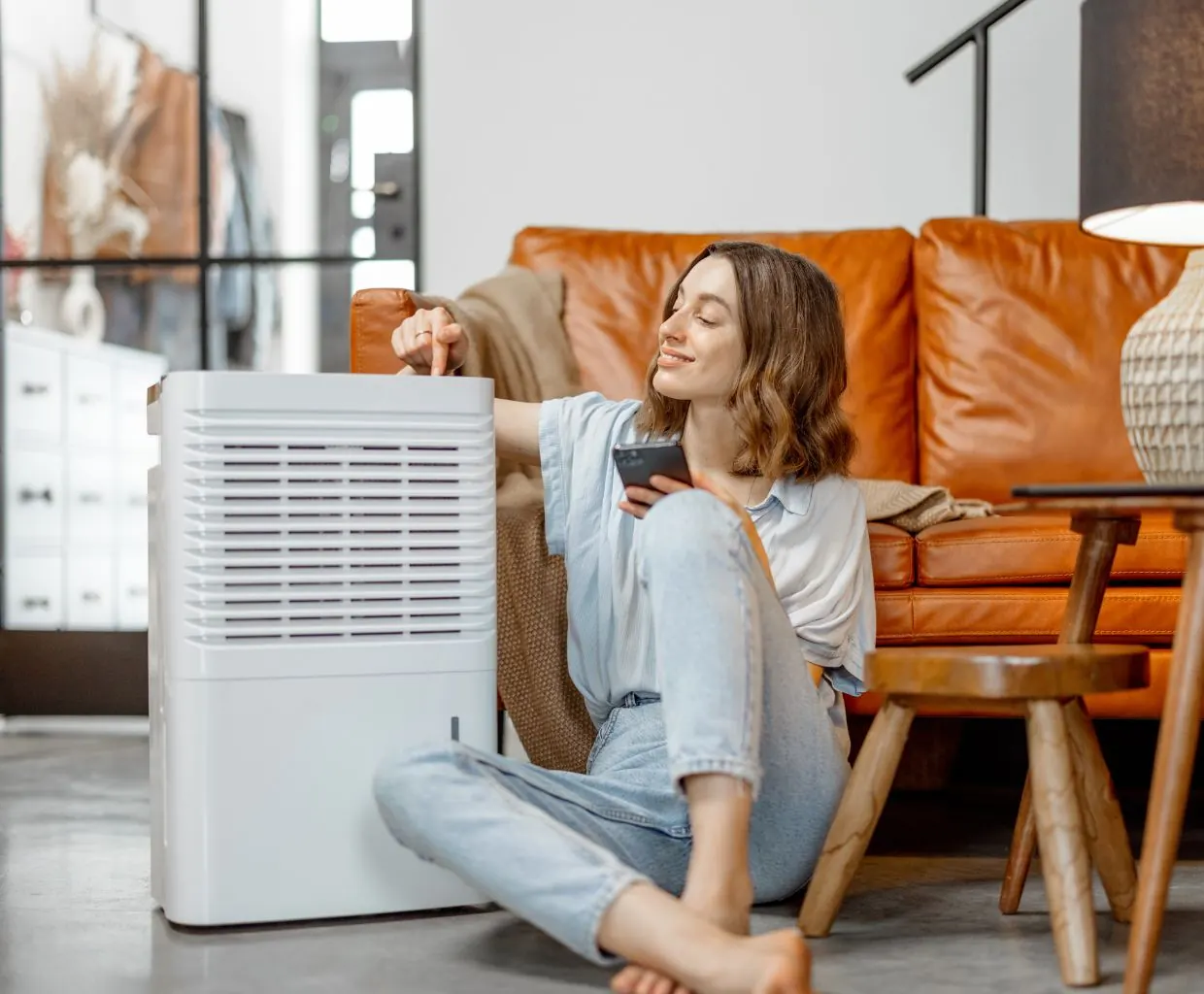
To reduce humidity in your house, measure it first, then remove moisture in this order: vent it outdoors with exhaust fans, run the air conditioner or a dehumidifier, and cut the everyday sources, such as laundry drying indoors. EPA’s target is below 60% relative humidity, ideally 30% to 50%. If you see condensation, musty smells or mold, treat it as a moisture problem to fix, not just a number to lower.
Step 1: Check your humidity with a hygrometer
You can’t fix what you haven’t measured. CPSC notes that a hygrometer from a hardware store will tell you your home’s relative humidity. NDSU Extension warns that mechanical (dial) hygrometers are frequently off by more than 20%, so we’d buy a digital one and check a few rooms, including the basement and bathrooms.
Check digital hygrometers on Amazon
What the reading means:
| Reading | What it means | Source |
|---|---|---|
| 30% to 50% | The ideal range | EPA, CPSC |
| 30% to 40% in winter | Recommended in cold weather; above about 40%, windows are more likely to sweat | NDSU Extension |
| Above 50% | A sign of excess moisture on Oregon State’s mold checklist | OSU Extension |
| 60% or higher | A moisture problem: condensation and mold growth become likely | EPA, CPSC |
Our guide to ideal indoor humidity explains why the targets differ by season.
Signs your house is too humid
- Condensation on windows, walls or cold-water pipes. EPA’s Mold Course says condensation forms when warm, humid air meets a cold surface and can be a sign of high humidity. The dew point calculator shows at what surface temperature that happens for your room’s temperature and humidity, and our explainer on condensation on windows inside covers the fixes for glass.
- A musty smell, damp spots or water stains.
- Mold on walls, window frames, closets or in the basement.
Step 2: Vent moisture outdoors with exhaust fans
EPA says the most effective approach to indoor pollution is usually to remove the source, then exhaust what’s left, including excess water vapor, to the outdoors. Oregon State University Extension’s checklist puts it practically: spot ventilation fans placed near the moisture source in the kitchen, bathroom and laundry room, vented to the outside, and left on until all the moisture is gone. It suggests timers or controls with built-in moisture sensors so the fan keeps running after you leave.
A fan that only blows into the attic or a wall cavity just moves the problem. Check that yours vents outdoors. In a bathroom without a working fan, an air purifier is no substitute, as our bathroom air purifier guide explains.
How much water are we talking about? A 1974 University of Minnesota Extension fact sheet estimated that a family of four breathes out 8 to 12 pounds of water a day, cooking for four on a gas stove adds about 5 pounds, and each shower about half a pound. The figures are old, but they show why kitchens and bathrooms need fans.
Step 3: Run the air conditioner
EPA recommends using air conditioners and/or dehumidifiers when needed to keep humidity down. Oregon State’s checklist adds: maintain the air conditioner’s filter, coils and lines. In the Ohio dust-mite study we cover below, most homes that stayed under 51% humidity through humid summers used air conditioning plus a high-efficiency dehumidifier.
Step 4: Use a dehumidifier where it stays damp
When fans and AC can’t keep up, especially in basements, a dehumidifier is the tool. We’d put the first one in the dampest room, usually the basement. ENERGY STAR’s advice:
- Size by pints per day. ENERGY STAR says capacity depends on the size of the space and how damp it is without dehumidification. Its chart starts at 20 to 30 pints a day for a slightly to moderately damp small-to-medium space (50% to 75% humidity, an intermittent musty smell) and rises for very damp or wet spaces. It says it’s better to oversize than undersize.
- Use the humidistat. ENERGY STAR says all certified dehumidifiers have a built-in humidistat for setting the target.
- Close the room. Keep doors and windows to the space closed while it runs.
- Give it space. Set it away from walls and furniture so air circulates freely.
- Plan the drainage. Some portable units can drain through a hose to a floor drain or sump pump instead of a bucket. Never route water near electrical circuits or devices.
ENERGY STAR says certified dehumidifiers are 20% more efficient than non-certified models. An air purifier won’t do this job: it filters particles and leaves the moisture in the air. Our air purifier vs dehumidifier comparison explains which one solves which problem.
Step 5: Dry laundry outside and vent the dryer
Oregon State’s checklist says to hang laundry outside to dry and to vent the clothes dryer to the outside. ENERGY STAR’s own sizing chart lists laundry drying as a “high-load” condition in the wettest category of space. If you must dry clothes indoors, we’d do it in a room with the exhaust fan or dehumidifier running and the door closed.
Step 6: Cut other indoor moisture sources
The same checklist lists several small sources that add up:
- Cover aquariums.
- Limit houseplants.
- Dry wet shoes, coats and umbrellas before putting them away.
- Store firewood outside.
- Empty the refrigerator drip pan and the dehumidifier tank regularly.
- Vent combustion heating appliances to the outside. EPA’s Mold Course also names dryers, combustion appliances such as stoves and steam radiators among the things that raise indoor humidity.
Step 7: Turn the humidifier down or off
EPA’s Mold Course lists humidifiers among the things that raise indoor humidity, and its humidifier guidance says not to humidify above 50%. If water condenses on windows, walls or pictures, EPA says to move the humidifier, lower its humidistat setting or use it less. In our view, a humidifier should simply be off in a damp house.
Step 8: Fix leaks and outside water
In our view, no fan or dehumidifier keeps up with a leak, so fix those first. Oregon State’s checklist covers the usual suspects: plumbing (including lines to the refrigerator, water heater and under sinks), roofs, windows, doors and foundation vents. Outside, keep gutters clear, point downspouts away from the house, make sure no water pools near the foundation and keep sprinklers off the walls. EPA says to dry water-damaged areas and items within 24 to 48 hours to prevent mold growth.
Step 9: Keep air moving and cold surfaces warmer
EPA’s advice for condensation on windows, walls or pipes is to dry the surface quickly and cut the moisture source, then lower humidity, increase ventilation, insulate cold surfaces such as cold-water pipes and raise the air temperature. Oregon State adds simple air-circulation habits: keep furniture away from exterior walls, open curtains and leave interior doors and heating and cooling vents open.
Step 10: Basements and crawlspaces
Basements are usually the dampest part of a house. EPA’s Indoor airPLUS program, which certifies new homes, requires basement and crawlspace dehumidifiers to be set to hold humidity at or below 60%. Oregon State recommends covering exposed soil in a crawlspace with a vapor barrier. If the basement is also living space, our basement air purifier guide covers what to run once it’s dry.
Why it matters: mold and dust mites
EPA says the key to mold control is moisture control. If you find mold, clean it up and fix the water problem, or it will likely come back. EPA says a patch under about 10 sq ft can usually be cleaned by the homeowner, and that killing mold isn’t enough, because dead mold can still cause allergic reactions. Air purifiers can remove airborne spores and musty odors but won’t stop mold from growing; our best air purifier for mold guide covers that follow-up step.
Dust mites depend on humidity too. In a 17-month Ohio study, homes kept below 51% humidity saw live mites fall from 401 to 8 per gram of dust. If you have allergies or asthma, talk to your doctor about which triggers matter most for you. For the bigger picture, see our guide on how to improve indoor air quality.
Tip: Don’t overshoot. Once you’re in the 30% to 50% range, keep the dehumidifier’s humidistat there. In winter, NDSU’s 30% to 40% range is low enough to keep most windows dry.
Frequently asked questions
What humidity level is too high in a house?
EPA recommends keeping indoor humidity below 60%, ideally between 30% and 50%. CPSC warns that above 60%, moisture may build up and condense on surfaces where bacteria and fungi can grow.
What is the fastest way to reduce humidity in a house?
Run exhaust fans that vent outdoors, turn on the air conditioner and run a dehumidifier with doors and windows to that room closed. Then remove the sources, such as indoor laundry drying or an unvented dryer.
Does running the air conditioner reduce humidity?
Yes. EPA recommends using air conditioners and/or dehumidifiers when needed to keep humidity down. In very damp spaces such as basements, a dehumidifier usually does the bulk of the work.
What size dehumidifier do I need?
ENERGY STAR sizes dehumidifiers in pints per day by room size and dampness. Its chart starts at 20 to 30 pints a day for a slightly damp small-to-medium space, and it says it's better to oversize than undersize.
Do houseplants increase humidity?
They add some moisture through watering and their leaves. Oregon State University Extension lists limiting houseplants and covering aquariums among its ways to cut indoor moisture.
Related guides
Guides
Air Purifier vs Dehumidifier: Particles vs Moisture, and Which One You Need
An air purifier filters particles; a dehumidifier pulls moisture out of the air. Here's which one helps with mold, allergies and damp basements, and when you need both.
6 min read
Guides
Condensation on Windows Inside: Why It Happens and How to Stop It
Water on the inside of your windows means the glass is colder than the room air's dew point. When it's normal, when humidity is too high and how to fix it.
7 min read
Guides
Dust Mites and Humidity: Why Keeping It Below 50% Matters
Dust mites live on moisture from the air. Keeping indoor humidity below 50% is the best-supported way to cut their numbers; here's how to get there.
6 min read

Guides
How to Improve Indoor Air Quality: 9 Steps in the Order That Works
Cut pollution at the source, bring in outdoor air, then filter what's left. Nine EPA-based steps, from humidity and mold to purifiers and radon.
7 min read