How to Check Humidity in Your House (and What the Number Means)
A hygrometer is the easiest way to check indoor humidity. Here is how to choose one, test its accuracy, place it and read the result.
By Clean Air Guides editorial teamUpdated 6 min read
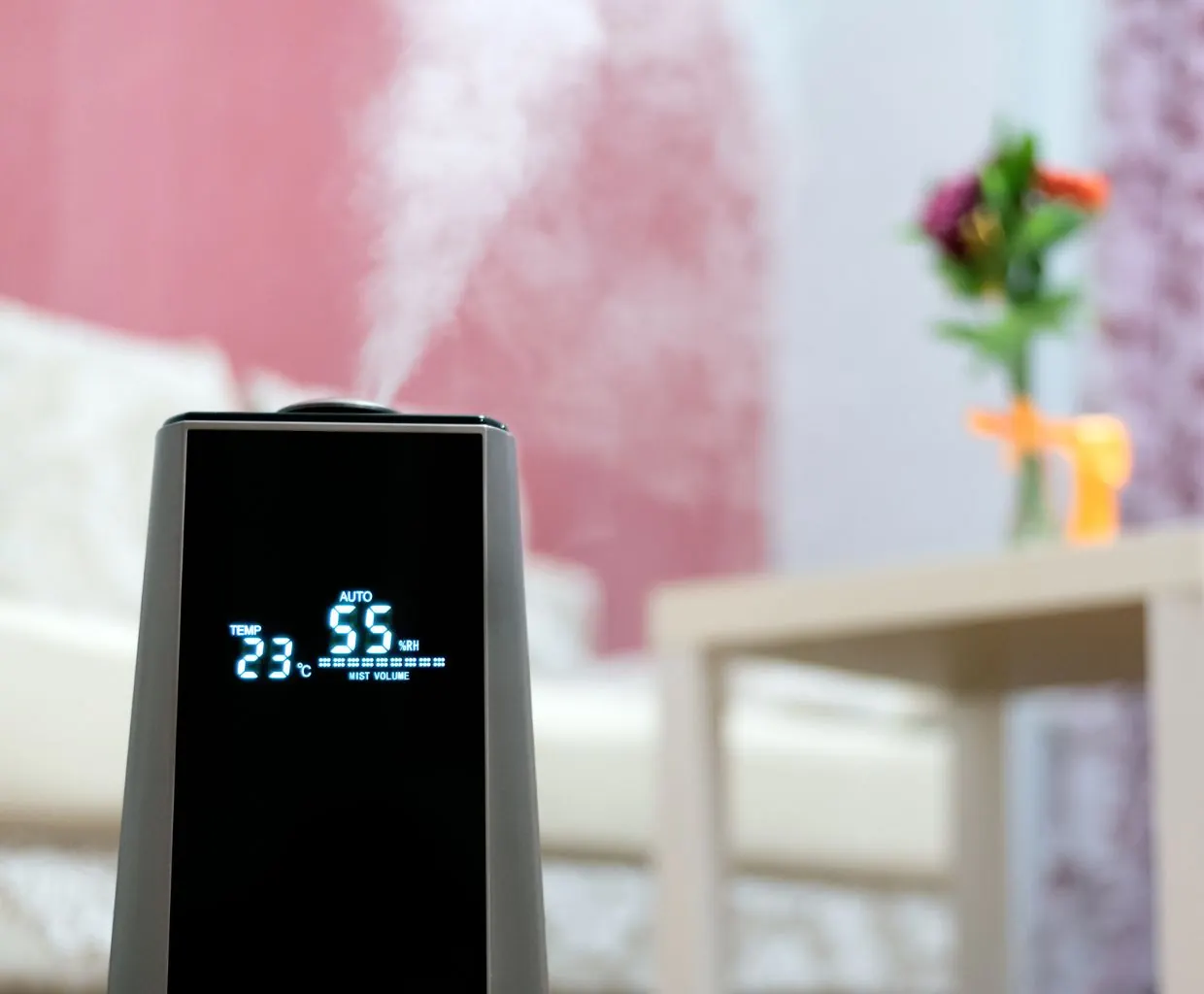
The easiest way to check the humidity in your house is with a hygrometer, a small gauge that shows relative humidity (RH) as a percentage. The EPA and CPSC both point to the hygrometers sold at hardware stores. A digital model is the better buy, because NDSU Extension says dial (mechanical) gauges are frequently off by more than 20 percent. Check its accuracy with a simple salt test, put it in the room you care about, and aim for 30% to 50%.
Your options for measuring indoor humidity
You have more than one way to get a reading, but they aren’t equally reliable:
| Method | What you get | Accuracy | Best use |
|---|---|---|---|
| Digital (electronic) hygrometer | RH number, often temperature too | Tends to be more accurate, but should still be calibrated (NDSU) | Everyday checks, room by room |
| Mechanical (dial) hygrometer | RH on a needle gauge | Frequently off by more than 20% (NDSU) | Only after a salt test |
| Humidifier’s built-in humidistat | RH right next to the unit | Can read wrong if mist reaches the sensor (Levoit) | Rough control, not a reference |
| Window check | Condensation or none | Shows when humidity is too high for the weather | A practical upper limit in winter |
In our view, a separate digital hygrometer is the one tool worth owning. It’s the only way to know whether a humidifier or dehumidifier is actually doing its job. If you don’t have one yet, look for a digital indoor hygrometer that also shows temperature, so you can use the calculators below.
How to check your hygrometer’s accuracy: the salt test
A hygrometer you can’t trust is worse than none, because it makes you over- or under-humidify with confidence. NDSU Extension describes a simple calibration check:
- Put 1/4 cup of table salt and 1/2 cup of water in a cup.
- Seal the cup and the hygrometer together in a plastic bag.
- Leave it at room temperature for about 12 hours.
- Read the hygrometer without opening the bag. It should show about 75%.
If it reads 70%, it’s reading about 5 points low, so add 5 to every reading you take. If your model has a calibration setting, adjust it instead.
Tip: Do the salt test when you first buy a hygrometer and again each fall before you start running a humidifier. A dial gauge that fails it by a wide margin is best replaced with a digital one.
Where to put a hygrometer
None of our sources gives an official placement rule, so this is our practical advice, based on how humidity behaves:
- In the room you’re managing. Humidity can differ from room to room, so check the bedroom if that’s where you run a humidifier.
- Away from the humidifier. A gauge in the mist reads high. Levoit’s Classic 300S manual says moisture on its own sensor can cause a wrong reading.
- Away from windows, heaters, vents and direct sun. Relative humidity depends on temperature, so a warm or cold spot gives a skewed number.
- At about the height where you sit or sleep, not on the floor or near the ceiling.
Give it time to settle after you move it, and watch the trend across a day rather than trusting one reading. Our guide on where to put a humidifier covers the other side of the setup.
What about the reading on your humidifier?
Many humidifiers have a built-in humidistat: a sensor that switches the mist off at a target. The EPA notes that some units have one. They’re useful, but the sensor sits inches from the mist, so it measures the air right next to the unit, not the room. Here’s what some manufacturers say about theirs:
- Levoit Classic 300S: if the display shows an incorrect humidity reading, the room may be larger than the unit’s effective range, or moisture has built up on the sensor. Levoit says to turn the unit off, let the sensor dry and point the nozzle away from it.
- Levoit LV600HH: in Auto mode it restarts misting when humidity drops 5% below the set level.
- Dreo HM755S and HM735S: Dreo claims “±5%” humidity control. That’s a maker claim about holding a target, not a measured sensor accuracy.
- Honeywell HEV685: a dial humidistat with a “humidity reached” light and no number on display at all.
In our view, a built-in humidistat is good for keeping the unit from running non-stop, but you should set it using numbers from a separate hygrometer across the room.
What the number means: target ranges
Once you have a reliable reading, compare it with what the official sources recommend:
| Situation | Target relative humidity | Source |
|---|---|---|
| Most homes, year-round | 30% to 50% | EPA, CPSC, Mayo Clinic |
| Running a humidifier | Don’t go above 50% | EPA humidifier fact sheet |
| Humidifier setting | 40% to 50% | MedlinePlus (NIH) |
| Winter | 30% to 40% | NDSU Extension |
| Summer | Below 65% for mold; below 50% for dust mites | NDSU Extension |
| Any season | Below 60% | EPA mold guide |
Cold weather lowers the ceiling. The University of Minnesota Extension says that, regardless of what a humidity gauge reads, window condensation must be your measure of a tolerable moisture level. Its 1974 fact sheet suggests just 25% to 30% indoors when it’s 0 °F outside, for homes with double windows. Our ideal indoor humidity guide has the full table. When the gauge and the windows disagree, we’d believe the windows.
Signs your humidity is off (no hygrometer needed)
Your house gives clues even before you buy a gauge.
Signs the air is too dry. NDSU Extension lists:
- Dry and cracking skin, and dry nasal passages (below about 30% RH)
- Static electricity
- Damage to furniture and musical instruments
Signs the air is too humid:
- Condensation on the inside of windows, walls or pictures. The EPA says to move the humidifier, lower its setting or use it less if you see it.
- A stuffy feel. Mayo Clinic says high humidity can make a home feel stuffy.
- Damp patches, mold or a musty smell. The CPSC warns that above 60%, moisture may condense on surfaces where bacteria and fungi can grow.
Note: If anyone in your home has asthma, allergies or other breathing problems, talk to your doctor about the humidity range that’s right for them.
Use the calculators to make sense of a reading
Relative humidity changes with temperature even when the amount of water in the air stays the same. That’s why a cool bedroom often reads higher than a warm living room. Air at 70 °F and 40% RH, cooled to 64 °F without adding or removing water, reads about 49%. You can try your own numbers in our relative humidity calculator, which also shows why heated winter air gets so dry.
The dew point is the more useful number for windows. Any surface colder than the room air’s dew point will collect water. At 70 °F and 40% RH, the dew point is about 44.6 °F, so glass colder than that will fog. Enter your hygrometer’s temperature and humidity in the dew point calculator to see your own limit, and read our guide to condensation on windows if you already have it.
What to do with the result
- Below 30%: a humidifier makes sense. Enter your reading and target in our humidifier size calculator to see how many gallons per day a humidifier has to add.
- 30% to 50%: you’re in the recommended range. We’d leave things alone and keep checking through the season.
- Above 50%: turn the humidifier down or off. If you don’t run one and still read high, see how to reduce humidity in the house. Higher humidity also favors dust mites; our guide to dust mites and humidity explains why.
Frequently asked questions
How can I check the humidity in my house without a hygrometer?
You can watch for signs. Condensation on the inside of windows points to humidity that's too high for the weather, while dry, cracking skin, static shocks and dry nasal passages point to air that's too dry. A hygrometer is the only way to get an actual number.
Are digital hygrometers accurate?
NDSU Extension says electronic meters tend to be more accurate than mechanical ones, but they should still be calibrated. Mechanical (dial) hygrometers are frequently off by more than 20 percent.
How do I calibrate a hygrometer?
NDSU Extension's salt test: seal the hygrometer in a plastic bag with a cup holding 1/2 cup of water and 1/4 cup of table salt, and leave it at room temperature for about 12 hours. It should read about 75%; the difference is your correction.
What humidity should my house be?
The EPA, CPSC and Mayo Clinic all give 30% to 50% relative humidity. NDSU Extension recommends 30% to 40% in winter, and the EPA says not to run a humidifier above 50%.
Is the humidity reading on my humidifier accurate?
Treat it as a rough guide. The sensor sits right next to the mist, and Levoit's Classic 300S manual says the reading can be wrong if moisture builds up on the sensor or the room is larger than the unit's range. Check it against a separate hygrometer across the room.
Where should I put a hygrometer?
In our view, put it in the room you want to measure, at about the height where you sit or sleep, away from the humidifier's mist, windows, heat sources and direct sun. Let it settle and watch the trend over a day.
Related guides
Humidifiers
Ideal Indoor Humidity: What Level to Aim For in Every Season
Aim for 30–50% relative humidity, and lower in a cold snap. What the EPA and others say, how to read a hygrometer and when to run a humidifier.
7 min read
Humidifiers
Should You Close the Door When Using a Humidifier?
Closing the door makes a humidifier work faster but raises the risk of overshooting and wet windows. When to close it, and safe settings for the night.
5 min read
Humidifiers
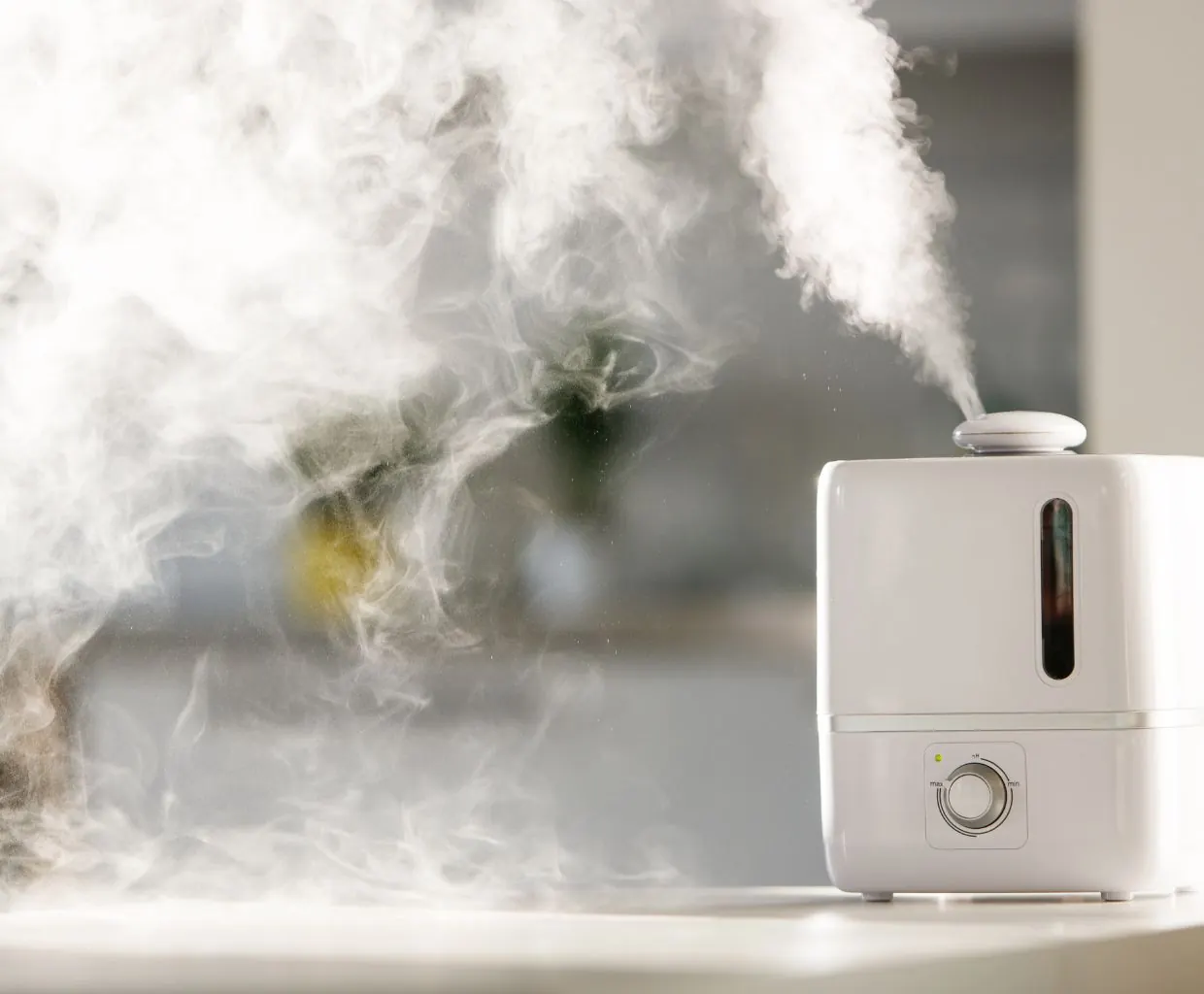
Why Is My Humidifier Making the Room Foggy? Causes and Fixes
A little mist above the nozzle is normal. A haze that fills the room means too much output, air near its dew point or tap-water minerals. Here's the fix.
6 min read
Humidifiers
Where to Put a Humidifier: Best Spot in the Bedroom and Every Room
Put it in the room you use most, on a firm, waterproof surface a few feet from the bed, walls and curtains, with the mist aimed into open air. Here's what manuals say.
7 min read