Where to Put an Air Purifier: Placement Rules From EPA and the Manuals
Put it in the room you use most, with 8 to 18 inches of clearance, away from heat, moisture and curtains, and size it for the space the door opens onto.
By Clean Air Guides editorial teamUpdated 6 min read
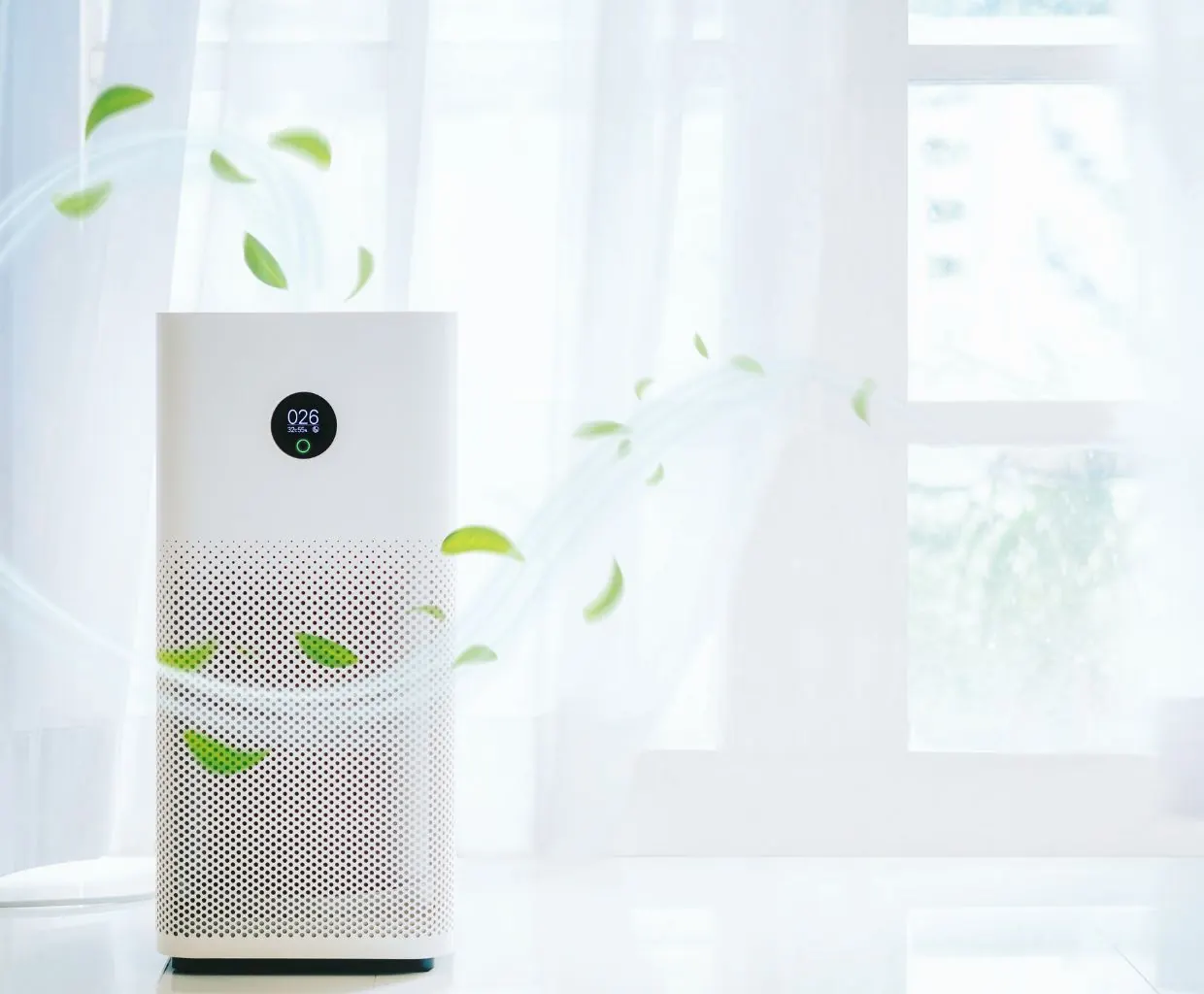
Put your air purifier in the room where you spend the most time, usually the bedroom, on the surface it was designed for, with clear space on every side. EPA’s advice is short: make sure airflow isn’t blocked and keep the unit away from curtains. The manuals we read add specifics, like 8 to 18 inches from walls and distance from heat, moisture and TVs. Then size it for the space it actually serves, which depends on whether the door is open.
The short version
- Room: the one you use most (EPA), usually the bedroom.
- Clearance: at least 8 to 18 inches from walls, depending on the model, and open space above top-venting units.
- Surface: hard, flat and level; floor units on the floor, tabletop units on a table.
- Keep away from: curtains, heaters, direct sun, water and steam, and electronics such as TVs.
- Doors: closed if you want the full rated performance in that room.
- Run time: as long as you can; longer and faster means more air filtered.
Pick the right room
EPA’s first placement tip is to consider putting the unit in the room or rooms where you spend the most time. For most people that’s the bedroom: you’re there for hours every night, with the door often closed. EPA’s asthma guidance points the same way for people with pet allergies, suggesting keeping pets out of the bedroom of the person with asthma and using a HEPA air cleaner. Our best air purifier for pets guide covers that setup, and the baby room guide covers nurseries.
If one room has an obvious source, such as a litter box, a smoker’s den or a musty basement, that room is the other candidate. AHAM’s room-size ratings assume the room’s air is well mixed, so in a real room we’d put the purifier between the source and where you sit rather than in a far corner.
Clearance: what the manuals say
Air purifiers pull air in through one side and push it out another, so they need breathing room. Here’s what two common manuals specify:
| Manual | From walls | Other distances |
|---|---|---|
| Coway Airmega AP-1512HH | At least 20 cm (about 8 in) from walls or adjacent objects | 30 to 60 cm (about 1 to 2 ft) of open space above; at least 2 m (about 6.5 ft) from electronics such as a TV |
| Winix 5520 | 12 to 18 in; not closer than 12 in | 12 to 18 in from TVs, radios and other electronics |
Winix gives a reason worth knowing: placing the unit closer than 12 inches to a wall may cause condensation on the wall and the surrounding area. Coway says to install the product so no obstacles block the circulation of air around it. EPA adds: keep air cleaners away from curtains and anything that might block airflow.
Your model may differ, so check your own manual. If it gives no number, we’d use 12 inches from walls as a reasonable default, based on the manuals above.
Floor or table?
EPA notes that many units are designed for the floor and some for tabletops; either way, the airflow shouldn’t be obstructed. Winix says to use only hard, flat surfaces, because flimsy or slanted ones can cause abnormal noise and vibration, and Coway says not to install its purifier on a sloped surface. We found no manufacturer or EPA guidance telling you to raise a floor unit, so leave a floor-standing tower on the floor. Winix’s hard-surface rule also means a deep-pile rug isn’t the right spot for its units.
What to keep it away from
The manuals agree on a short list:
- Heat sources. Coway and Winix both say not to place the unit near heating devices or elements, and Winix says to keep it away from hot objects such as a stove.
- Direct sunlight. Both manuals say to keep it out of direct sun; Coway also mentions strong artificial lighting.
- Water, steam and humidity. Coway says not to install it where it’s exposed to moisture or water. Winix says not to use it where it may get wet or come into contact with steam, and names the bathroom as an example. That also means not parking it in a humidifier’s mist.
- Electronics. Winix asks for 12 to 18 inches from TVs and radios because of interference; Coway asks for 2 m from a TV.
- Grease and fumes. Winix says to keep it away from products that make oily residue, such as a deep fryer.
- Drafts and outlets. Winix says not to face it into wind or drafts, and not to place it below an electrical outlet.
If the outflow feels drafty where you sit or sleep, EPA suggests redirecting it away from you. Bathrooms are a special case: some makers rule them out, so if you need one there, see our bathroom air purifier guide, which starts with the exhaust fan.
Doors open or closed?
A purifier’s rated room size assumes it’s cleaning one room. Open the door and it’s cleaning the room plus the hallway and everything connected to it. AHAM’s January 2026 white paper shows what that costs: a unit with a 100 cfm smoke CADR suits a 155 sq ft room, where it delivers about 4.8 air changes an hour and an 80% reduction. Put the same unit in a 750 sq ft space and it manages about 1 air change an hour and a 45% reduction.
So close the door when you want full performance, especially at night. During wildfire smoke, EPA’s cleaner-air-room advice is to close windows and doors, without doing anything that makes it hard to leave in an emergency, and to run the air cleaner continuously on its highest setting. Our best air purifier for smoke roundup has models sized for that.
If you like the door open, size the purifier for the open area instead. Our air purifier size calculator works out the CADR you need from the floor area and ceiling height.
One purifier per room or one for the whole home?
A portable purifier cleans the room it’s in. AHAM’s rule of thumb is a smoke CADR of at least two-thirds of the floor area with an 8 ft ceiling, so a 12 x 15 ft bedroom (180 sq ft) needs at least 120 cfm. A single big unit in the living room won’t do much for a bedroom down the hall with the door shut.
For several rooms you have two options: a purifier in each room you use most, or better filtration in your forced-air system. EPA recommends a furnace filter rated at least MERV 13, or the highest your system can handle, but it only cleans air while the system fan is running. Our whole house air purifier guide compares the two approaches. In our view, a well-sized bedroom purifier is the best first purchase for most homes.
How long and how fast to run it
EPA says higher fan speeds and longer run times both increase the amount of air filtered, and a unit set to a lower speed filters less. CADR is measured on the top speed, so a purifier sized well above the minimum can run on a quieter setting and still keep up. We’d leave it running whenever you’re in the room, on Auto if it has a sensor. To see what that costs, use the air purifier electricity cost calculator.
Tip: Moving the purifier won’t fix a clogged filter. EPA says a dirty, overloaded filter won’t work well, so replace filters on the maker’s schedule and clean any pre-filter as the manual says.
Safety around kids and pets
Coway’s manual says not to run the cord under carpeting or rugs, to keep it away from traffic areas where it could be tripped over, and not to let children hang on or climb the unit. Winix’s says children should be supervised so they don’t play with it and that nothing should be poked into the vents. We’d put it where it can’t easily be knocked over, with the cord running straight to a nearby outlet.
Frequently asked questions
Where is the best place to put an air purifier?
In the room where you spend the most time, usually the bedroom, with clear space around it. EPA says to make sure airflow isn't obstructed and to keep the unit away from curtains. Manuals we read ask for about 8 to 18 inches from walls.
How far from the wall should an air purifier be?
Follow your manual. Coway's AP-1512HH manual asks for at least 20 cm (about 8 inches) from walls and nearby objects, and Winix's 5520 manual asks for 12 to 18 inches, warning that closer than 12 inches can cause condensation on the wall.
Should an air purifier be on the floor or on a table?
Wherever its maker designed it to go. EPA notes that many units are made for the floor and some for tabletops. Winix says to use a hard, flat surface, and Coway says not to use a sloped one.
Should I close the door when running an air purifier?
Closing the door keeps the purifier working on the room it was sized for. With the door open, it's effectively cleaning a larger space, and AHAM's 2026 white paper shows how much that dilutes it: a unit sized for 155 sq ft gives only a 45% reduction in a 750 sq ft space.
Should I run my air purifier all the time?
Longer is better. EPA says longer run times and higher fan speeds increase the amount of air filtered. During wildfire smoke, EPA advises running it continuously on the highest setting.
Related guides
Air Purifiers
Best Air Purifiers for a Baby Room in 2026: Quiet, No Ozone, Nursery-Safe
Four quiet, CARB-certified air purifiers for a nursery, with published noise levels, ionizer status, sleep and light settings, and safe-placement tips.
7 min read
Air Purifiers
Best Bathroom Air Purifiers in 2026: Small Units, Humidity and Safety
Why the exhaust fan comes first, what Levoit's manuals say about humid rooms, and three small purifiers for bathrooms and en-suites.
7 min read
Air Purifiers
Best Air Purifiers for Smoke in 2026: Cigarette, Weed, Vape and Wildfire
Six purifiers for tobacco, cannabis, vape and wildfire smoke, chosen by verified smoke CADR and carbon, plus how to size one for a smoke event.
10 min read
Air Purifiers
Best HEPA Air Purifiers Under $100 in 2026: 4 Budget Picks With Real CADR
Four budget air purifiers at or under about $100 with verified CADR, honest filter labels, yearly filter and electricity costs, and what you give up.
8 min read