Best Furnace Filters of 2026: MERV 8 to 14 Picks for Every Home
Six furnace filters chosen on published ratings and airflow data, plus how to tell if MERV 13 is too much for your system and how to buy the right size.
By Clean Air Guides editorial teamUpdated 12 min read
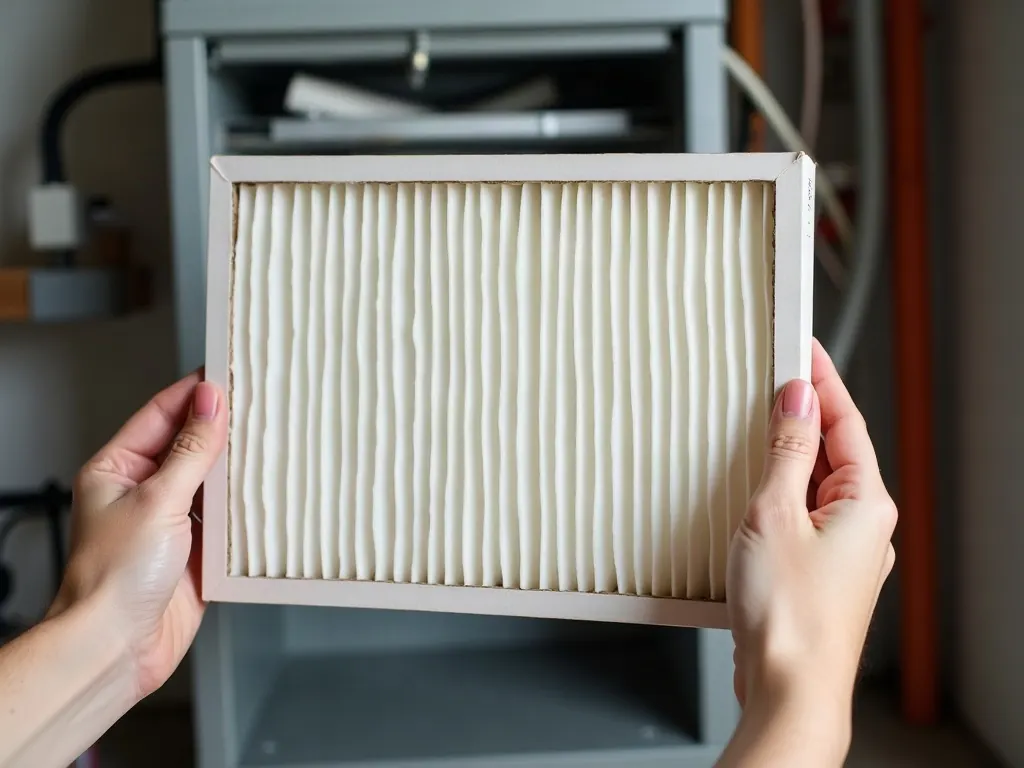
Our picks at a glance
- Top pickCheck price
Best overall
MERV 13 with published capture numbers, allergy certification and more than 30 sizes in a standard 1-inch slot.
- MERV 13
- 1-inch
- 62% at 0.3-1 µm (3M)
- Check price
Best budget
EPA's recommended rating for around $10 a filter in a six-pack on Filterbuy's own site.
- MERV 13
- 1-inch
- Change every 3 months
- Check price
Best for allergies and pets
Asthma & Allergy Friendly certified, and the only Filtrete line sold with a sensor that tracks filter life.
- MERV 12
- 1-inch
- 54% small particles (3M)
- Check price
Best for smoke
A MERV 14 filter in a 1-inch depth with a published 77% small-particle capture rate.
- MERV 14
- 1-inch
- 77% small particles (3M)
- Check price
Best 4-inch media filter
MERV 13 with a 12-month filter life and allergy certification, for a slot or cabinet built for deep filters.
- MERV 13
- 4-inch
- 12-month filter life
- Check price
Best for systems that struggle with airflow
About half the sample pressure drop of Filterbuy's MERV 13 in the same 1-inch size, at the cost of fine-particle capture.
- MERV 8
- 1-inch
- 0.10-0.12 in. w.g. (sample)
Prices change often; Amazon shows the current price. As an Amazon Associate, Clean Air Guides earns from qualifying purchases.
The best furnace filter for most homes is a MERV 13 pleated filter that fits your slot and that your blower can handle. Our pick is the Filtrete MPR 1900: 3M rates it MERV 13, publishes 62% capture of the smallest particles MERV measures, and sells it in more than 30 sizes. If you buy in bulk, the Filterbuy MERV 13 gets you the same rating for around $10 a filter on Filterbuy’s own site. If your system already struggles for airflow, step down to the Filterbuy MERV 8 and ask a technician about a deeper filter.
The same picks apply if you’re looking for the best air filter for your home or the best HVAC filter, since these all fit the same central-system slot. For what each rating captures by particle size, see our MERV rating chart.
How we chose
We don’t test filters ourselves. Every pick comes from maker spec pages, the Asthma & Allergy Friendly list, and EPA and Department of Energy guidance, checked in November 2026. Our research method explains the process. A filter had to be sold new in the US under a stated MERV, and we gave the most weight to:
- Published capture figures, especially for 0.3 to 1 µm, the range that matters for smoke.
- Airflow data. Few makers publish it, so we say where it’s missing.
- Certification, only where the certifier’s list or the maker’s page names the filter.
- Availability on Amazon in common sizes.
The best furnace filters compared
| Filter | Rating | Depth | Capture at 0.3-1 µm (maker) | Maker’s change interval |
|---|---|---|---|---|
| Filtrete MPR 1900 | MERV 13 | 1 in. | 62% | At least every 90 days |
| Filterbuy MERV 13 | MERV 13 | 1 in. | Not published | Every 3 months |
| Filtrete MPR 1500 | MERV 12 | 1 in. | 54% | At least every 90 days |
| Filtrete MPR 2500 | MERV 14 | 1 in. | 77% | At least every 90 days |
| Filtrete MPR 1900 4-Inch | MERV 13 | 4 in. | About 63%* | 12 months |
| Filterbuy MERV 8 | MERV 8 | 1 in. | Not published | 3 months (product page) |
*Our math: 3M says it captures 26% more than the 50% MERV 13 minimum.
The best furnace filters
Filtrete MPR 1900
Best for: most homes with a standard 1-inch slot.
3M lists this electrostatic pleated filter at MERV 13, and it publishes the numbers behind the label: 62%, 87% and 95% across the three MERV size groups. No other 1-inch brand we read gave that much data. It’s on the Asthma & Allergy Friendly list, and 3M offers 33 nominal sizes, from 10x10 to 25x25. National Allergy, a retailer, lists it from around $20 a filter, depending on size and pack. The package name is changing to “Allergens, Bacteria, Viruses & Air Pollutants,” so go by the MPR and MERV numbers.
3M also claims the best airflow of any retail 1-inch MERV 13 filter, citing California Energy Commission data from January 2025 and a 2026 Wirecutter review.
The trade-off: we couldn’t read either source ourselves, and 3M publishes no pressure drop number on its product page, so treat the airflow claim as the maker’s. We’d still start here, because it’s the best-documented 1-inch MERV 13 filter we found.
Our pick: Best overallFiltrete MPR 1900See today's price, ratings and delivery options
Check priceFilterbuy MERV 13
Best for: anyone buying in bulk who wants EPA’s recommended rating for less.
Filterbuy sells direct at around $10 a filter in a six-pack of 16x25x1. It describes electrostatically charged pleated media with wire backing, and says to change it every 3 months.
The trade-off: the savings depend on the pack, because one filter on its own costs around $36, and that’s Filterbuy’s own pricing, so compare it with Amazon’s price for your size. Filterbuy publishes no capture percentages on the page we read, and it isn’t on the allergy certification list. Its sample lab figures put a 1-inch MERV 13 at 0.22 to 0.25 in. w.g. at 1,000 cfm, depending on size. We explain below why that matters.
Our pick: Best budgetFilterbuy MERV 13See today's price, ratings and delivery options
Check priceFiltrete MPR 1500
Best for: households with allergies or pets.
The MPR 1500 is rated MERV 12, and 3M lists a 54% small-particle capture rate. That beats the 50% minimum for MERV 13 in that one range, though the filter is still rated a step lower overall. It’s listed as Asthma & Allergy Friendly.
The reason we’d choose it for pets is the Smart version, the only Filtrete line with one. A Bluetooth sensor tracks filter life from air pressure and system use, then alerts your phone. 3M says to change filters more often with pets, so that beats guessing. The sensor isn’t reusable, needs the Filtrete app and comes only in common 1-inch sizes.
The trade-off: if your system can take it, the MPR 1900 captures more and is certified too. Kleenex’s Elite Allergen MERV 13 is also on the certified list, but we couldn’t find it on Amazon. A filter can reduce airborne allergens, but it won’t treat symptoms, so talk to your doctor. Our best air purifier for allergies guide covers the bedroom.
Our pick: Best for allergies and petsFiltrete MPR 1500See today's price, ratings and delivery options
Check priceFiltrete MPR 2500
Best for: wildfire smoke or heavy outdoor pollution, if your system can take it.
EPA advises MERV 13 or higher for smoke, with the fan switched from Auto to On. The MPR 2500 goes a step past that minimum: MERV 14, with a 77% small-particle capture rate from 3M, against a 75% minimum for that rating. It’s also Asthma & Allergy Friendly certified.
The trade-off: it comes in only 10 sizes (12x24 to 20x30), and there’s no published pressure drop. 3M says its filters have similar airflow at every level, while Nordic Pure’s own MERV 14 page warns that systems should be rated for that filtration. We’d ask a technician first. During smoke, EPA says to check it often and change it when it gets dirty or starts to smell. For the room you sleep in, see the best air purifier for smoke.
Our pick: Best for smokeFiltrete MPR 2500See today's price, ratings and delivery options
Check priceFiltrete MPR 1900 4-Inch
Best for: homes that already have a 4-inch slot or media cabinet.
3M gives this MERV 13 filter a 12-month life and says it captures 26% more small particles than the MERV 13 minimum. It’s certified and comes in 16x20, 16x25, 20x20 and 20x25. Check the depth: the 16x25 actually measures 15.44 x 24.63 x 4.31 inches. 3M also sells a slim 4-inch version and one for cabinets that take AprilAire 213 and 413 filters.
The trade-off: no published pressure drop, and deep filters aren’t interchangeable, so match your cabinet’s size before ordering. If you have a Honeywell Home F100 or F200 cabinet, its FC200E is the better-documented choice: MERV 13, 63%, 90% and 97% capture, about 0.30 in. w.c. at 500 feet per minute, and a 6-to-12-month life. We found only third-party listings for it on Amazon, so your installer may be the safer source.
If your cabinet uses the AprilAire 413, AprilAire now calls it a sunsetting filter and points owners to the UK413 with new rails. Our best whole house air purifiers guide compares the cabinets themselves.
Our pick: Best 4-inch media filterFiltrete MPR 1900 4-inchSee today's price, ratings and delivery options
Check priceFilterbuy MERV 8
Best for: older or undersized systems where a technician or the manual says to keep resistance low.
Filterbuy’s sample lab data lists its 1-inch MERV 8 at 0.10 to 0.12 in. w.g. at 1,000 cfm, about half its MERV 13 in the same sizes (0.22 to 0.25). It’s around $7 a filter in a six-pack on Filterbuy’s site. The product page says to change it every 3 months, though Filterbuy’s pressure drop guide says 30 to 60 days for MERV 8, so we’d check it monthly and go by how it looks.
The trade-off: MERV 8 has no requirement in the 0.3 to 1 µm range, so don’t count on it for smoke. The figures are Filterbuy’s own samples, and it says values vary by maker. Even MERV 8 has a cost: in a Department of Energy study, new MERV 8 filters had 2.7 to 4.7 times the pressure drop of basic fiberglass and cut airflow about 7% on standard motors.
Our pick: Best for systems that struggle with airflowFilterbuy MERV 8See today's price, ratings and delivery options
Check priceFurnace filter buying guide
Which MERV for which household
EPA recommends at least MERV 13 or the highest your fan and filter slot can take. Within that advice, here’s how we’d match a filter to the household:
- Best furnace filter for dust: MERV 8 to 11 is reasonable if lint and visible dust are the main problem. If dust keeps coming back, why is my house so dusty covers the usual sources.
- Best furnace filters for allergies: MERV 12 or 13, ideally from the certified list.
- Best furnace filter for pets: the same, changed more often. Dander is a particle; odor is a gas. Nordic Pure sells 1-inch filters with added carbon, but EPA found thin carbon layers saturate quickly.
- Smoke: MERV 13 or higher if your system can take it.
Is MERV 13 too high for your home?
Usually not, but it can be. EPA says most systems can take MERV 13 provided the filter is replaced frequently. EPA’s technical summary adds that not all fans can handle high-efficiency filters, and that lost airflow can raise the risk of component failure and comfort problems.
Every system has a limited pressure budget. The Department of Energy says most homes run efficiently when the total drop across the whole system is no higher than 0.4 or 0.5 in. of water, so a 0.25 filter can use half of it. Resistance also rises as a filter loads. With standard PSC motors, airflow falls and air conditioner coils can freeze. ECM motors hold airflow better, but they use more energy doing it. That research dates from 2014, and EPA’s 2018 summary says lower-resistance filters are increasingly available, so treat it as a reason to check.
To find out where your system stands:
- Check the manual for your furnace or air handler. EPA’s technical summary says to look at the maker’s information.
- Ask an HVAC technician to measure airflow and pressure with the filter you want in place. EPA says that’s a job for a professional.
- Watch for trouble after a swap: weaker airflow at the vents, ice on the coil, or a filter that bows or gets pulled out of place. If you see any of these, change the filter, step down a rating and call a technician.
One caution: makers measure at different air speeds, and Resideo, which makes Honeywell Home filters, warns that this makes comparisons between brands difficult. Compare within one maker’s data.
1-inch vs 4-inch filters
Depth is the best way to get high MERV without the penalty. EPA says deeper pleated filters increase media area and limit resistance. Filterbuy’s samples show it: a 20x25 MERV 13 drops from 0.22 in. w.g. at 1 inch to 0.11 at 4 inches, at the same 1,000 cfm. You can’t just buy a thicker filter, though. The Department of Energy says a technician has to modify a system designed for 1-inch filters.
How to measure and buy the right size
Filter sizes are nominal, meaning rounded. Filterbuy and Nordic Pure both cut a 16x25x1 to 15.5 x 24.5 x 0.75 inches, while 3M lists 15.62 x 24.62 x 0.78 for its MPR 1500. Those differences matter most in a tight grille.
- If you have the old filter, copy the size off the frame. If the print is gone, Filterbuy says to measure and round each number up.
- If the slot is empty, Nordic Pure says to measure the inside and subtract 0.25 to 0.5 inch for clearance, then pick an actual size slightly smaller than the opening.
- For cabinets, buy by part number. AprilAire’s 413 is nominally 16 x 25 x 4 but actually 16.52 x 29.38 x 4 inches.
EPA says the filter should fit snugly, without bending or crushing, because air that leaks around it isn’t filtered. Point the arrow in the direction of airflow.
MPR and FPR vs MERV
MERV is the industry standard. MPR is 3M’s own scale, and its product pages give the matching MERV: MPR 700 is MERV 8, 1000 is 11, 1500 is 12, 1900 and 2200 are 13, and 2500 is 14. FPR is Home Depot’s scale, found on the Honeywell and HDX filters it sells. Its listings pair FPR 10 with MERV 13, but building scientist Allison Bailes notes that Home Depot explains the method only in broad strokes and that some listings have been inconsistent.
Sellers’ cross-references don’t agree either. Nordic Pure calls MERV 13 comparable to MPR 2200 to 2400; Filterbuy says MPR 1900 to 2800. We’d buy on the MERV number and skip any filter that won’t print one.
Washable and electrostatic filters
These aren’t the same thing. Every pick above is a disposable filter with charged media, which EPA says can reach a higher MERV without added resistance. EPA also notes that charged media sometimes lose fine-particle efficiency as they load, one more reason to change them on time.
Washable “permanent” filters are a different category. NAFA’s guide lists passive, self-charging permanent filters among typical MERV 1 to 4 types, and washable ones at MERV 5 to 8. RectorSeal’s product page for its washable Dust Fighter 95 lists no MERV. We’d want a published MERV before buying one for allergies or smoke.
When to replace, and whether subscriptions pay
EPA says makers typically recommend every 60 to 90 days, and sooner if a filter looks heavily soiled. 3M says more often with pets, smokers, renovation or a fan that runs constantly. Filterbuy suggests 60 days with pets or allergies and 30 days in smoke. ENERGY STAR says to inspect the filter monthly, because a dirty one can raise energy costs and damage equipment.
Subscriptions save a little: 5% at Filterbuy and 10% at Nordic Pure when we checked. In our view, the real value is that the filter shows up before you forget.
What a furnace filter can’t do
- It only cleans while the fan runs. EPA says systems usually run less than 25% of the time in heating and cooling seasons. Running the fan longer filters more air, but raises electricity costs and can reduce humidity control in summer.
- It doesn’t remove gases. EPA says home HVAC filters are usually designed for particles, so odors and fumes pass through.
- It doesn’t touch settled dust. 3M itself says heavy particles settle on furniture before reaching the filter, and that a filter won’t eliminate the need for dusting.
If one room is the problem, a portable unit may suit you better. EPA says two or more well-placed portable cleaners can be just as effective as running a central system continuously, and may cost less. Our guide to the best air purifier is the place to start.
Frequently asked questions
What is the best air filter for a home furnace?
For most homes, a MERV 13 pleated filter that fits your slot and that your blower can handle. EPA recommends at least MERV 13 or as high as your system can take. Our pick is the Filtrete MPR 1900, a 1-inch MERV 13 filter sold in more than 30 sizes.
Is MERV 13 too high for a home system?
Often not. EPA says most systems can take MERV 13 if the filter is replaced frequently. But it also warns that not all HVAC fans can handle high-efficiency filters, so check your manual and ask an HVAC technician if you're unsure or notice weaker airflow.
What is the best furnace filter for allergies?
No agency sets an allergy-specific MERV, so EPA's general MERV 13 advice applies. The Asthma & Allergy Friendly program lists Filtrete and Kleenex HVAC filters in its May 2026 guide. A furnace filter can reduce airborne allergens but doesn't treat allergies, so talk to your doctor about symptoms.
What is the best furnace filter for pets?
We'd pick a certified MERV 12 or 13 filter and change it more often, as 3M and Filterbuy both advise for homes with pets. A particle filter catches airborne dander but not pet odors, which are gases.
What is the best furnace filter for dust?
Any pleated filter from MERV 8 up helps with airborne dust, as long as it fits snugly. No furnace filter removes dust that has already settled. 3M says its filters capture some dust but won't eliminate the need for dusting.
Can I put a 4-inch filter in a 1-inch slot?
No. The Department of Energy says an HVAC technician has to modify a system designed for a 1-inch filter before it can take a larger or deeper one. Your slot sets the depth.
Related guides

Guides
MERV Rating Chart: What MERV 11, 13 and 16 Filters Actually Capture
A MERV rating chart built from ASHRAE 52.2 minimums, plus how MERV compares with HEPA and MPR, which rating suits smoke, allergies and pets, and when your HVAC can't take it.
7 min read

Guides
Why Is My House So Dusty? Causes and Fixes That Work
Most house dust blows in, gets tracked in or is shed indoors. Here is where yours likely comes from and the fixes in the order that pays off most.
8 min read
Guides
HEPA vs Carbon Filter: What Each One Removes (and Which You Need)
HEPA filters trap particles; activated carbon adsorbs gases and odors. Neither does the other's job. Here's what each removes and which you need.
6 min read
Guides
Do Air Purifiers Work? What They Remove, What They Can't and When They're Worth It
Yes, for particles in the air: smoke, pollen, pet dander and dust. Here's what EPA and AHAM say purifiers can and can't do, and how to size one so it works.
7 min read