Best Dehumidifier for Basement (2026): Picks for Cold, Damp and Crawlspace Conditions
Five basement dehumidifiers chosen for cool temperatures, pumps and drains, plus how to size, drain and set one so mold doesn't get a foothold.
By Clean Air Guides editorial teamUpdated 10 min read
Our picks at a glance
- Top pickCheck price
Best overall for basements
A built-in pump to lift water to a laundry sink, 41 °F operation and published noise figures.
- 49.95 pints/day (DOE)
- Built-in pump
- Down to 41 °F
- Check price
Best for cold basements and crawlspaces
Listed down to 33.8 °F with automatic defrost, in a low, drain-only body that fits a crawlspace.
- 36.33 pints/day (DOE)
- Down to 33.8 °F
- Gravity drain
- Check price
Best compact pump unit
A 50-pint class pump model about 15 inches on a side, with a 4.26-gallon bucket for when the pump isn't hooked up.
- 49.67 pints/day (DOE)
- Built-in pump
- 4.26-gal bucket
- Check price
Best for a whole finished basement
Ducted or stand-alone, ENERGY STAR Most Efficient, with a washable MERV 8 filter and a 5-year warranty.
- 65 pints/day (DOE, 73 °F)
- IEF 2.35
- 45 dBA ducted
- Check price
Best for a basement bedroom or office
A 20-pint unit with a 12-liter bucket, automatic defrost and a 45 dBA rating.
- 20.16 pints/day (DOE)
- 45 dBA
- 12 L bucket
Prices change often; Amazon shows the current price. As an Amazon Associate, Clean Air Guides earns from qualifying purchases.
The best dehumidifier for a basement is one that keeps working when the air is cool and gets the water out without you hauling a bucket upstairs. For most basements, our pick is the Frigidaire FHDP5033Y1: a 50-pint ENERGY STAR model with a built-in pump that’s rated down to 41 °F. If your basement or crawlspace stays colder than that, look at the AlorAir Sentinel HD55S, and for a finished basement you’d rather not clutter, a ducted AprilAire E080.
Why basements need a different dehumidifier
A dehumidifier that works fine in a bedroom can struggle downstairs. Basements bring four problems:
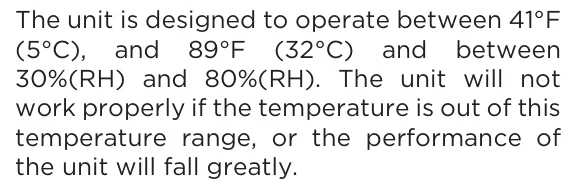
- Cool air. ENERGY STAR says frost can form on a dehumidifier’s coils below 65 °F, and the compressor may cycle without pulling much water. If the space is regularly cooler than that, it recommends a model rated for lower temperatures.
- Lots of water to move. A damp basement can fill a bucket in hours, so the drain plan matters as much as capacity.
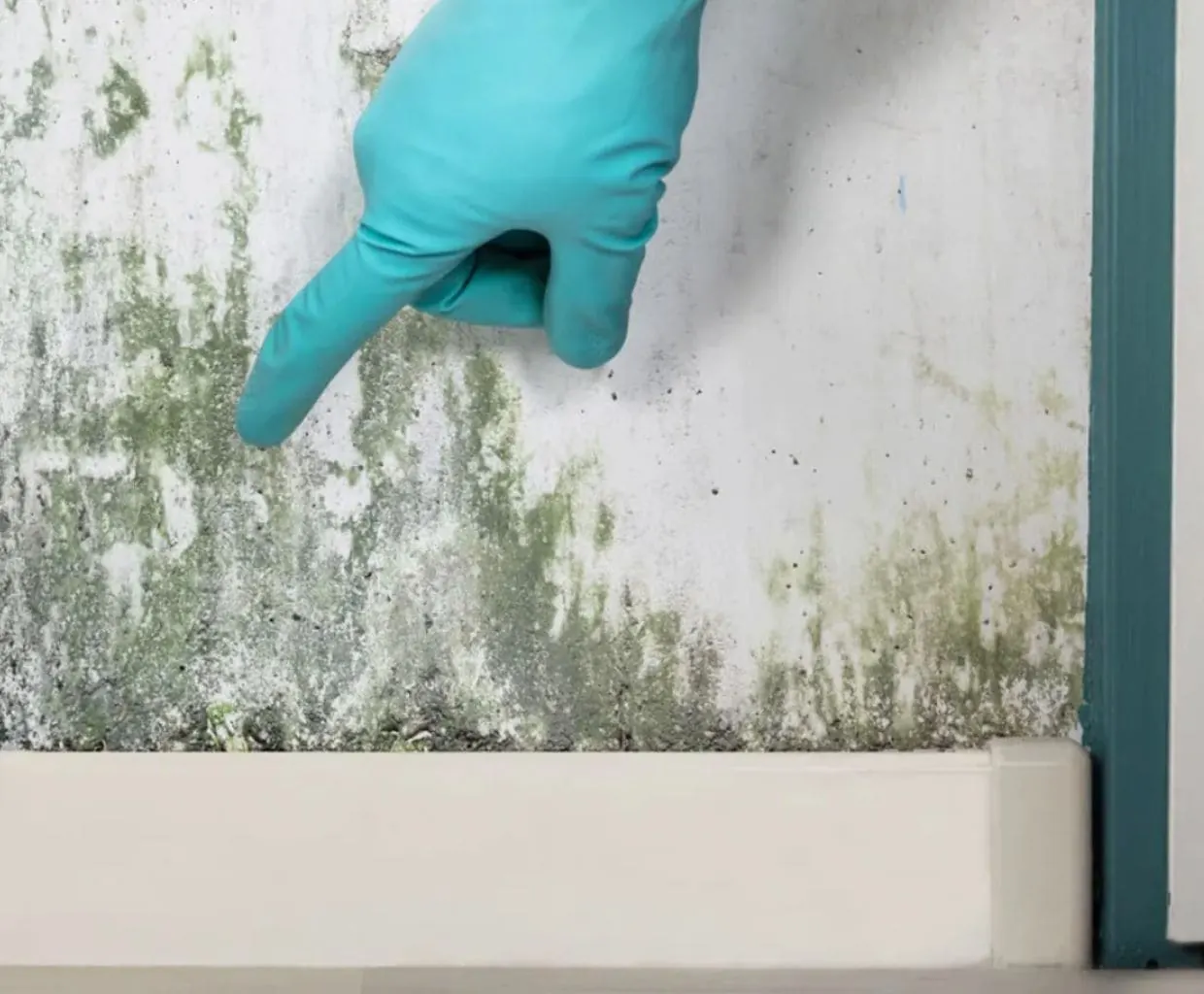
- Mold risk. EPA says the key to mold control is moisture control, and basements are usually the dampest part of a house.
- Cold surfaces. Foundation walls, slabs and cold-water pipes collect condensation whenever they’re colder than the air’s dew point. The dew point calculator shows how close you are.
One thing a dehumidifier has nothing to do with is radon. It’s a soil gas, not moisture, and we cover it separately below.
How we chose
We don’t test dehumidifiers. We built our shortlist from ENERGY STAR’s certified-product data, manufacturer spec sheets and product pages, carton labels and, where a manufacturer was silent, dealer listings (we say so when we use one). For a basement we weighted:
- Minimum operating temperature and automatic defrost.
- Drainage: a built-in pump, a gravity drain, or both.
- Capacity under the current DOE test, so the numbers compare fairly.
- ENERGY STAR certification, because a basement unit can run many hours a day.
- Recall history. We found none for these models on CPSC’s dehumidifier recall page.
Everything here is sold new as of October 2026.
Basement dehumidifiers compared
| Model | Capacity (DOE test) | Lowest rated temp | Drainage | Best spot |
|---|---|---|---|---|
| Frigidaire FHDP5033Y1 | 49.95 pints/day | 41 °F | Pump, hose or 1.9-gal bucket | Unfinished or finished basement |
| AlorAir Sentinel HD55S | 36.33 pints/day | 33.8 °F (dealer) | Gravity drain only | Cold basement, crawlspace |
| Midea Cube 50 Pint with Pump | 49.67 pints/day | Not published | Pump, hose or 4.26-gal bucket | Basement with no low drain |
| AprilAire E080 | 65 pints/day (73 °F test) | 50 °F inlet air | Drain or optional pump | Whole finished basement |
| Midea Cube 20 Pint | 20.16 pints/day | 41 °F (retailers) | Hose or 12 L bucket | Basement bedroom or office |
The best dehumidifiers for basements
Frigidaire FHDP5033Y1
Best for: most basements, especially when the nearest drain is a laundry sink or a window.
Its built-in pump is the reason it tops this list. Frigidaire says it pushes water upward into a sink or out a window, which solves the most common basement headache: a floor drain that’s in the wrong place or doesn’t exist. You can also use plain continuous drainage or the 1.9-gallon bucket. Frigidaire says it’s designed to operate down to 41 °F.
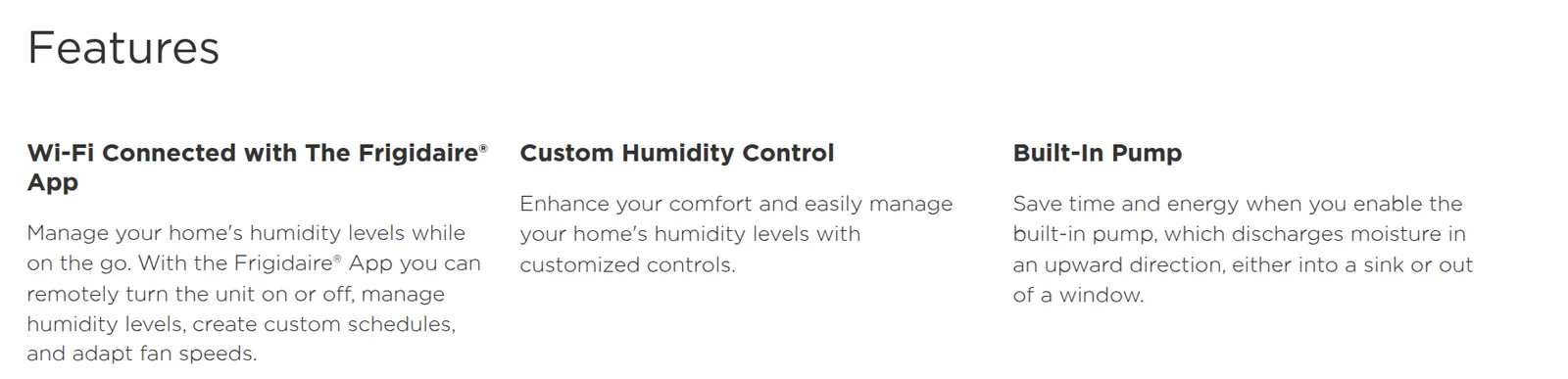
ENERGY STAR lists 49.95 pints a day under the DOE test and an IEF of 2.01, with an estimated 520 kWh a year (about $95 at the US average of 18.31 cents per kWh). Frigidaire rates it at 49 dBA on low and 51.5 dBA on high and includes Wi-Fi through its app, so you can control it from upstairs.
The trade-off: Frigidaire doesn’t publish how high the pump lifts, so measure the rise to your sink and confirm with Frigidaire before relying on it. The listed warranty is 1 year of labor. If you have a floor drain right there, the non-pump FHDD5033Y1 is the same machine otherwise.
Our pick: Best overall for basementsFrigidaire FHDP5033Y1See today's price, ratings and delivery options
Check priceAlorAir Sentinel HD55S
Best for: unheated basements and encapsulated crawlspaces that stay cool for much of the year.
It’s a low, rectangular unit, about 19 x 12 x 13 inches, sold for crawlspaces and basements. A dealer listing gives an operating range of 33.8 to 104 °F with automatic defrost, the lowest rating we found. ENERGY STAR lists 36.33 pints a day under the DOE test and an IEF of 2.08. AlorAir advertises “55 pints” at the older 80 °F AHAM condition and 120 pints at saturation; neither number compares with DOE ratings. AlorAir sizes it for up to 1,300 sq ft, and its site advertises a 6-year limited warranty, with the first 2 years full coverage.
The trade-off: there’s no bucket. Water leaves through a gravity drain, so you need a floor drain or sump below it, or a separate condensate pump. The temperature range and the under-52 dBA noise figure come from a dealer, not AlorAir’s own spec page. We’d still pick it for any space that regularly sits in the 40s °F.
Our pick: Best for cold basements and crawlspacesAlorAir Sentinel HD55SSee today's price, ratings and delivery options
Check priceMidea Cube 50 Pint with Pump
Best for: a basement with no low drain where you also want a big bucket as a fallback.
ENERGY STAR lists this Cube (MAD50PS1QWT-A) at 49.67 pints a day and an IEF of 2.01, with an estimated 515 kWh a year. It measures about 14.8 x 14.5 x 14.6 inches, small for a 50-pint class machine. Midea’s carton label lists a built-in pump, a 4.26-gallon bucket with preset fill levels of 1 to 4 gallons, an adjustable humidistat, continuous run, auto shut-off, smartphone and voice-assistant control, and a 1-year limited warranty. Midea markets it for spaces up to 4,500 sq ft that are moderately damp.
The trade-off: Midea doesn’t publish a minimum operating temperature, noise rating or pump lift height for the US model on the pages we read, so it’s a weaker choice than the Frigidaire for a cold basement. The ENERGY STAR record also lists it as not connected-capable, despite Midea’s app claims.
Our pick: Best compact pump unitMidea Cube 50 Pint with PumpSee today's price, ratings and delivery options
Check priceAprilAire E080
Best for: a finished basement, or a basement that’s part of a whole-house humidity problem.
Instead of a box sitting in the room, the E080 can be ducted to dedicated grilles or tied into the home’s ductwork, or set up on its own over a drain. AprilAire’s spec sheet says it suits basements and crawl spaces and can be programmed to circulate crawlspace air to even out humidity and temperature. ENERGY STAR lists 65 pints a day (whole-home units are rated at 73 °F) and an IEF of 2.35, and it meets ENERGY STAR’s Most Efficient criteria. The spec sheet lists 45 dBA ducted, a washable MERV 8 filter, a threaded drain, an optional condensate pump with 22 ft of lift and a 5-year warranty.
The trade-off: the spec sheet calls for inlet air of at least 50 °F to dehumidify, so it’s not the tool for a cold crawlspace. AprilAire sells it through HVAC professionals, and ENERGY STAR says whole-home drains should be routed by a pro. In our view it’s worth the extra cost and planning only when you want the whole basement, or house, under control.
Our pick: Best for a whole finished basementAprilAire E080See today's price, ratings and delivery options
Check priceMidea Cube 20 Pint
Best for: a basement bedroom, office or den that’s already fairly dry but drifts above 50%.
ENERGY STAR lists 20.16 pints a day and an IEF of 1.70, with an estimated 249 kWh a year (about $46 at average rates). Midea lists a 12-liter bucket, 45 dBA, automatic defrost, a washable filter with a clean-filter light, Wi-Fi and a hose for continuous drainage. Home Depot and Sylvane list 41 °F as its lowest operating temperature; Midea’s own pages don’t say.
The trade-off: 20 pints is the bottom of ENERGY STAR’s range for even a slightly damp space, so it’s for one finished room with the door closed, not an open, musty basement. There’s no pump.
Our pick: Best for a basement bedroom or officeMidea Cube 20 PintSee today's price, ratings and delivery options
Check priceSizing a basement dehumidifier
ENERGY STAR’s chart is based on floor area and how damp the space is without a dehumidifier:
- Slightly to moderately damp (50% to 75% humidity, a musty smell now and then): 20 to 30 pints a day under 2,000 sq ft, 30+ above.
- Very damp (75% to 90%, damp spots on walls or floor): 25 to 40, or 40+.
- Wet (90% to 100%, sweating walls, seepage): 30 to 50, or 50+.
ENERGY STAR says it’s better to oversize than undersize. Keep in mind that today’s ratings use a 65 °F test, so they’re lower than pre-2020 numbers: ENERGY STAR maps an old 50-pint rating to about 30 pints and an old 70-pint rating to 40 to 45. So if an old 50-pint unit kept your basement dry, a new 30-pint model may do the same job, as ENERGY STAR points out. Our dehumidifier size calculator applies the chart and converts old ratings, and our main guide to the best dehumidifier for every room explains the rating change in more detail.
Plan the drain before you buy
Drainage decides which model you need:
- Floor drain or sump lower than the unit: any model with a gravity hose works, including drain-only units like the AlorAir.
- Drain is higher, or it’s a laundry sink or window: you need a built-in pump (Frigidaire FHDP5033Y1, Midea Cube with Pump) or an add-on condensate pump.
- No drain at all: a bucket model, emptied often. That’s realistic only in a slightly damp space.
ENERGY STAR advises keeping drain hoses away from electrical cords and connections. We’d also raise the unit off the floor if your basement takes on water now and then.
Set it up so it actually dries the basement
- Target below 60%. EPA recommends indoor humidity below 60%, ideally 30% to 50%, and its Indoor airPLUS program requires basement and crawlspace dehumidifiers to be set at or below 60%. Our guide to ideal indoor humidity covers seasonal targets.
- Close it off. ENERGY STAR says to close doors and windows to the space while the unit runs.
- Give it room away from walls and boxes if it doesn’t discharge air from the top.
- Watch the temperature. If the unit frosts up in a cool basement, ENERGY STAR suggests switching it off to defrost; a model rated for lower temperatures avoids the problem.
- Fix the sources. Gutters, downspouts, leaks and an unvented dryer can outpace any dehumidifier. Our guide on how to reduce humidity in your house covers those steps.
Mold: what a dehumidifier can and can’t do
Keeping the air dry helps stop mold from starting, but it won’t remove mold that’s already there. EPA’s advice is to clean up the mold and fix the water problem, or it will likely come back, and to dry water-damaged areas within 24 to 48 hours. A patch under about 10 sq ft can usually be cleaned by the homeowner; larger areas need more involved remediation. EPA also says some air cleaners can remove airborne spores and musty odors but won’t stop mold growth. For that follow-up step, see our picks for the best air purifier for mold and the best basement air purifier. If anyone in the house has asthma or mold allergies, talk to your doctor.
Radon is a separate problem
A dry basement can still have high radon. Radon is a soil gas, and neither a dehumidifier nor an air purifier lowers it; EPA doesn’t recommend air cleaning for radon. EPA estimates radon causes about 21,000 lung cancer deaths a year in the US. Test your basement, and fix the home if the result is 4 pCi/L or more. EPA says the most effective fix is active soil depressurization, which vents air from under the slab to the outdoors.
Frequently asked questions
What size dehumidifier do I need for a basement?
Go by dampness first. ENERGY STAR recommends 20 to 30 pints a day for a slightly to moderately damp space under 2,000 sq ft, 25 to 40 for a very damp one and 30 to 50 if there's seepage. A basement with a musty smell that comes and goes is in the 20-to-30 range; we'd go bigger if you see damp spots.
Will a dehumidifier work in a cold basement?
Below 65 °F, ENERGY STAR says frost can form on the coils and the compressor may cycle without removing much moisture. Look for a model rated for lower temperatures with automatic defrost; Frigidaire lists 41 °F for its models, and a dealer lists the AlorAir HD55S down to 33.8 °F.
Where should a basement dehumidifier drain?
A gravity hose can run to a floor drain or sump. If those are higher than the unit's outlet, or you want to use a laundry sink or a window, you need a built-in or add-on pump. Keep hoses away from electrical cords.
What humidity should I keep my basement at?
EPA recommends below 60%, ideally 30% to 50%. EPA's Indoor airPLUS program for new homes requires basement and crawlspace dehumidifiers to be set at or below 60%.
Will a dehumidifier get rid of mold in my basement?
No. It helps stop new growth by keeping the air drier, but existing mold has to be cleaned up and the water problem fixed. EPA says areas under about 10 sq ft can usually be cleaned by a homeowner.
Does a dehumidifier reduce radon?
No. Radon is a soil gas and has nothing to do with humidity. EPA recommends testing and fixing the home if radon is 4 pCi/L or more, usually with active soil depressurization.
Related guides

Humidifiers
Best Dehumidifiers of 2026: Picks for Every Room, Basement and Whole Home
Six research-based dehumidifier picks, from a 22-pint bedroom unit to a ducted whole-home system, plus how the 2019 pint-rating change affects what you buy.
12 min read
Humidifiers
Best Whole House Humidifiers in 2026: Bypass, Fan-Powered and Steam Compared
Four furnace-mounted humidifiers from AprilAire and Honeywell Home, compared by gallons per day, sizing, installation and yearly upkeep.
11 min read
Humidifiers
Best Humidifiers for Large Rooms in 2026: Output, Wicks and Whole-House Options
Six humidifiers for rooms over 500 sq ft, picked from maker specs and manuals, plus when a whole-house unit on your furnace makes more sense.
13 min read
Humidifiers
Levoit Superior 6000S Review: Output, Wicks, Auto Mode and How It Compares
A research-based look at the Levoit Superior 6000S evaporative humidifier: 1,500 mL/h, a 6-gallon tank, the 3,000 sq ft claim, wicks, Auto modes and rivals.
10 min read