MERV Rating Chart: What MERV 11, 13 and 16 Filters Actually Capture
A MERV rating chart built from ASHRAE 52.2 minimums, plus how MERV compares with HEPA and MPR, which rating suits smoke, allergies and pets, and when your HVAC can't take it.
By Clean Air Guides editorial teamUpdated 7 min read
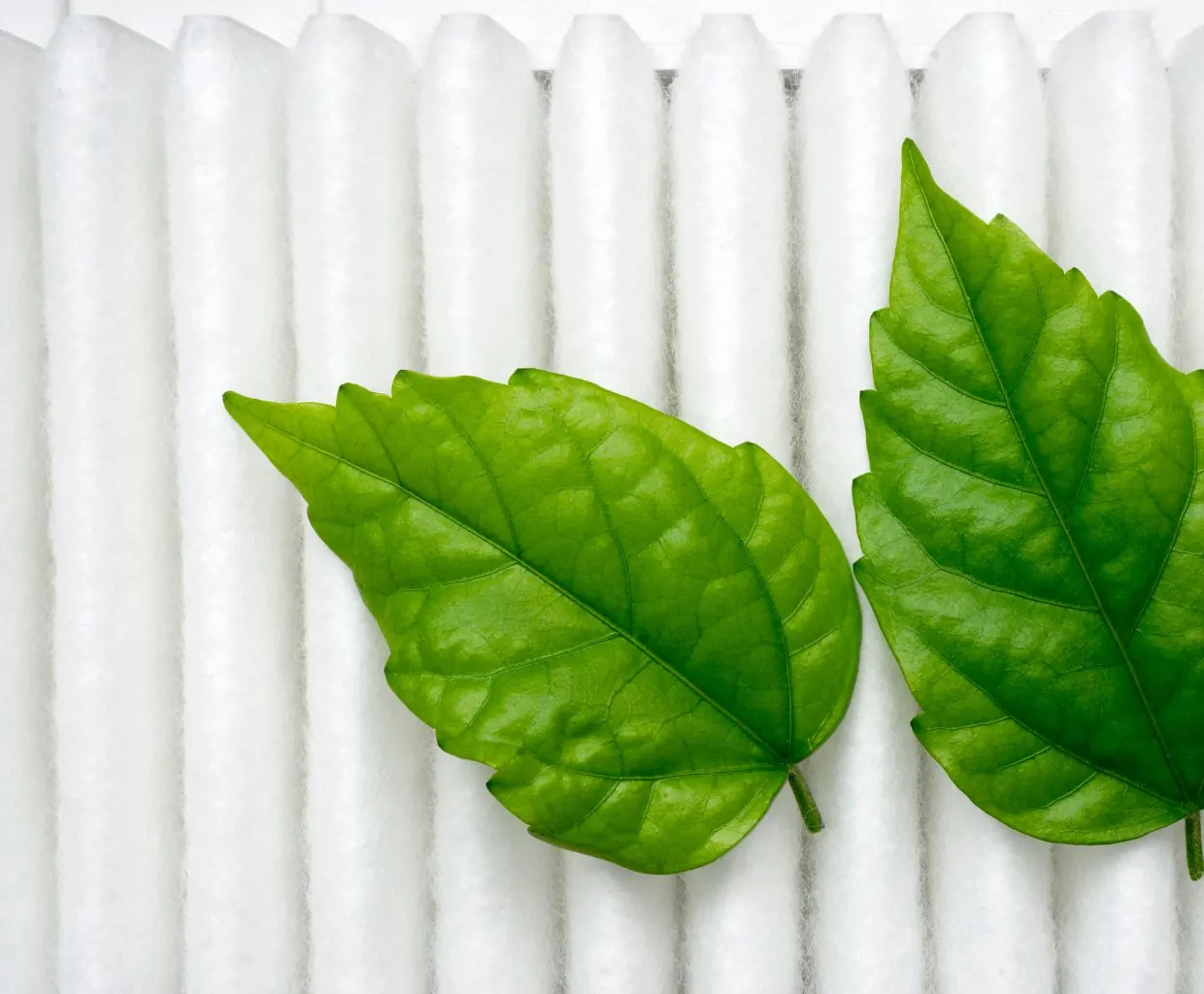
A MERV rating tells you how well an HVAC or furnace filter captures particles, on a scale from 1 to 16. Higher numbers catch more of the smallest particles, the ones in smoke. Only MERV 11 and up have any requirement for the 0.3 to 1 µm range, and EPA recommends MERV 13 or the highest rating your system can handle. The chart below shows the minimum each rating must capture, followed by what that means for smoke, allergies, pets and your blower.
What MERV means
MERV stands for Minimum Efficiency Reporting Value. It comes from ASHRAE Standard 52.2, which grades a filter on its minimum average removal efficiency in three particle size groups:
- E1: 0.3 to 1.0 µm, the fine particles found in smoke and combustion.
- E2: 1.0 to 3.0 µm, the middle range.
- E3: 3.0 to 10.0 µm, larger particles. For comparison, the pollen AHAM uses in its CADR test measures 5 to 11 µm.
The key word is minimum. A filter earns its MERV number by meeting the lowest efficiency the standard allows in each group, so a real filter can do better than the chart.
MERV rating chart (MERV 11 to 16)
These are the minimum capture rates in ANSI/ASHRAE 52.2-2025, as published in the National Air Filtration Association’s user guide:
| MERV | E1: 0.3 to 1 µm | E2: 1 to 3 µm | E3: 3 to 10 µm |
|---|---|---|---|
| 11 | 20% | 65% | 85% |
| 12 | 35% | 80% | 90% |
| 13 | 50% | 85% | 90% |
| 14 | 75% | 90% | 95% |
| 15 | 85% | 90% | 95% |
| 16 | 95% | 95% | 95% |
MERV 1 to 10 have no requirement at all in the smallest E1 range; they’re graded on larger particles only. We’ve left their exact thresholds out of this chart because we only publish numbers we’ve checked against the source, and our research covers MERV 11 to 16.
Two things stand out. The jump from MERV 11 to MERV 13 more than doubles the required fine-particle capture, from 20% to 50%. That matches EPA’s own summary that MERV 13 and above must remove at least 50% of the smallest particles tested. And MERV 16 is the only rating that requires 95% across all three groups.
What real MERV 13 filters publish
Because the chart lists minimums, it’s worth checking what a manufacturer reports for its own filter. Two examples from our research:
| Filter | Rating | 0.3 to 1 µm | 1 to 3 µm | 3 to 10 µm |
|---|---|---|---|---|
| Honeywell Home FC200E (4-inch) | MERV 13 | 63% | 90% | 97% |
| Filtrete MPR 1900 (1-inch) | MERV 13 (3M chart) | 62% | 87% | 95% |
Both clear the MERV 13 minimum in every group. In our view, a filter maker that publishes its E1, E2 and E3 numbers is easier to trust than one that prints only a brand score.
MERV vs HEPA vs MPR
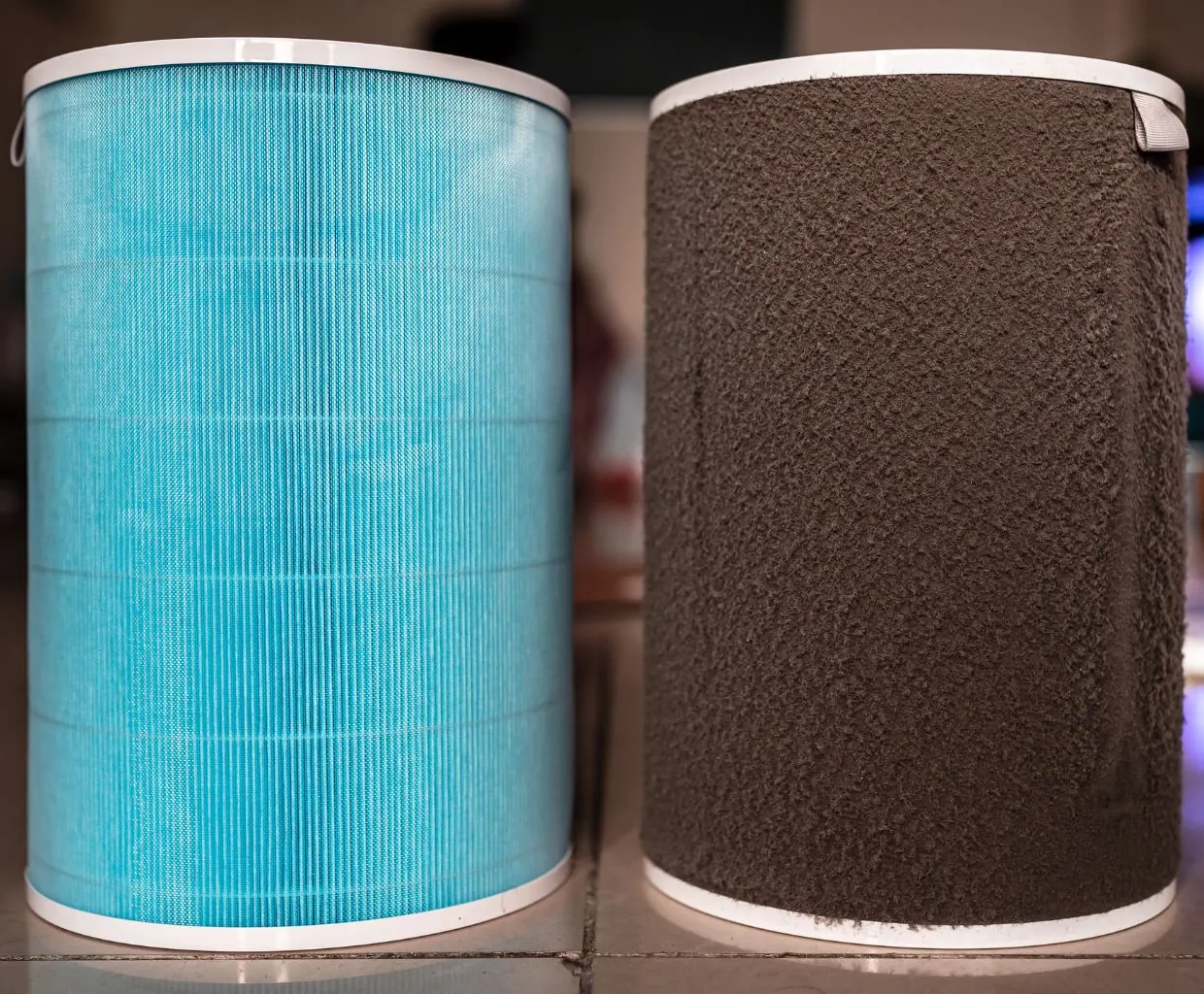
MERV vs HEPA. HEPA isn’t on the MERV scale. The US Department of Energy defines a HEPA filter as a throwaway, extended-medium, dry-type filter with a minimum efficiency of 99.97% against 0.3 µm particles. EPA notes there’s no widely accepted HEPA definition for consumer products, but says HEPA filters in home air purifiers are generally comparable to MERV 16 and usually remove 99% or more of the particle sizes tested. So a MERV 13 furnace filter is a big step up from a basic filter, but it isn’t HEPA. Our guide to HEPA vs carbon filters explains what HEPA does and doesn’t catch.
MERV vs MPR. MPR is 3M’s own Filtrete scale, not an ASHRAE rating. 3M publishes a conversion chart:
| Filtrete MPR | MERV (3M chart) |
|---|---|
| 1500 | 12 |
| 1900 | 13 |
| 2200 | 13 |
So if you want MERV 13 in a Filtrete filter, you need MPR 1900 or 2200, not 1500.
Other brand scores. Some store brands use their own scales, such as FPR. We don’t have a verified conversion from those to MERV, so we’d look for the MERV number on the package or the maker’s spec sheet and skip any filter that doesn’t list one.
Which MERV rating for smoke, allergies and pets
Wildfire smoke. EPA advises HVAC filters rated MERV 13 or higher if the system can take them, with the system fan running rather than on Auto. AHAM’s smoke test particles measure about 0.1 to 1 µm, which overlaps the E1 range, so the jump to MERV 13 matters here. A furnace filter only cleans air while the fan runs, so EPA also recommends a portable air cleaner for the room you use most. Our best air purifier for smoke picks are sized for that job.
Allergies. No agency sets an allergy-specific MERV, so EPA’s general advice applies: MERV 13 or the highest your system can handle. Pollen is a large particle, and every rating from MERV 11 up must catch at least 85% in the 3 to 10 µm range. The bigger limit is that an HVAC filter only works while air is moving through it. For the bedroom, we’d add a HEPA purifier; see our best air purifier for allergies guide, and talk to your doctor about symptoms.
Pets. The same logic applies to pet dander: we’d aim for MERV 13 if the system allows it, then add a portable unit where the pet sleeps. A particle filter won’t touch pet odors; EPA says gases and odors need activated carbon or another gas filter. Our best air purifier for pets guide covers units with both HEPA and carbon.
Dust. A furnace filter catches airborne dust as the house air cycles through it, but not dust that has already settled. If dust keeps coming back, why is my house so dusty walks through the usual sources, including leaky return ducts.
Airflow: why your system sets the limit
Higher MERV means denser media, and denser media can mean more resistance to airflow. EPA’s technical summary warns that high-efficiency filters can reduce airflow in systems not designed for them, and EPA suggests checking with an HVAC technician before moving up. A few points from the manufacturer data we reviewed:
- Depth helps. A deep media filter spreads the air over much more material. AprilAire’s 4-inch 413 MERV 13 filter has 28.3 sq ft of media, with resistance listed from 0.05 in. w.c. at 600 cfm to 0.27 in. w.c. at 2,000 cfm. A 1-inch MERV 13 filter adds more resistance than a 4-inch media cabinet.
- Compare pressure drop. Resideo lists an initial pressure drop of about 0.30 in. w.c. for its MERV 13 FC200E, against 0.23 in. w.c. for its standard FC100A media (MERV 10 to 11). Ask whether your blower can handle the difference.
- Fit matters. EPA says air that bypasses a poorly fitted filter, or leaks in through return ducts, greatly reduces how well filtration works. In our view, a snug MERV 13 beats a loose MERV 16.
If your system can’t take MERV 13 in a 1-inch slot, a media cabinet with a deeper filter is the usual fix. Our guide to the best whole house air purifiers compares the AprilAire and Honeywell Home cabinets and drop-in filters.
How often to change a MERV filter
EPA says manufacturers typically recommend replacing furnace and HVAC filters every 60 to 90 days, because a dirty, overloaded filter won’t work well. Deeper media lasts longer: Resideo rates its 4-inch FC200E for 6 to 12 months and AprilAire rates its 4-inch 413 for a year. Our guide on how often to change an air purifier filter covers portable units.
If you want a MERV 13 upgrade today
For most homes with a standard 1-inch slot, the simplest move is a drop-in MERV 13 filter, provided your system can take the extra resistance. 3M maps the Filtrete MPR 1900 to MERV 13, with published capture of 62%, 87% and 95% across the three size groups. We’d pick it as a no-install starting point and check airflow with a technician if you notice weaker vents.
Check the Filtrete MPR 1900 on Amazon
Keep in mind that HVAC filters have no CADR, so you can’t compare them number for number with a portable purifier. If you’re sizing a room unit instead, our explainer on what CADR is shows how that rating works.
Frequently asked questions
What MERV rating should I use at home?
EPA recommends HVAC filters rated at least MERV 13, or as high as your system fan and filter slot can handle. If you're not sure your system can take MERV 13, EPA suggests asking an HVAC technician.
Is MERV 13 the same as HEPA?
No. MERV 13 must capture at least 50% of 0.3 to 1 µm particles. A HEPA filter, by the US Department of Energy definition, captures at least 99.97% of 0.3 µm particles. EPA says HEPA filters in home purifiers are generally comparable to MERV 16.
Is a higher MERV rating always better?
For capture, yes, but EPA warns that high-efficiency filters can reduce airflow in systems not designed for them. The best rating is the highest one your blower and filter slot can handle, with a snug fit.
What MPR equals MERV 13?
3M's MPR-to-MERV chart maps Filtrete MPR 1900 and MPR 2200 to MERV 13. MPR 1500 maps to MERV 12.
What MERV rating is best for wildfire smoke?
EPA advises HVAC filters rated MERV 13 or higher if your system can take them, with the system fan running. For the room you spend the most time in, EPA also recommends a portable air cleaner.
How often should I change a MERV 13 filter?
EPA says manufacturers typically recommend replacing furnace filters every 60 to 90 days. Deeper media filters last longer: Resideo rates its 4-inch FC200E for 6 to 12 months and AprilAire its 4-inch 413 for a year.
Related guides
Guides
HEPA vs Carbon Filter: What Each One Removes (and Which You Need)
HEPA filters trap particles; activated carbon adsorbs gases and odors. Neither does the other's job. Here's what each removes and which you need.
6 min read
Guides
Why Is My House So Dusty? Causes and Fixes That Work
Most house dust blows in, gets tracked in or is shed indoors. Here is where yours likely comes from and the fixes in the order that pays off most.
8 min read
Guides
Do Air Purifiers Work? What They Remove, What They Can't and When They're Worth It
Yes, for particles in the air: smoke, pollen, pet dander and dust. Here's what EPA and AHAM say purifiers can and can't do, and how to size one so it works.
7 min read
Guides
What Is CADR? Clean Air Delivery Rate Explained, With the 2/3 Rule
CADR is how many cubic feet of particle-free air a purifier delivers per minute. Here's how AHAM tests it, how to size a room with it, and what it can't tell you.
7 min read