How Often to Change an Air Purifier Filter: Intervals by Brand and Filter Type
Most HEPA filters are rated for 6 to 12 months, carbon filters often less and pre-filters need cleaning every few weeks. Manufacturer intervals by brand, plus the signs a filter is done.
By Clean Air Guides editorial teamUpdated 8 min read
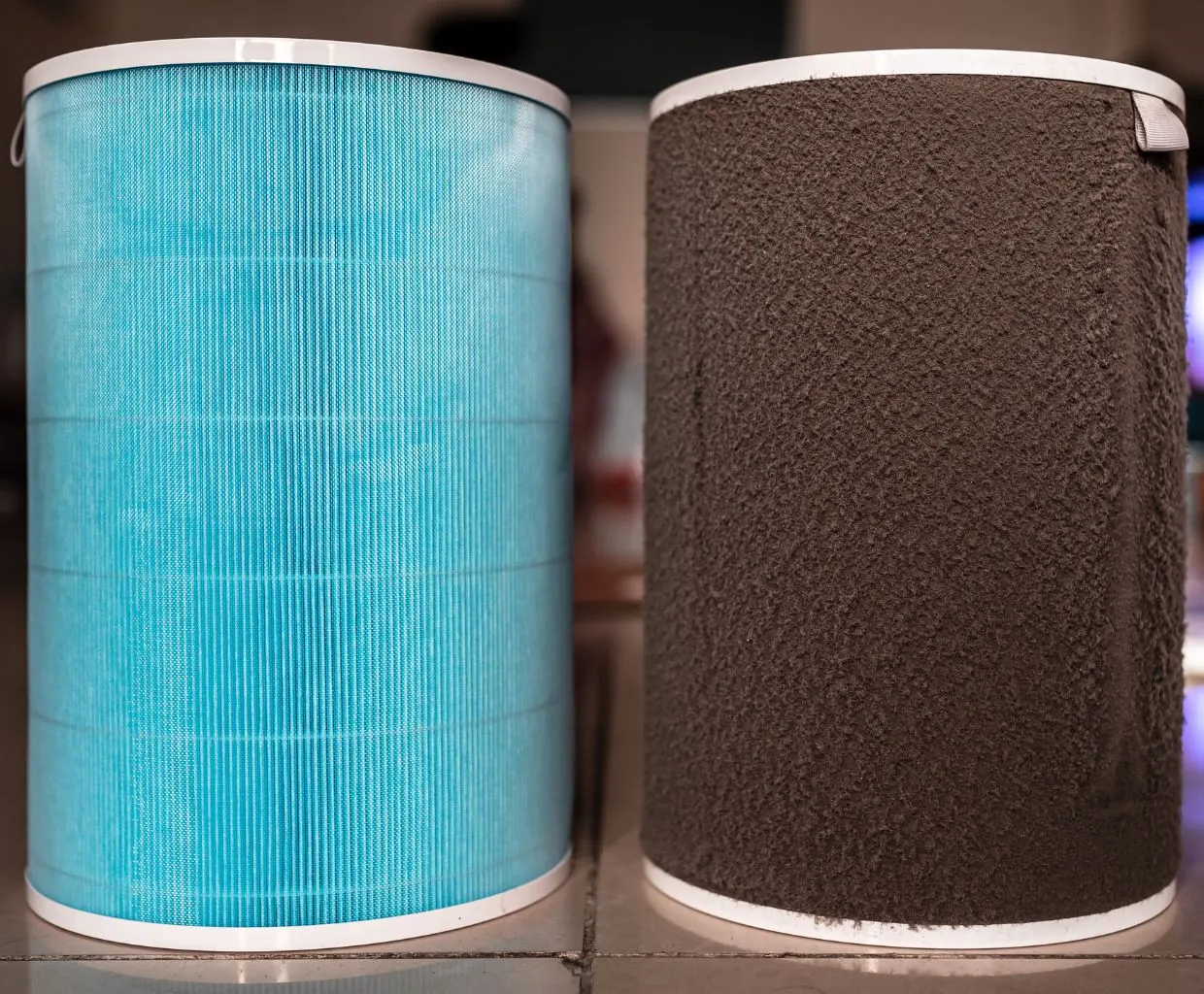
Most air purifier makers say to replace the main HEPA filter every 6 to 12 months. Carbon filters often need changing sooner, every 3 to 6 months on some models, and washable pre-filters need a rinse or vacuum every 2 to 4 weeks. A few heavy-duty purifiers use filters rated for several years. The right answer for your unit is in its manual, so start there and use the filter light as a reminder, not a guarantee.
Below are the intervals manufacturers actually publish, model by model, and what changes them.
Air purifier filter replacement intervals by brand
These come from each manufacturer’s manual, filter page or spec table, as compiled in our research database in October 2026. Where a brand doesn’t publish an interval, we say so rather than guess.
| Model | Main (HEPA) filter | Carbon / other | Pre-filter |
|---|---|---|---|
| Coway Airmega AP-1512HH | Every 12 months | Carbon every 6 months | Wash or vacuum every 2 to 4 weeks |
| Coway Airmega Mighty2 AP-1512N | Combined HEPA + carbon, up to 1 year | Same filter | Washable |
| Coway Airmega 400 / 400S | Max2 (HEPA + carbon), 1 year in spec table, “6 to 12 months” in product copy | Same filter | Washable |
| Levoit Vital 200S | 6 to 12 months | Same filter | Washable |
| Levoit Core 300, 300S, Core Mini-P | Not published; follow the filter light or app | Same filter | Built into the filter |
| Honeywell HPA and InSight HPA5000 | R HEPA every 12 months | Optional S filter every 3 months | A or A+ every 3 months |
| Honeywell Allergen Plus HPA4100/4200/4300 | Y 3-in-1 filter every 9 to 12 months | Same filter | Same filter |
| Winix 5520 | Filter Q about 12 months | Same filter | Clean every 14 days |
| Winix A231 | Filter O about 12 months | Same canister | Vacuum or brush about every 14 days |
| Winix C545 | HEPA every 12 months | Carbon every 3 months | Clean every 1 to 2 months |
| Blueair Blue Pure 211i Max / 311i Max | Up to 9 months | Same filter | Washable fabric |
| GermGuardian AC4825E | Filter B every 6 to 8 months | UV-C bulb about every 10 to 12 months | Carbon layer: no interval published |
| Alen BreatheSmart 45i | HEPA-only about 9 to 12 months | Carbon versions about 6 to 8 months | Vacuum |
| Alen BreatheSmart 75i | HEPA-only about 12 to 15 months | Carbon versions about 7 to 10 months | Vacuum the screen |
| Medify MA-112 PRO | About 3,000 hours (4 to 5 months) | Same filter set | Same filter set |
| Rabbit Air A3 | 12 months at 24/7, up to 2 years at 12 h a day | Same kit | Clean monthly |
| IQAir HealthPro Plus | HyperHEPA about 48 months | V5-Cell gas filter about 24 months | PreMax about 18 months |
| Austin Air HealthMate HM400 | Whole filter up to 5 years | Same filter | Vacuum the intake screen monthly |
If your purifier isn’t listed, look for the interval in the manual’s maintenance section or on the replacement filter’s product page. For Honeywell owners, our step-by-step Honeywell air purifier cleaning guide also covers how to reset each model’s filter light.
Why the intervals are so different
Three things drive the spread between a 4-month and a 5-year filter.
How long and how hard you run it. Manufacturers base their intervals on an assumed amount of use. IQAir’s figures assume 10 hours a day at fan speed 3. Rabbit Air says 12 months if the A3 runs 24/7, but up to 2 years at 12 hours a day. If you run your purifier around the clock on high, expect the short end of any range.
What’s in the air. Smoke, pets and heavy dust load a filter faster than a clean bedroom does. EPA says a dirty, overloaded filter won’t work well, which is why intervals are maximums for typical use, not promises.
How much filter there is. A large, deep filter has more media to fill. Austin Air rates its HealthMate filter for up to 5 years, and IQAir rates its HyperHEPA for about 4 years. A slim cylinder in a small purifier has far less capacity.
HEPA, carbon and pre-filters wear out differently
HEPA filters catch particles and slowly fill up. As they load, they keep catching particles, but airflow through them drops. Most mainstream brands rate them for 6 to 12 months.
Activated carbon works differently. It adsorbs gases and odors until its surface is used up. EPA says all adsorbents have limited capacity and need regular replacement to avoid “breakthrough,” and that thin carbon-impregnated layers saturate quickly and can even release pollutants they captured earlier. That’s why carbon often gets a shorter interval than HEPA:
- Coway AP-1512HH: carbon every 6 months, HEPA every 12 months
- Winix C545: carbon every 3 months, HEPA every 12 months
- Alen 45i: the HEPA-only filter lasts about 9 to 12 months, the carbon versions about 6 to 8 months
If you bought your purifier for odors or smoke, change the carbon on schedule even if the HEPA still looks fine. Our HEPA vs carbon filter guide explains what each one removes.
Pre-filters catch hair, lint and large dust before they reach the HEPA filter. Cleaning them on time is the cheapest way to help the main filter last. Coway says every 2 to 4 weeks for the AP-1512HH, Winix every 14 days for the 5520 and A231, and Rabbit Air monthly for the A3.
Signs your air purifier filter needs changing
- The filter light or app says so. Levoit’s Core 300 relies on a Check Filter indicator, the Core 300S shows filter life in its app, and Coway’s Mighty2 shows remaining filter life as a percentage.
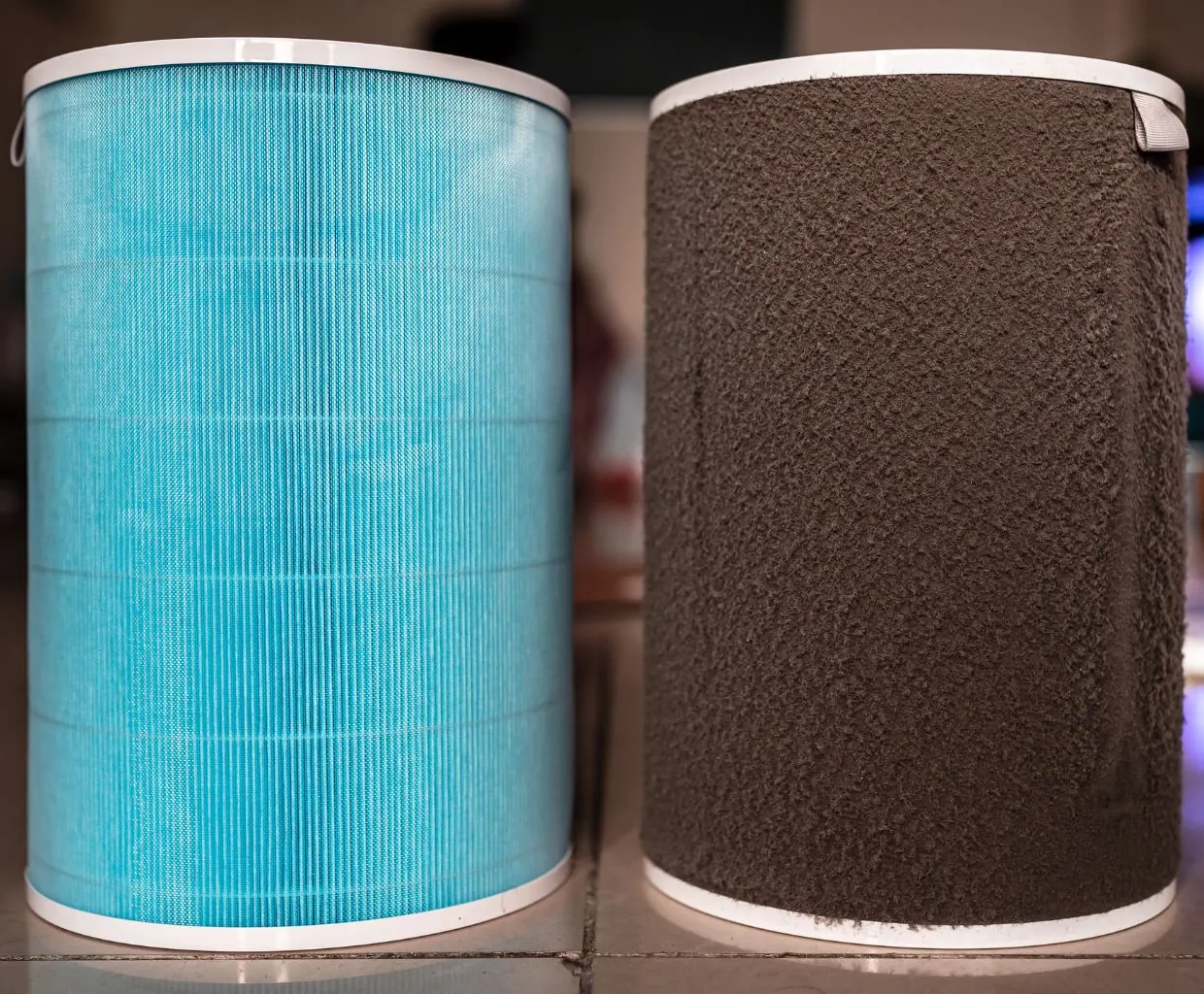
- The filter looks gray or caked with dust, like the used filter in the photo above. Compare it with a new one if you’re unsure.
- Odors come back even though the purifier is running. That usually points to saturated carbon.
- The calendar says so. If your manual gives an interval and you’ve passed it, replace the filter even if the light hasn’t come on.
Tip: Write the install date on the filter’s frame with a marker. It makes the next replacement easy to time, and you’ll learn how fast your home actually uses up filters.
Washable vs replaceable filters
True HEPA filters are never washable. Honeywell says washing its HEPA filters will ruin them, and Afloia’s Q10 manual says not to wash or vacuum its filter. Water damages the fine fibers that do the filtering.
What you can wash depends on the model:
- Washable pre-filters: Coway AP-1512HH, Mighty2 and Airmega 400; Levoit Vital 200S; Blueair Blue Pure Max (fabric); Rabbit Air A3; Winix 5520 and C545 (mesh).
- Washable main filter: Honeywell’s ifD models, such as the HFD-120-Q and AirGenius 4 and 5. Honeywell says to wash the ifD filter and foam pre-filter about every 3 months. If you use the optional K odor pre-filter, replace it every 3 months, because it isn’t washable.
- Washable carbon: no current Winix US model has one. The discontinued Winix 5500-2 did, and Winix’s own filter page warns that performance “may decrease after each wash.”
Always let a washed part dry completely before it goes back in. If you’d rather avoid buying main filters, our guide to the best air purifier with washable filters compares the options and their trade-offs.
What filters cost to keep up
Filter costs vary far more than purchase prices. A few examples from manufacturer stores in October 2026:
- Winix A231: one Filter O a year at around $40 to $55, the cheapest routine on this list.
- Levoit Vital 200S: around $50 per filter every 6 to 12 months, so roughly $50 to $100 a year.
- Medify MA-112 PRO: around $140 every 4 to 5 months, which adds up to more than $300 a year.
- IQAir HealthPro Plus: the HyperHEPA costs around $200 but is rated for about 4 years.
Electricity is the other running cost. ENERGY STAR says a standard room air cleaner running continuously uses about 394 kWh a year, or about $72 at the US average of 18.31 cents per kWh (EIA, July 2026) by our math. Certified models use more than 50% less. Work out your own unit’s cost with the air purifier electricity cost calculator. A purifier with a cheap price tag but expensive, short-lived filters can cost more over three years than a pricier one.
What about furnace and whole-house filters?
HVAC filters follow a different schedule. EPA says manufacturers typically recommend replacing them every 60 to 90 days, and that they only clean air while the system fan is running. Thicker whole-house media lasts longer: AprilAire says to change its 413 MERV 13 media annually, and Resideo rates Honeywell Home F100 and F200 media for 6 to 12 months. Our guide to whole-house air purifiers covers those systems in more detail.
Our advice
- Follow your manual’s interval, and treat it as a maximum if you have smoke, pets or run the purifier 24/7.
- Clean the pre-filter on schedule. It’s free and it protects the expensive filter.
- Change carbon on time if odors are why you bought the purifier.
- Never wash a HEPA filter.
- Buy the filter made for your model. With Levoit’s Core 300 series, for example, not every filter version lists every model as compatible. Our Levoit Core 300 review has the details.
In our view, filter cost belongs in the buying decision as much as CADR does. Before you buy, check the price and the published interval of the replacement filter.
Frequently asked questions
How often should you change a HEPA filter in an air purifier?
For most home purifiers, every 6 to 12 months, going by manufacturer guidance. Coway, Winix and Honeywell rate their HEPA filters for about 12 months, Levoit gives 6 to 12 months for the Vital 200S and Blueair says up to 9 months for the Blue Pure Max filters.
How often should you change a carbon filter?
Often sooner than the HEPA filter. Coway says every 6 months for the AP-1512HH, and Winix says every 3 months for the C545. Carbon has a limited capacity and stops adsorbing odors once it's saturated.
Can I wash my air purifier's HEPA filter?
No. True HEPA filters are never washable, and manuals from brands such as Honeywell and Afloia warn that washing ruins the filter. Only pre-filters and a few special filters, such as Honeywell's ifD, are meant to be washed.
What happens if you don't change your air purifier filter?
A dirty, overloaded filter won't work well, according to EPA, and saturated carbon stops removing odors. The purifier keeps running, but it cleans less air than its rating.
Is the filter light on an air purifier accurate?
It's a reminder based on the manufacturer's assumptions about how you use it. If you run the purifier around the clock, on high, or with smoke or pets in the home, check the filter before the light comes on.
Related guides
Guides
Do Air Purifiers Use a Lot of Electricity? Watts, Yearly Cost and How to Cut It
Not much. Most current purifiers draw under 80 W even on top speed, so running one 24/7 costs roughly $10 to $125 a year at the US average rate.
7 min read
Guides
How Long to Run an Air Purifier: Per Day, Overnight and 24/7
Run it whenever you're in the room, ideally all the time on Auto or low. A well-sized unit clears a closed room in about 30 to 40 minutes on high.
7 min read
Guides
Do Air Purifiers Work? What They Remove, What They Can't and When They're Worth It
Yes, for particles in the air: smoke, pollen, pet dander and dust. Here's what EPA and AHAM say purifiers can and can't do, and how to size one so it works.
7 min read
Guides
HEPA vs Carbon Filter: What Each One Removes (and Which You Need)
HEPA filters trap particles; activated carbon adsorbs gases and odors. Neither does the other's job. Here's what each removes and which you need.
6 min read