How Long to Run an Air Purifier: Per Day, Overnight and 24/7
Run it whenever you're in the room, ideally all the time on Auto or low. A well-sized unit clears a closed room in about 30 to 40 minutes on high.
By Clean Air Guides editorial teamUpdated 7 min read
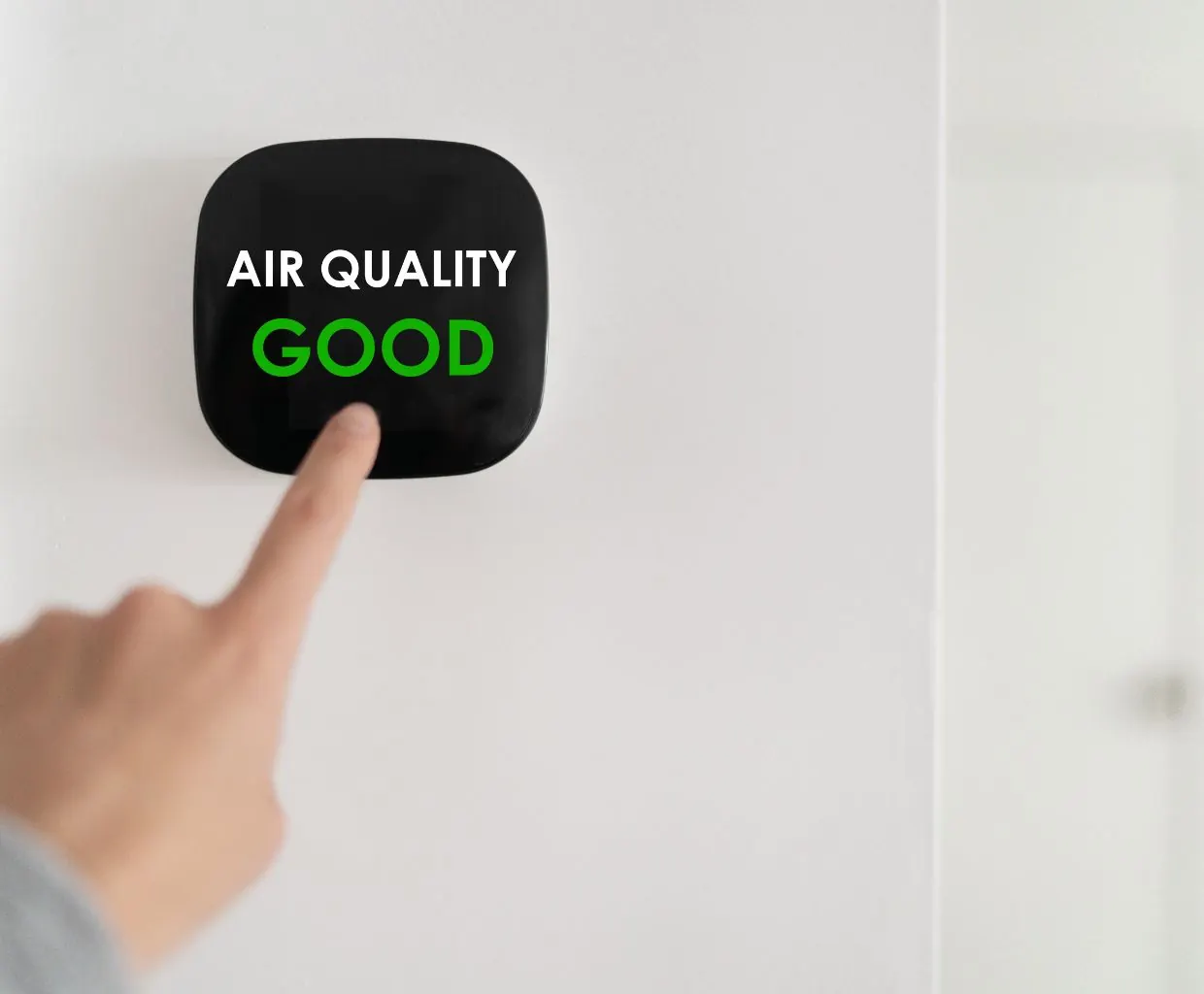
Run an air purifier whenever you’re in the room, and ideally all the time, on Auto or a low speed. A purifier only holds particle levels down while it’s running; switch it off and outdoor air, cooking, pets and people bring them back. If you want a number for a fresh start, a purifier that’s the right size for the room clears most airborne particles in about 30 to 40 minutes on its top speed.
Here’s how to work out the time for your room, and when to run it harder.
How long does it take to clean a room?
It depends on how many times an hour the purifier can pass the room’s air through its filter. CDC calls this air changes per hour (ACH), and AHAM calls the purifier’s share equivalent air changes per hour (eACH):
eACH = CADR (cfm) × 60 ÷ room volume (cubic feet)
Use the smoke CADR, which covers the finest particles. AHAM’s room-size rule (smoke CADR at least two-thirds of the floor area, 8 ft ceiling) works out to about 4.8 eACH, or one equivalent air change every 12.5 minutes. The table shows how long one air change takes at other rates, and how far particle levels fall once the purifier has been running a while, from AHAM’s January 2026 white paper:
| eACH from the purifier | One air change every | Steady-state reduction (AHAM) |
|---|---|---|
| 1 | 60 minutes | about 45% |
| 2 | 30 minutes | about 62% |
| 4.8 (AHAM room size) | 12.5 minutes | about 80% |
| 7.5 (AHAM wildfire sizing) | 8 minutes | about 86% |
One air change doesn’t remove everything, because clean air mixes with dirty air. In an idealized, well-mixed room with no new particles coming in (our calculation), one air change removes about 63% of the particles that were in the air, two about 86% and three about 95%. That’s why we use three air changes as the rule of thumb for “the room is mostly clean.”
Worked example: a 12 x 15 ft bedroom
A 12 x 15 ft bedroom with an 8 ft ceiling holds 12 × 15 × 8 = 1,440 cubic feet. A Levoit Core 300-P has an AHAM-listed smoke CADR of 139 cfm:
- 139 × 60 ÷ 1,440 = about 5.8 eACH on top speed.
- One air change takes 60 ÷ 5.8 = about 10 minutes.
- Three air changes take about 31 minutes.
On a lower speed it will take longer. EPA notes that the CADR on the box is measured at the highest fan speed, and CADR at quieter settings is often not published and can be much lower. To run the numbers for your own room and ceiling height, use our air purifier size calculator, and see what CADR means if you’re comparing models.
Should you run an air purifier 24/7?
In our view, yes, for the rooms you use. AHAM’s sizing model assumes outdoor air leaks into a typical room at about one air change per hour, bringing particles with it. The 80% reduction AHAM quotes is a steady state, the level the room settles at while the purifier keeps running. Turn it off and the room drifts back toward outdoor and household levels.
Purifiers are built for this. ENERGY STAR’s running-cost estimate is for a room air cleaner running continuously, and Rabbit Air quotes the A3’s filter life for 24/7 use. The real costs of nonstop running are electricity and filters, covered below.
There’s one caveat. If your purifier has an ionizer, check the manual for a switch. The Coway Airmega AP-1512HH, for example, has a “bipolar” ionizer that can be turned off with a button. EPA notes that ionizers can emit ozone, so for a unit running all day we’d switch it off and prefer CARB-certified models. Our guide to air purifier side effects covers ozone in detail.
Running an air purifier all night
The bedroom is where most people get the most value: you spend hours there every night, usually with the door closed. A closed door also means the purifier only has to clean one room’s air. Our guide on where to put an air purifier covers placement, wall clearance and doors.
For overnight use, noise and light matter as much as run time:
- Use sleep mode or the lowest speed. Low-speed noise is far below top speed. Levoit lists 23 to 54 dB for the Vital 200S and Blueair 23 to 50 dB for the Blue Pure 311i Max.
- Turn off the lights. The Levoit Core 300 can turn its display off, and the Winix 5520 has an auto sleep mode.
- Give it a head start. We’d run it on high for 30 to 40 minutes before bed, with the door closed, then drop to sleep mode. Based on the math above, a well-sized unit has cleared most of the room’s particles by then.
If you’re shopping for a quiet unit sized to run all night, see our best air purifier for bedroom picks.
Auto mode: the easiest way to run it all day
A purifier with an air-quality sensor and Auto mode raises the fan when it detects more particles and slows it when the air is clean. That gives you fast cleanup when you need it and a quiet, low-power fan the rest of the time. The Winix 5520 has dual sensors, the Levoit Vital 200S an infrared dust sensor, and Coway’s AP-1512HH adds an Eco mode that stops the fan after 30 minutes of clean air.
Know what your sensor measures. Honeywell’s InSight HPA5300 runs its Auto mode from a VOC sensor and Honeywell names no PM2.5 sensor, so it may not respond to dust the way a particle sensor would. We’d use Auto as the everyday setting and override it by hand when you know the air is about to get worse.
When to turn it up
Some situations call for a higher speed or longer run time than usual:
- Wildfire smoke. EPA advises running the purifier continuously on its highest setting, with doors and windows closed, using a CARB-certified unit whose smoke CADR is at least two-thirds of the room area. AHAM goes further for wildfires: a smoke CADR at least equal to the floor area. Our best air purifier for smoke picks are sized for this.
- Dusting, vacuuming and making beds. A purifier only catches particles while they’re in the air, and cleaning stirs settled dust back up. We’d run it on high during and for about half an hour after cleaning. If dust keeps returning, see why is my house so dusty.
- Cooking. Cooking and combustion particles fall in the fine range that the smoke CADR covers. Turn it up while you cook and use the range hood too.
- Guests or someone sick at home. CDC suggests aiming for 5 or more air changes per hour of clean air in occupied rooms, counting ventilation, filtration and air cleaning together. It calls this a rough guide that doesn’t guarantee safe air. The air changes per hour calculator shows whether your purifier gets a room there.
Should you turn it off when you leave?
You don’t have to. On Auto, a purifier left running in an empty room mostly idles at low speed. If you’d rather switch it off, run it on high for 30 to 40 minutes when you get home. Timers and schedules help: the Coway AP-1512HH has a 1, 4 or 8 hour timer, the Honeywell InSight HPA5300 a 2, 4 or 8 hour timer, and the Levoit Core 300S app supports schedules.
How run time affects filters and electricity
Filters wear out faster the more you run them. Manufacturers base their intervals on an assumed amount of use:
- Rabbit Air A3: 12 months at 24/7 use, up to 2 years at 12 hours a day.
- IQAir HealthPro Plus: its filter lifetimes assume 10 hours a day at fan speed 3.
- Medify MA-112 PRO: about 3,000 hours, which Medify puts at 4 to 5 months.
If you run your purifier around the clock or on high, expect the short end of any range and check the filter before the light comes on. Our guide on how often to change an air purifier filter lists intervals by brand.
Electricity costs less than most people expect. ENERGY STAR estimates that a standard room air cleaner running continuously uses about 394 kWh a year. At the July 2026 US average of 18.31 cents per kWh (EIA), that’s about $72 a year, and certified models use more than 50% less. Running on low or Auto cuts it further, because fan power drops sharply at lower speeds. Our guide to whether air purifiers use a lot of electricity breaks down watts by model, and the air purifier electricity cost calculator works out your own cost.
Our take: buy a purifier with more CADR than your room needs, leave it on Auto or low all day, and turn it up when you cook, clean or smell smoke. That gets you clean air with less noise than short bursts on high.
Frequently asked questions
How long should you run an air purifier each day?
As long as you're using the room, and ideally around the clock. A purifier only lowers particle levels while it runs; once it stops, outdoor air and new particles bring the levels back up.
Is it OK to run an air purifier 24/7?
Yes. ENERGY STAR's running-cost estimate is for a unit that runs all the time, and some makers quote filter life for 24/7 use. Running 24/7 shortens filter life, so check the filter more often, and turn off any ionizer if the model has one.
Should I run my air purifier all night?
Yes, in the bedroom with the door closed. Use sleep mode or a low speed for quiet, and if you can, run it on high for half an hour before bed so the room starts out clean.
How long does it take an air purifier to clean a room?
About three air changes clear most of the particles that were in the air. A purifier sized by AHAM's rule gives one air change about every 12.5 minutes on top speed, so roughly 35 to 40 minutes. An undersized unit or a low speed takes much longer.
Should I turn my air purifier off when I leave the house?
You can. If it has Auto mode, leaving it on costs little because the fan slows when the air is clean. If you switch it off, run it on high for 30 to 40 minutes when you get back.
Related guides
Guides
Do Air Purifiers Work? What They Remove, What They Can't and When They're Worth It
Yes, for particles in the air: smoke, pollen, pet dander and dust. Here's what EPA and AHAM say purifiers can and can't do, and how to size one so it works.
7 min read
Guides
What Is CADR? Clean Air Delivery Rate Explained, With the 2/3 Rule
CADR is how many cubic feet of particle-free air a purifier delivers per minute. Here's how AHAM tests it, how to size a room with it, and what it can't tell you.
7 min read
Guides
Do Air Purifiers Use a Lot of Electricity? Watts, Yearly Cost and How to Cut It
Not much. Most current purifiers draw under 80 W even on top speed, so running one 24/7 costs roughly $10 to $125 a year at the US average rate.
7 min read
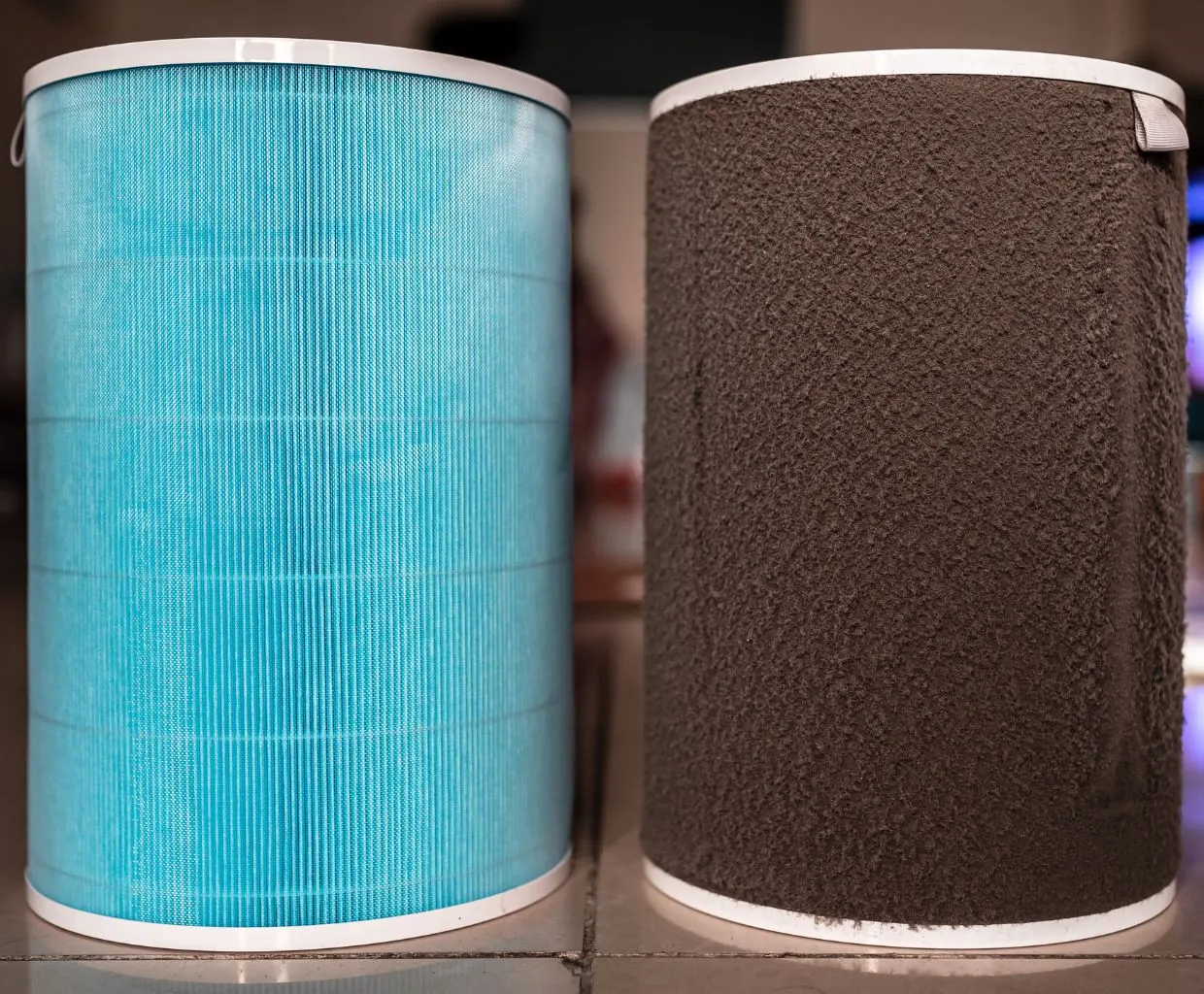
Guides
How Often to Change an Air Purifier Filter: Intervals by Brand and Filter Type
Most HEPA filters are rated for 6 to 12 months, carbon filters often less and pre-filters need cleaning every few weeks. Manufacturer intervals by brand, plus the signs a filter is done.
8 min read