Do Air Purifiers Use a Lot of Electricity? Watts, Yearly Cost and How to Cut It
Not much. Most current purifiers draw under 80 W even on top speed, so running one 24/7 costs roughly $10 to $125 a year at the US average rate.
By Clean Air Guides editorial teamUpdated 7 min read
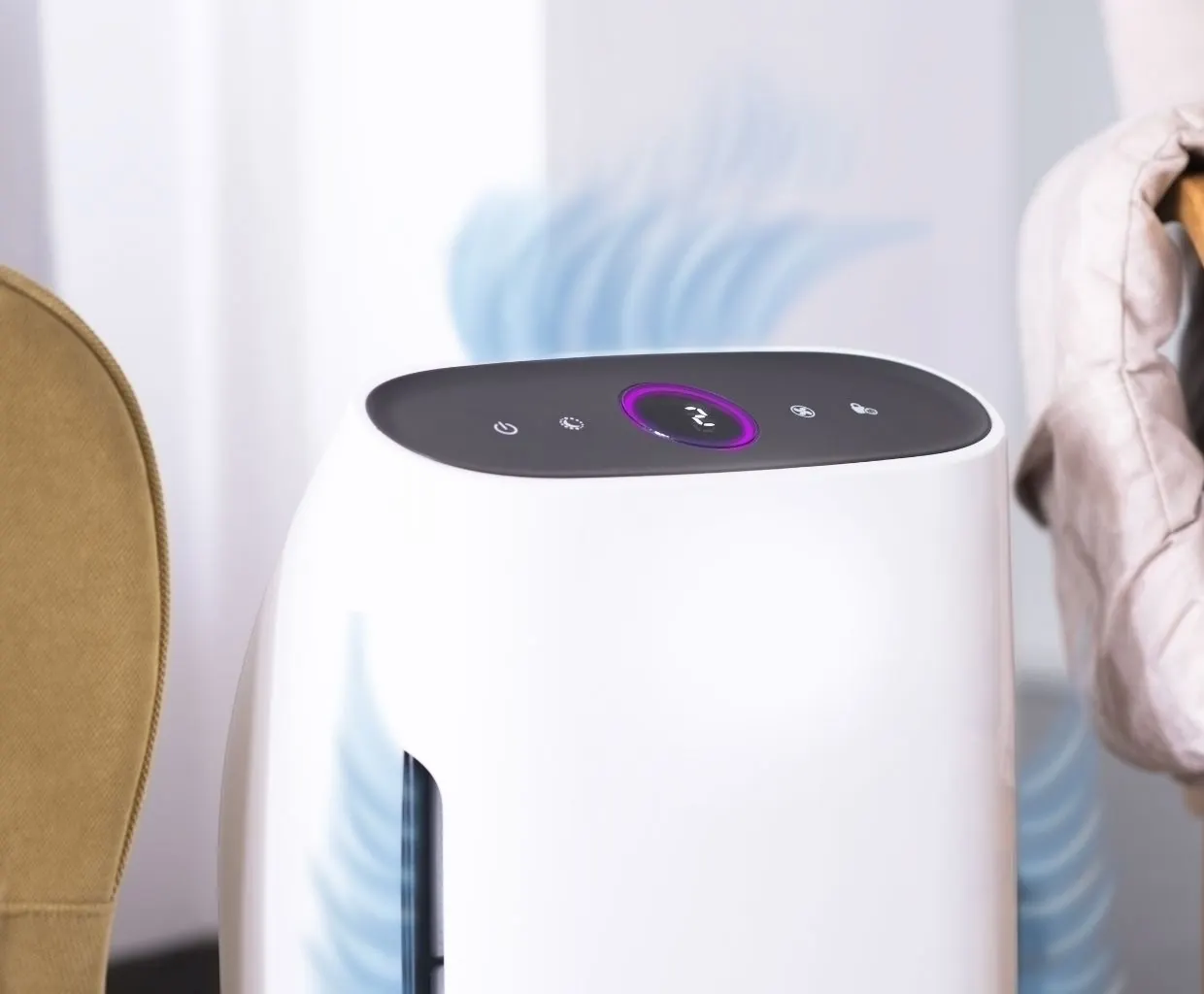
No, not compared with what most people expect. The current air purifiers in our research draw between 7 and 160 watts on their highest fan speed, and most sit between about 30 and 80 W. Running a typical one around the clock, even on its top speed, costs roughly $50 to $125 a year at the US average electricity rate, and less on a lower speed. Replacement filters often cost about as much as the power, or more.
To check your own model, put its watts and your rate into our air purifier electricity cost calculator. The rest of this guide explains where the numbers come from.
How much electricity does an air purifier use?
An air purifier is basically a fan pushing air through a filter, so its power use depends almost entirely on fan speed. ENERGY STAR estimates that a standard room air cleaner running continuously uses about 394 kWh a year, which works out to an average draw of about 45 W.
Here’s what manufacturers and the AHAM directory list for current models at their top speed, and what that would cost if the unit ran on top speed all day, every day. That’s a worst case; few people run a purifier on high around the clock.
| Model | Smoke CADR | Power at top speed | 24/7 on top speed | Cost a year at 18.31¢ |
|---|---|---|---|---|
| Levoit Core Mini-P | 34 | 7 W (Levoit) | 61 kWh | about $11 |
| Blueair Blue Pure 311i Max | 283 | 32 W (Blueair) | 280 kWh | about $51 |
| Levoit Core 300S | 144 | 37.9 W (AHAM) | 332 kWh | about $61 |
| Blueair Blue Pure 211i Max | 435 | 46 W (Blueair) | 403 kWh | about $74 |
| Levoit Vital 200S | 250 | 52.4 W (AHAM) | 459 kWh | about $84 |
| Winix 5520 | 253 | 65 W rated (Winix) | 569 kWh | about $104 |
| Coway Airmega AP-1512HH | 233 | 77 W (Coway) | 675 kWh | about $124 |
| IQAir HealthPro Plus | not published | 134 W (IQAir) | 1,174 kWh | about $215 |
| Medify MA-112 PRO | 600 | 160 W (Medify) | 1,402 kWh | about $257 |
The price is the US average residential rate of 18.31 cents per kWh for July 2026 from the EIA. Your own rate is on your bill and can be well above or below that.
Two things stand out. First, more CADR doesn’t have to mean more watts: the Blueair 211i Max delivers far more clean air than the Coway AP-1512HH on fewer watts. Second, the big users are the very large or heavy-duty units, which are built for big rooms. If you want to compare clean air per watt, our guide to what CADR means explains the rating.
Watts by fan speed
The top-speed figure overstates what most people use. Several makers publish the full range:
- Blueair Blue Signature (Large): 3.5 to 42 W.
- Rabbit Air A3: 5 to 60 W.
- IQAir HealthPro Plus: 8 W on the lowest speed, 134 W on the highest.
So the same purifier can use many times more power on high than on low; IQAir’s top speed draws about 16 times what its lowest does. The catch is that EPA notes the CADR on the box is usually measured at top speed, and CADR at quieter settings is often not published and can be much lower. In our view, the cheapest way to clean a room is a purifier sized comfortably above the room’s needs, running on a low or medium speed. Our air purifier size calculator shows the CADR your room needs.
Tip: Rated watts and measured watts can differ. Levoit rates the Core 300S at 23 W, but the AHAM directory lists 37.9 W at maximum smoke CADR. Where an AHAM figure exists, we’d use it.
Worked example: what one purifier costs to run
The formula is the one EPA uses in its technical summary: kWh = watts × hours ÷ 1,000, then cost = kWh × price per kWh.
Take the Levoit Vital 200S, which the AHAM directory lists at 52.4 W at its maximum setting:
- Per day, 24 hours on top speed: 52.4 × 24 ÷ 1,000 = 1.26 kWh.
- Per year: 1.26 kWh × 365 = about 459 kWh.
- Cost: 459 kWh × $0.1831 = about $84 a year, or about $7 a month.
Run it 8 hours a night at the same top speed and that falls to about 153 kWh, roughly $28 a year. On a lower speed it would be less again. Want to try your own numbers? The electricity cost calculator does the same math and adds filter costs if you enter them.
For context, EPA’s technical summary compiled measurements from older studies (2008 and 2011) in which HEPA units drew 103 to 226 W. At $0.12 per kWh, running 24/7, those cost about $103 to $238 a year. Many current models draw a fraction of that.
Standby power: does it use electricity when off?
A little, as long as it’s plugged in. AHAM’s test standard, ANSI/AHAM AC-1-2020, measures standby power separately from operating power. ENERGY STAR’s previous specification capped standby at 1.0 W, or 2.0 W for models with Wi-Fi. The current Version 3.0 has no separate cap because standby energy is built into its efficiency score.
At 2 W for a full year, standby adds about 17.5 kWh, roughly $3 at the US average rate. That’s small, but a Wi-Fi model left in standby all year isn’t free. If you only use the purifier seasonally, we’d unplug it between seasons.
ENERGY STAR: how much can you save?
ENERGY STAR says certified air cleaners are more than 50% more energy efficient than standard models, saving about 211 kWh a year, or roughly $18 to $40 a year depending on size. At July 2026 prices, 211 kWh is about $39.
The bar is meaningful. Since October 9, 2025, ENERGY STAR Version 3.0 requires at least 4.4 to 5.6 cfm of PM2.5 CADR per watt, including standby, depending on the unit’s size. The federal minimum for room air cleaners made on or after December 31, 2025 is 1.9 to 2.9 for the same size bands, so a certified model has to be roughly twice as efficient as the legal floor.
Some current models in the ENERGY STAR V3.0 list, with the smoke CADR per watt and annual energy use it records:
- Blueair Blue Signature (Large): 11.49 CADR/W, 235 kWh a year.
- Blueair Blue Pure 211i Max: 10.14 CADR/W, 259 kWh a year.
- Blueair Blue Pure 311i Max: 9.59 CADR/W, 193 kWh a year.
- Coway Airmega 400 (AP-2015F): 6.02 CADR/W, 366 kWh a year.
- Levoit Core Mini-P: 4.86 CADR/W, 42 kWh a year.
These annual figures come from the standard test method rather than your habits, so use them to compare models, not to predict your bill. Be careful with older claims, too: several product pages and manuals still say “ENERGY STAR” based on an earlier spec, and those models aren’t in the current list.
If running cost matters to you, we’d look at the Blueair Blue Pure 311i Max for a medium room (283 smoke CADR, 32 W max, ENERGY STAR V3.0).
Check the Blueair Blue Pure 311i Max on Amazon
For a large room, the Blue Signature Large has a 455 smoke CADR on 3.5 to 42 W.
Check the Blueair Blue Signature on Amazon
Do low-watt ionizers save power?
On paper. In the studies EPA compiled, ion generators drew only 5 to 46 W, but they also moved very little clean air: fine-particle CADRs under about 20 cfm, compared with about 150 to 300 cfm for many HEPA units. Some ionizers also emit ozone. Watts alone don’t tell you much; what matters is clean air delivered per watt, and on that measure we’d skip ionizers for a filter unit. Our guide to the ionic air purifier covers the trade-offs.
How to cut the running cost
- Size up, then run it lower. A purifier with more CADR than the room needs can run on a quiet, low-watt speed.
- Use Auto mode if it has one. A particle sensor lets the fan drop when the air is clean. Coway’s AP-1512HH goes further: its Eco mode stops the fan after 30 minutes of clean air.
- Pick ENERGY STAR V3.0 if you plan to run it most of the day.
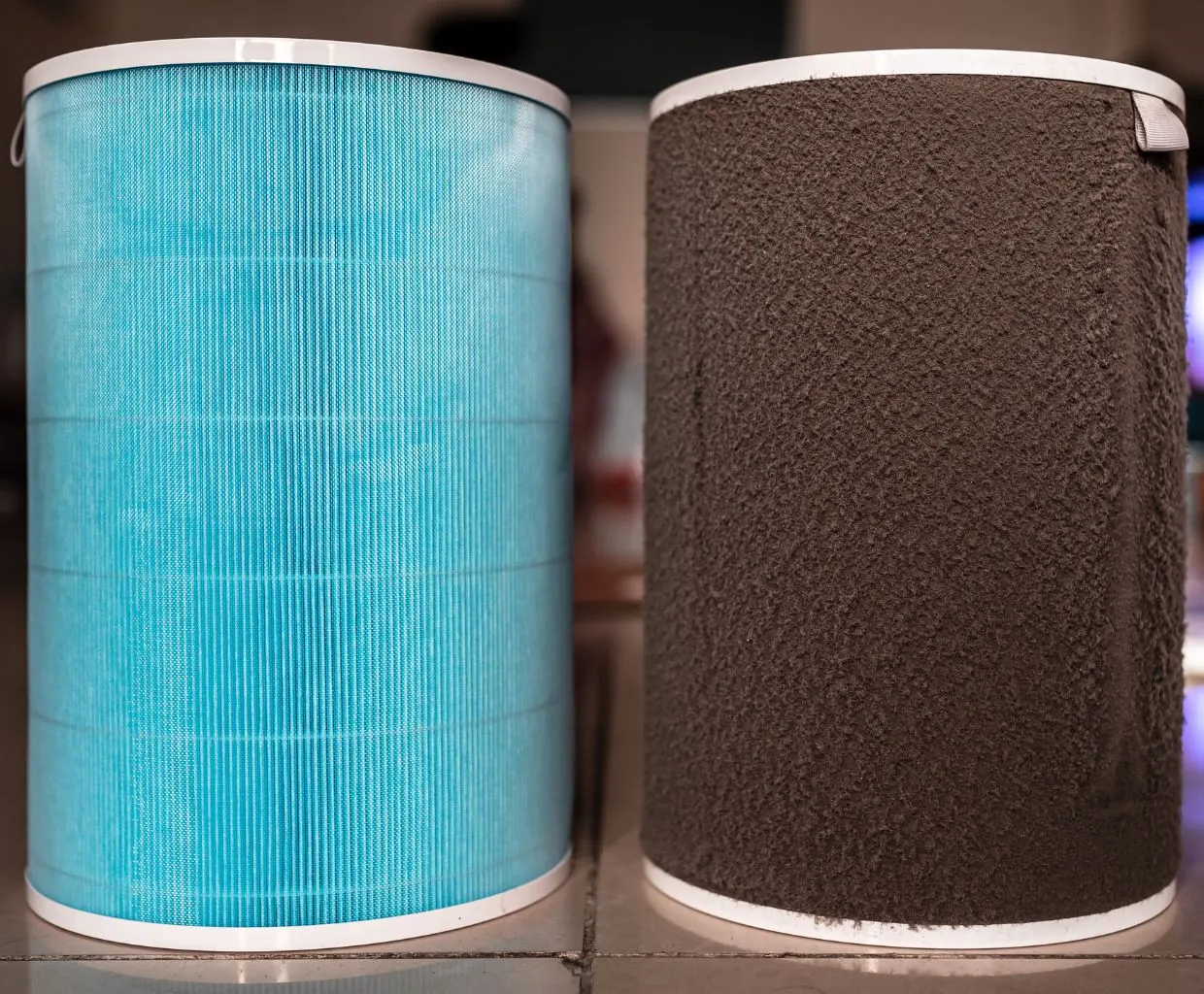
- Keep filters on schedule. A saturated filter cleans less air for the same power. See our guide on how often to change an air purifier filter.
- Budget for filters too. The Medify MA-112 PRO’s filter set, at around $140, lasts about 3,000 hours (4 to 5 months), which can cost more per year than its electricity.
Running time matters more than anything else on this list. Our guide on how long to run an air purifier explains why we’d still run one most of the day, and why that costs less than most people fear.
Frequently asked questions
How many watts does an air purifier use?
It depends on the model and fan speed. Current models in our research draw from 7 W (Levoit Core Mini-P) to 160 W (Medify MA-112 PRO) at their highest setting, and much less on low: Blueair lists 3.5 to 42 W for the Blue Signature.
How much does it cost to run an air purifier 24/7?
Multiply the watts by 8,760 hours, divide by 1,000 and multiply by your rate. ENERGY STAR's estimate for a standard unit is about 394 kWh a year, which is about $72 at the July 2026 US average of 18.31 cents per kWh.
Do air purifiers use electricity when turned off?
A little, if they stay plugged in. AHAM's test standard measures standby power separately, and ENERGY STAR's earlier spec capped it at 1 W, or 2 W with Wi-Fi. A full year at 2 W is about 17.5 kWh, roughly $3.
Is it cheaper to run an air purifier on low?
Yes. Power drops sharply at lower fan speeds; IQAir lists 8 W on the lowest speed of the HealthPro Plus versus 134 W on the highest. Clean-air output drops too, so a purifier sized above your room's needs can run on low and still keep up.
Do ENERGY STAR air purifiers save money?
ENERGY STAR says certified models are more than 50% more efficient than standard ones and save about 211 kWh a year, roughly $18 to $40 depending on size. At 18.31 cents per kWh, 211 kWh is about $39.
Related guides
Guides
How Long to Run an Air Purifier: Per Day, Overnight and 24/7
Run it whenever you're in the room, ideally all the time on Auto or low. A well-sized unit clears a closed room in about 30 to 40 minutes on high.
7 min read
Guides
How Often to Change an Air Purifier Filter: Intervals by Brand and Filter Type
Most HEPA filters are rated for 6 to 12 months, carbon filters often less and pre-filters need cleaning every few weeks. Manufacturer intervals by brand, plus the signs a filter is done.
8 min read
Guides
Do Air Purifiers Work? What They Remove, What They Can't and When They're Worth It
Yes, for particles in the air: smoke, pollen, pet dander and dust. Here's what EPA and AHAM say purifiers can and can't do, and how to size one so it works.
7 min read
Guides
What Is CADR? Clean Air Delivery Rate Explained, With the 2/3 Rule
CADR is how many cubic feet of particle-free air a purifier delivers per minute. Here's how AHAM tests it, how to size a room with it, and what it can't tell you.
7 min read