Ionic Air Purifiers: How They Work, Ozone and Which Ones to Skip
How ionizers and electrostatic purifiers work, what EPA and CARB say about ozone, which popular HEPA models let you switch the ionizer off, and what we'd skip.
By Clean Air Guides editorial teamUpdated 7 min read
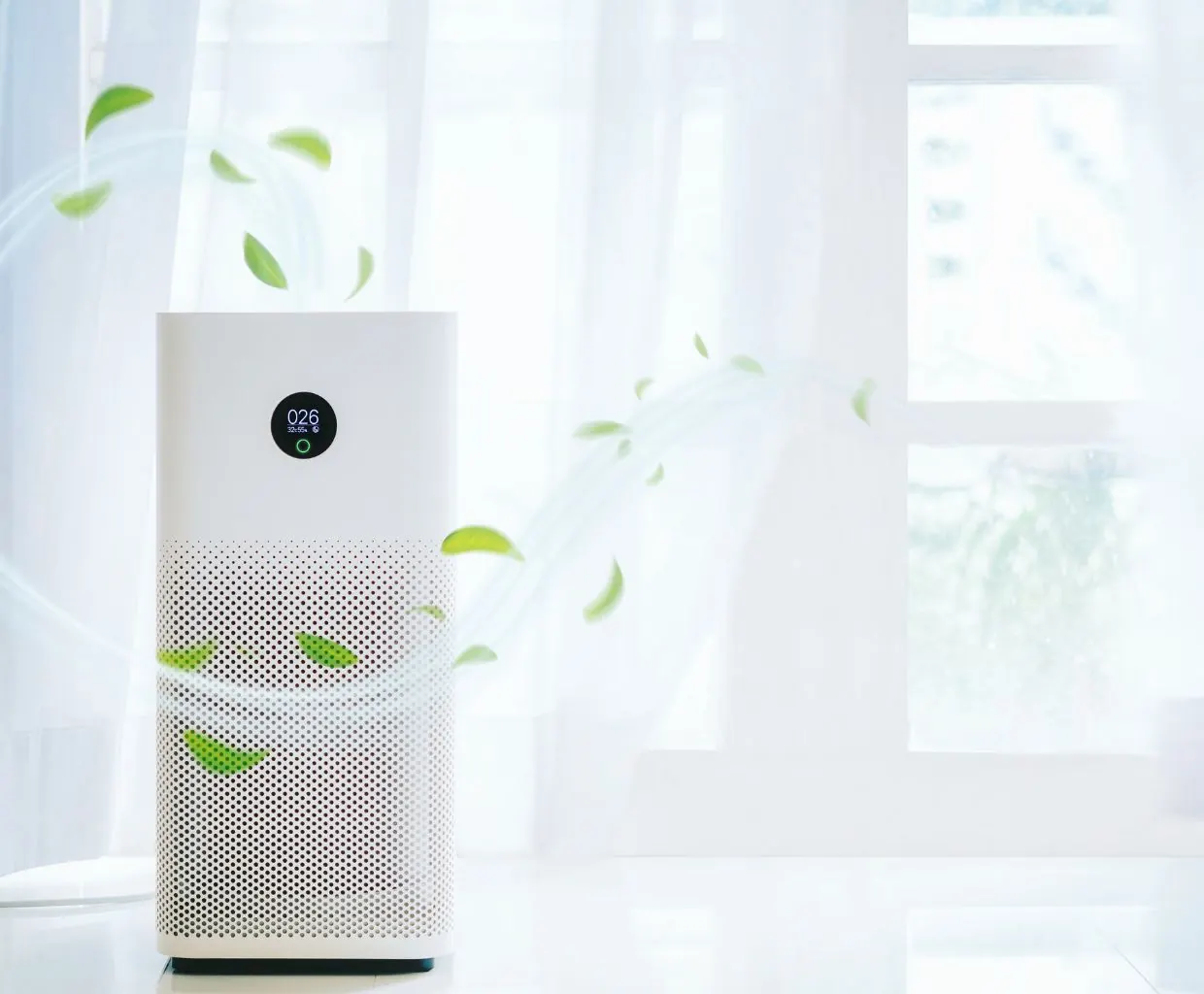
An ionic air purifier puts an electric charge on airborne particles so they stick to a collector plate, a filter or the surfaces in your room. The catch is that the same high-voltage process can make ozone, a lung irritant, and EPA’s data shows ionizers clean far less air than a fan pushing air through a HEPA filter. For most homes, we’d pick a mechanical HEPA purifier, or switch the ionizer off on the one you already own. And we’d never use an ozone generator, whatever it’s called.
How ionic air purifiers work
“Ionic” covers several designs that all use high voltage to charge particles:
- Ionizers (ion generators) release charged ions into the room. The ions attach to particles, which then collect on a plate or settle on nearby surfaces. There is no filter to hold them.
- Electrostatic precipitators (ESPs) pull air through a charging section and trap the particles on metal collector plates that you wash. Standalone ionic towers such as the Ionic Pro TA750 use this design, as does the AprilAire Model 5000 in the ductwork.
- Ionizers added to a filter purifier. Many HEPA purifiers add an ionizing stage under a brand name: Winix calls it PlasmaWave, Coway’s AP-1512HH has a “bipolar device”, and Alen and Rabbit Air offer an optional ionizer.
- Electrostatic charging before a filter. Blueair’s HEPASilent charges particles so its filter media catches more of them.
That last group is why “ionic” and “HEPA” aren’t opposites. Plenty of filter purifiers have an ionizing stage, and the question is whether it’s on all the time.
Do ionizers produce ozone?
They can. EPA’s technical summary says ESPs and ionizers use high voltage and may produce ozone, either as a byproduct or by design, and that some models can push indoor ozone above public health standards. EPA’s consumer guide lists ESPs, ionizers, some UV lights and plasma as the technologies that may emit ozone, and advises avoiding air cleaners that intentionally produce it.
Ozone matters because, in EPA’s words, inhaled ozone can damage the lungs, and relatively low amounts can cause chest pain, coughing and throat irritation. Our guide to air purifier side effects covers the health side and the exposure limits in more detail.
How much ozone a certified ionizing purifier makes varies:
- Alen BreatheSmart 45i and 75i: Alen states under 0.001 ppm with the ionizer on and 0 with it off. ENERGY STAR lists 1 ppb for the 75i.
- Blueair Blue Pure 311i Max: ENERGY STAR lists 2 ppb.
- Honeywell AirGenius 4 and 5: the manuals say the ionizer makes a small amount of ozone, under 50 ppb.
All of these stay under California’s limit. None of them is zero, which is why a switch matters.
Ionizer vs ozone generator. An ionizer makes ozone as a side effect. An ozone generator makes it on purpose and is sometimes sold as an “air purifier”. EPA concludes that ozone at levels that don’t exceed public health standards is generally ineffective at cleaning indoor air, that ozone generators don’t remove particles such as dust and pollen, and that no federal agency has approved them for occupied spaces.
What EPA found about how well they clean
Ozone aside, ionizers are weak cleaners. The studies compiled in EPA’s 2018 technical summary typically measured fine and ultrafine particle CADRs of under about 20 cfm for ionizers and PCO units, against about 150 to 300 cfm for many HEPA and ESP portables. CADR is the clean-air number you size a purifier by; our explainer on what CADR is shows how it works, and the air purifier size calculator turns it into a room size.
EPA adds that ESPs and ionizers don’t remove gases or odors. For smells you need activated carbon, which we compare in HEPA vs carbon filters. And an ionizer without a collector doesn’t capture anything: it moves particles out of the air and onto the surfaces around it.
Electrostatic precipitators are the exception on airflow: EPA groups many ESP portables with HEPA units in the 150 to 300 cfm range. They still carry the ozone question, and their collector plates need washing.
CARB certification: what it tells you
California requires every indoor air cleaning device sold there, including online, to be certified by CARB as emitting no more than 0.050 ppm (50 ppb) of ozone. Certified products carry the label “Meets California ozone emissions limit. CARB certified.” Purifiers that use only mechanical filters are exempt from ozone testing because their ozone output is negligible, but they still need certification.
CARB’s list also sorts each device into a type, which is a quick clue. Ionizing, electrostatic, UV and PCO units are listed as Electronic; filter-only units as Mechanical. Two cautions from our research:
- The list isn’t always consistent. CARB lists some Levoit SKUs as Electronic although Levoit advertises no ionizer, and lists Honeywell’s AirGenius towers as Mechanical although their manuals describe an always-on ionizer. Read the manual too.
- CARB itself says certification doesn’t mean a device is effective or “safe to use”. It’s the floor, not a recommendation.
Which popular HEPA purifiers have an ionizer switch
Here’s what the manuals, product pages and CARB list in our research database say about well-known models:
| Model | Ionizing stage | Can you turn it off? | CARB type |
|---|---|---|---|
| Coway Airmega AP-1512HH Mighty | “Bipolar device” ionizer | Yes, IONIZER button | Electronic |
| Coway Airmega Mighty2 AP-1512N | None listed | n/a | Mechanical |
| Winix 5520, A231, C545 | PlasmaWave | Yes, dedicated button | Electronic |
| Alen BreatheSmart 45i, 75i | Optional ionizer | Yes | Electronic |
| Rabbit Air A3 | Negative ion generator | Yes | Electronic |
| Blueair Blue Pure 311i Max, 211i Max | HEPASilent electrostatic charging | No toggle on blueair.com | Electronic |
| Honeywell AirGenius 4, AirGenius 5, QuietClean HFD-120-Q | Ionizer | No off switch in the manuals | Mechanical (per CARB) |
| Levoit Core 300-P, Core 600S-P, Vital 200S-P | None advertised | n/a | Mechanical (some SKUs Electronic) |
A few details worth knowing. Winix’s A231 manual shows PlasmaWave on by default, so you have to press the button each time you want it off. Coway’s Mighty2, launched in March 2026 as the next generation of the AP-1512HH, lists no ionizer and is certified as Mechanical. The Honeywell towers aren’t HEPA at all: they use a permanent washable ifD filter plus the ionizer, which we cover in our guide to the best filterless air purifier.
Tip: If your purifier has an off switch, the HEPA and carbon filters keep working without the ionizer. We’d leave it off in bedrooms, nurseries and around anyone with asthma.
Which ones we’d skip
- Ozone generators, under any name. CARB keeps a list of potentially hazardous ozone generators sold as air purifiers, such as the EcoQuest/Alpine “Living Air Classic”. Commercial units like the Enerzen O-777 are sold online, aren’t on CARB’s certified list, and listings say they’re not for sale in California. We’d never run one in an occupied room.
- Ionizer-only gadgets that aren’t CARB certified. The Ritello Purello, for example, has an ionizer but no Purello entry on CARB’s list and no published CADR. See our Purello air purifier overview.
- Standalone ionic towers with no CADR. The Ionic Pro TA750 family is CARB certified as Electronic, but there’s no AHAM CADR on record, so you can’t compare how much air it cleans.
- Always-on ionizers in a nursery or an asthmatic’s bedroom. The Honeywell ifD towers are CARB certified, but with no off switch we’d choose a mechanical HEPA unit for those rooms. Our air purifier for baby room guide explains why.
What we’d buy instead
Our pick is a mechanical HEPA purifier with enough CADR for the room. Two current examples from our research, both certified by CARB as Mechanical:
Coway Airmega Mighty2 AP-1512N. Coway lists a CADR of 240 for smoke, 242 for dust and 249 for pollen, close to the AP-1512HH that Coway still sells alongside it, with a washable pre-filter and a combined carbon and HEPA filter. No ionizer is listed on the product page.
Check the Coway Mighty2 on Amazon
Levoit Vital 200S-P. The AHAM directory lists a smoke CADR of 250, which Levoit and AHAM put at 388 sq ft. It has a washable pre-filter, a particle filter and activated carbon, and Levoit advertises no ionizer.
Check the Levoit Vital 200S on Amazon
If allergies are the reason you’re shopping, our guide to the best air purifier for allergies ranks more filter-only models by pollen CADR and room size.
Frequently asked questions
Are ionic air purifiers safe?
EPA says ionizers and electrostatic precipitators may emit ozone, a lung irritant, and that some models can push indoor ozone above public health standards. If you use one, pick a CARB-certified model (0.050 ppm ozone or less) and, ideally, one whose ionizer you can switch off.
Is an ionizer the same as an ozone generator?
No. An ionizer can make some ozone as a byproduct, while an ozone generator makes it on purpose. EPA says no federal agency has approved ozone generators for occupied spaces, and we'd never use one where people or pets breathe.
Do ionic air purifiers work?
Not as well as a filter. Studies compiled in EPA's technical summary measured fine-particle CADRs of under about 20 cfm for ionizers, against about 150 to 300 cfm for many HEPA and electrostatic precipitator portables. Ionizers also don't remove gases or odors.
Should I turn the ionizer off on my air purifier?
We would, especially in bedrooms, nurseries and homes with someone who has asthma. The HEPA and carbon filters do the cleaning, so the purifier still works with the ionizer off. Coway, Winix, Alen and Rabbit Air all document an off switch on the models in our research.
How do I know if my air purifier has an ionizer?
Look for terms like ionizer, ion generator, PlasmaWave, bipolar or electrostatic in the manual, and check the model on CARB's certified list. CARB classes ionizing and electrostatic units as Electronic, though the list isn't always consistent with what the manual says.
Related guides
Air Purifiers
Best Filterless Air Purifiers in 2026: Ionizers, Ozone and Safer Options
What a filterless air purifier really is, why EPA warns about ozone, and the few CARB-certified options worth a look, plus a HEPA alternative.
9 min read
Air Purifiers
Negative Side Effects of Air Purifiers: Ozone, Ionizers and Other Downsides
The real downsides of air purifiers, from ozone and ionizers to noise, dirty filters and cost, and how to avoid each one.
7 min read
Air Purifiers
Best Air Purifiers With Washable Filters in 2026: What You Can Really Rinse
Six air purifiers with washable filters or pre-filters, picked from AHAM, ENERGY STAR and maker data, plus why true HEPA is never washable.
10 min read
Air Purifiers
Best Air Purifiers for Large Rooms in 2026: Verified CADR for 500+ sq ft
Six air purifiers with enough verified clean air for living rooms and open plans of 500 sq ft or more, plus how to size one and when two units beat one.
11 min read