What Does a Humidifier Do? How It Works, What It Helps and When You Need One
A humidifier adds water vapor to dry indoor air. Here's how each type works, what it can and can't help with, and how to tell if you need one.
By Clean Air Guides editorial teamUpdated 6 min read
In this article
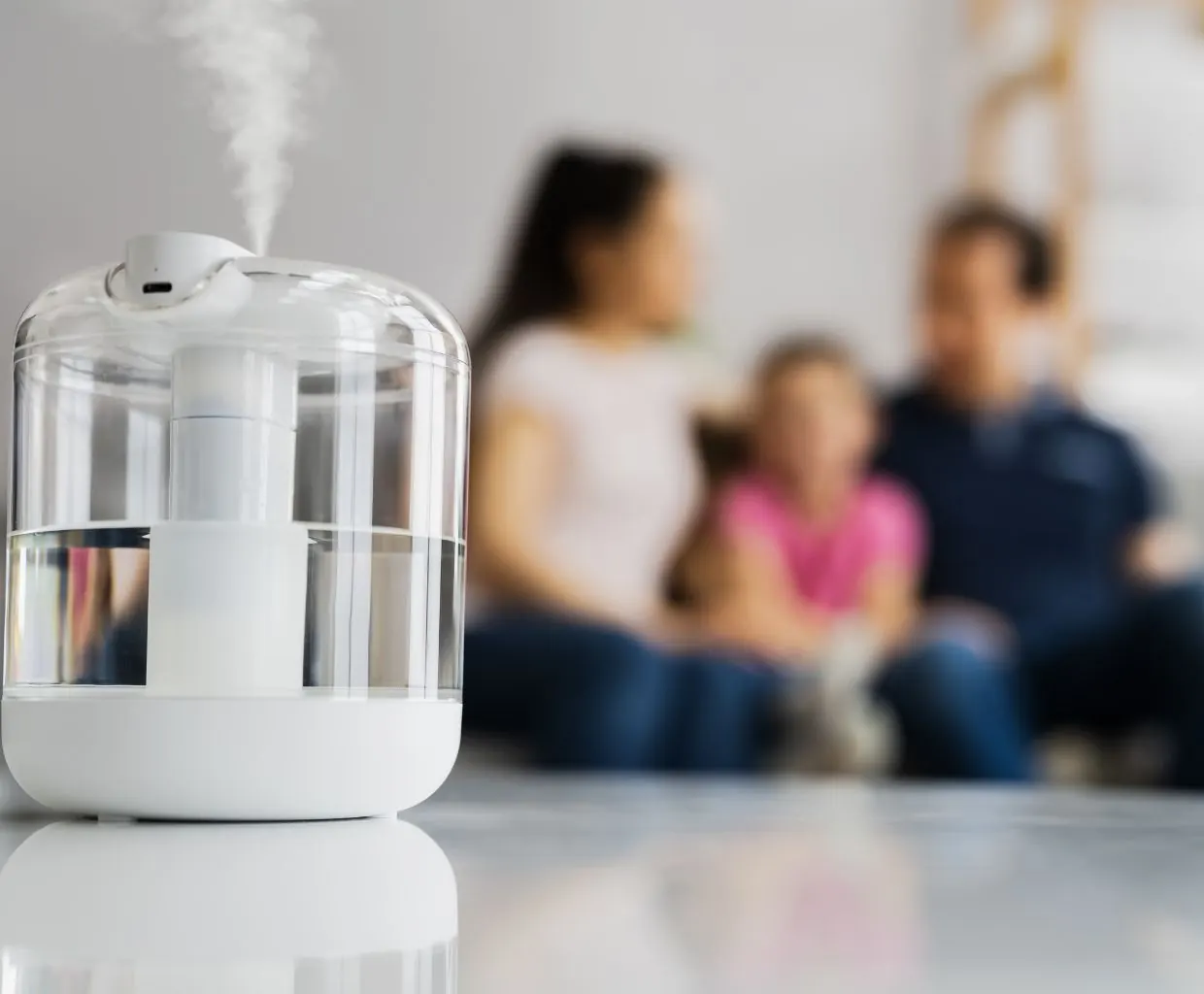
A humidifier adds water vapor to the air, which raises the relative humidity in a room. That’s the whole job. It’s useful when indoor air gets very dry, usually in winter with the heat on, and it can make dry skin and a dry nose and throat more comfortable. It doesn’t clean, heat or cool the air, and if it’s left dirty or pushed too high, it can cause problems of its own.
What a humidifier actually does
Air always holds some water vapor. Relative humidity (RH) tells you how much it holds compared with the most it could hold at that temperature. A humidifier turns water from its tank into vapor or a fine mist that evaporates, so the air holds more water and the RH reading goes up. To see the numbers behind a reading, our relative humidity calculator shows how the RH of the same air changes with temperature, and the absolute humidity calculator gives the grams of water in each cubic meter.
Why does a house get dry in the first place? In cold weather, outdoor air holds very little water. A University of Minnesota Extension fact sheet explains that cold air leaks into a home, warm air leaks out and takes moisture with it, and the result is low indoor humidity. A humidifier replaces some of that lost water.
How much water does that take? Our humidifier size calculator does the math. For a 180 sq ft bedroom with 8 ft ceilings at 70°F, going from 30% to 45% takes about 0.32 gallons a day at a typical US air exchange rate, and about 0.71 gallons a day in a leakier home that swaps its air once an hour. Every humidifier is fighting that steady leak, which is why the room dries out again soon after you switch it off.
How each type of humidifier works
EPA describes four main designs. They all add water to the air; the difference is how they get it there.
| Type | How it works | What leaves the unit | Main trade-off |
|---|---|---|---|
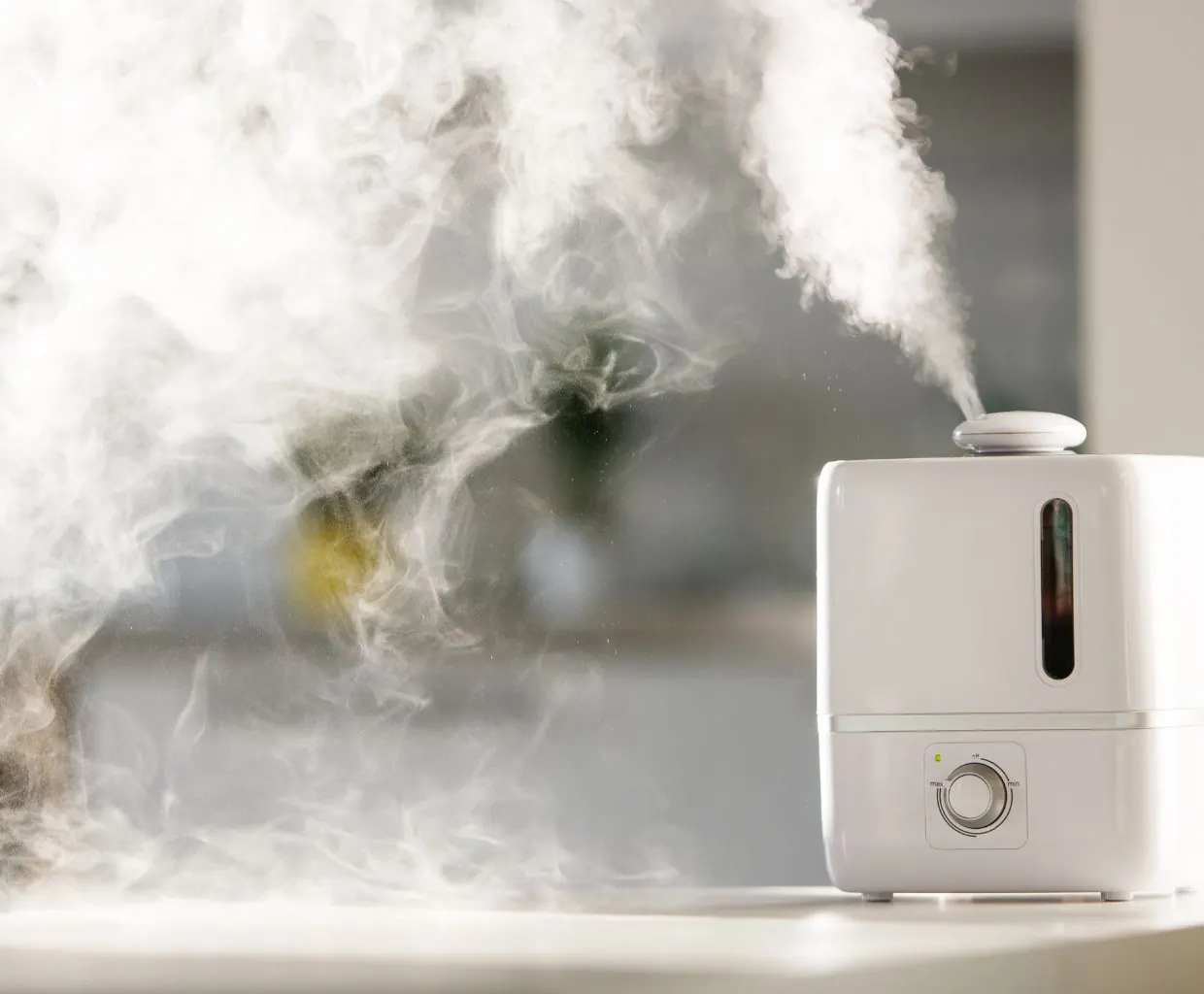
| Ultrasonic | A plate vibrating at ultrasonic speed breaks water into a fine mist | Visible cool mist | Spreads tap-water minerals as white dust (EPA) |
| Impeller | A fast-spinning disk flings water into a mist | Visible cool mist | Same mineral and germ concern as ultrasonic (EPA) |
| Evaporative | A fan blows air through a wet wick, belt or filter | Invisible water vapor | Wicks need replacing |
| Steam / warm mist | A heating element or electrodes boil the water | Steam, cooled a little in warm-mist models | Hot water can burn; uses more power |
A few details worth knowing:
- Ultrasonic and impeller (“cool mist”) units generally disperse the most minerals and microorganisms from the tank, according to EPA. That’s why makers of ultrasonic models usually recommend distilled water, and why we’d pick another type if your tap water is hard.
- Evaporative units aren’t expected to disperse substantial amounts of minerals, per EPA. They slow down as the room gets more humid, which makes them harder to overdo.
- Steam units boil the water, so minerals stay behind. EPA calls warm-mist humidifiers a type of steam vaporizer in which the steam is cooled before it leaves. Health sources advise keeping them out of children’s reach because of the burn risk.
If you’re choosing between types, our ultrasonic vs evaporative humidifier and warm mist vs cool mist humidifier comparisons go through the details.
What a humidifier can help with
Here’s what the health and building sources we rely on actually say. We’ve kept to their wording and left out the bigger promises you’ll see in ads.
- Dry skin. Mayo Clinic says low humidity can cause dry skin, and its humidifier guidance is framed around easing skin and breathing symptoms.
- Dry nose, throat and stuffiness. Mayo Clinic says a cool-mist humidifier may ease a child’s stuffy nose during a cold. Talk to your doctor about symptoms that are severe or don’t go away.
- Wood and instruments. EPA’s Indoor airPLUS guidance notes that buildings can get very dry in winter and that humidification can improve comfort and reduce cracking of wood floors, furniture and instruments.
What it doesn’t do matters just as much. A humidifier doesn’t remove dust, pollen, smoke or odors; that’s the job of an air purifier (see air purifier vs humidifier). It won’t heat a room in any way your thermostat would notice. And it isn’t a treatment for asthma or allergies. If you have a lung condition, talk to your doctor before adding a humidifier, because higher humidity also feeds dust mites and mold.
When you need one (and when you don’t)
Measure first. EPA notes that hygrometers are sold at hardware stores, and some humidifiers have one built in.
Then compare the reading with the ranges health agencies publish:
- EPA and CPSC: keep indoor humidity between 30% and 50% if possible.
- EPA’s humidifier fact sheet: don’t humidify above 50%, because higher humidity may encourage biological growth.
- MedlinePlus: set a humidifier to 40% to 50%.
So the simple rule is this: if your home sits below about 30% for days at a time, a humidifier makes sense. If it’s already in the 30s or 40s, you probably don’t need one. In very cold weather, windows can fog well before 50%, so watch them too. Our ideal indoor humidity guide covers the winter adjustments.
We’d pick a model with a built-in humidistat, so it stops at your target instead of running until the windows fog. For current models, see our roundup of the best humidifier options by room and budget.
The risks: too much moisture and dirty tanks
A humidifier is one of the few home appliances that can make the air worse if you neglect it. Two things go wrong:
Too much humidity. CPSC warns that above 60%, moisture may build up and condense on surfaces where bacteria and fungi can grow. EPA says that if water condenses on windows, walls or pictures, you should move the humidifier, turn it down or use it less, and never let carpets, drapes or tablecloths near it get damp.
A dirty tank. CPSC found that bacteria and fungi often grow in humidifier tanks and can be released in the mist, and that breathing dirty mist may cause problems ranging from flu-like symptoms to serious infection. MedlinePlus lists “humidifier lung” as another name for hypersensitivity pneumonitis, which can be caused by fungi or bacteria in humidifiers. EPA’s routine for portable units is to change the water every day and clean every third day. If you develop breathing symptoms you link to a humidifier, EPA says to stop using it and contact a physician.
Tip: Empty the tank and let it dry if you won’t use the humidifier for a day or more. Standing water is where the trouble starts. Our how to clean a humidifier guide has step-by-step routines for each type.
The short version
In our view, a humidifier is worth owning if your hygrometer regularly reads under 30% in winter. Pick a type that fits your water and your household (evaporative for hard tap water, cool mist around kids), set it to 40% to 50%, and clean it on schedule. We’d skip one entirely if your home already holds 30% or more on its own: you’d be adding upkeep for little benefit.
Frequently asked questions
What does a humidifier do?
It adds water vapor to indoor air, which raises the relative humidity. That's all it does: it doesn't filter, cool or heat the air in any meaningful way.
What is a humidifier used for?
Mostly for dry winter air. Mayo Clinic says low humidity can cause dry skin, and health sources describe humidifiers as a way to ease dry skin and breathing symptoms. EPA also notes humidification can reduce cracking of wood floors and furniture in very dry buildings.
When do you need a humidifier?
When a hygrometer shows your home staying below about 30% relative humidity. EPA and CPSC advise keeping indoor humidity between 30% and 50%, and EPA says not to humidify above 50%.
Is it OK to run a humidifier all night?
Yes, as long as it has a humidistat or you check the humidity so it stays at or below 50%. MedlinePlus suggests setting the unit to 40% to 50% and placing it several feet from the bed.
Can a humidifier make you sick?
A dirty one can. CPSC says bacteria and fungi often grow in humidifier tanks and can be released in the mist. Change the water daily and clean the unit every third day, as EPA advises, and stop using it and talk to your doctor if you notice breathing symptoms you link to it.
Does a humidifier clean the air?
No. A humidifier adds moisture; it doesn't remove dust, pollen or smoke. That's what an air purifier with a HEPA filter does.
Related guides
Humidifiers
Warm Mist vs Cool Mist Humidifier: Safety, Energy, White Dust and Cleaning
Cool mist is the safer pick for kids and pets and uses far less power. Warm mist puts out little or no white dust from steam. Here's how they compare.
8 min read

Humidifiers
Does a Humidifier Help With Congestion? What Health Sources Say
MedlinePlus, CDC and Mayo Clinic list a clean, cool-mist humidifier as comfort care for a stuffy nose. Here's what it can and can't do, and how to use one safely.
6 min read
Humidifiers
Ideal Indoor Humidity: What Level to Aim For in Every Season
Aim for 30–50% relative humidity, and lower in a cold snap. What the EPA and others say, how to read a hygrometer and when to run a humidifier.
7 min read
Humidifiers
Best Humidifiers in 2026: Picks for Every Room, Budget and Mist Type
Six humidifiers picked from maker specs and manuals, from a budget nightstand unit to a 6-gallon evaporative tower, plus how to choose the right type and size.
15 min read