Does a Humidifier Help With Congestion? What Health Sources Say
MedlinePlus, CDC and Mayo Clinic list a clean, cool-mist humidifier as comfort care for a stuffy nose. Here's what it can and can't do, and how to use one safely.
By Clean Air Guides editorial teamUpdated 6 min read

Yes, a humidifier can help with congestion, within limits. MedlinePlus says using a humidifier at home can help relieve a stuffy nose and help break up mucus, and CDC lists “a clean humidifier or cool mist vaporizer” among its tips for feeling better with a cold. It eases the discomfort; it doesn’t treat the cold, the flu or a sinus infection. Use cool mist, keep the room at 40% to 50% humidity, clean the unit often, and talk to your doctor if symptoms are severe or don’t go away.
What health sources say about humid air and a stuffy nose
We don’t give medical advice, so here’s what the main US health sources actually say. All of them list a humidifier as comfort care, next to rest, fluids and saline.
| Source | What it says about humidifiers and congestion |
|---|---|
| MedlinePlus (NIH) | Dry air can irritate and inflame the airways in your nose and throat; a humidifier can help relieve a stuffy nose, help break up mucus, and relieve the discomfort of colds and the flu |
| CDC | “Use a clean humidifier or cool mist vaporizer” is one of its common-cold relief tips, with saline spray or drops and breathing steam from a shower |
| Mayo Clinic | A cool-mist humidifier may ease a child’s stuffy nose during a cold; heated humidified air “doesn’t seem to have the same result” |
| MedlinePlus, sinusitis | Lists “Use a humidifier” with nasal saline, fluids and inhaling steam to help with sinus symptoms |
Two things stand out. First, the advice is about comfort: CDC reminds readers that antibiotics don’t work against viruses, and none of these pages presents a humidifier as a cure. Second, they agree on cool mist, both because of Mayo Clinic’s note on heated air and because of burn risk. We’d read that as a clear default for anyone choosing a unit for a cold.
Why moist air can feel better
MedlinePlus explains the mechanism simply: dry air can irritate and inflame the airways in the nose and throat, and adding moisture helps take that dryness away. Mayo Clinic says humidifiers are often used to soothe dry sinuses, bloody noses and cracked lips caused by dry indoor air.
That’s also the limit. A humidifier changes the air, not the infection, and it can’t open a nose blocked by swelling from allergies. If your congestion comes with sneezing and itchy eyes around pets or pollen, the moisture won’t remove the allergen. An air purifier with a HEPA filter is the tool for airborne allergens, as we explain in our guide to the best air purifier for allergies. Our air purifier vs humidifier comparison covers which device fits which problem.
Cool mist, especially for children
MedlinePlus says to “always use a cool-mist humidifier (vaporizer), especially for children,” because warm-mist humidifiers can cause burns if a person gets too close. Mayo Clinic says the same, and CHOP reports that the American Academy of Pediatrics recommends cool mist. EPA adds that steam vaporizers should be kept out of children’s reach because steam and boiling water may cause burns.
Please skip home-made steam. In 2026, Shriners Children’s Boston reported treating children with second-degree burns from pots of boiling water placed in bedrooms to ease congestion. The hospital advises store-bought cool-mist humidifiers instead and avoiding any home remedy that involves boiling water.
“Cool mist” covers ultrasonic, impeller and evaporative units. They differ in white dust and cleaning, and we compare them with steam units in warm mist vs cool mist humidifier. If you’re buying for a nursery, see our picks for the best humidifier for baby rooms.
Note: CDC also suggests breathing steam from a hot shower, and for young children, sitting together in a bathroom with the shower running. That’s a different thing from a pot of boiling water, which is what caused the burns Shriners describes.
Set the right humidity: 40% to 50%
More moisture isn’t better. MedlinePlus suggests setting the humidifier to 40% to 50%. EPA and CPSC recommend keeping the home between 30% and 50%, and EPA says not to humidify above 50%, because higher humidity may encourage the growth of biological organisms. MedlinePlus warns that if surfaces stay damp, mold and mildew can grow, which can cause breathing problems in some people.
- Use a humidistat or a hygrometer. EPA notes that hardware-store hygrometers can measure humidity and that some humidifiers have a built-in humidistat. Check its default: some units ship set higher than 50%.
- Watch the windows. If water condenses on windows, walls or pictures, EPA says to move the humidifier, lower its setting or run it less. Our dew point calculator shows how much humidity your windows can take on a cold night.
For the full seasonal picture, see our guide to ideal indoor humidity.
Where to put it at night
MedlinePlus suggests placing the humidifier several feet (about 2 meters) from the bed, and CHOP advises about 3 feet between a humidifier and a child. Put it on a firm, flat, waterproof surface, and don’t aim the mist at bedding, curtains or walls. EPA says not to let the area around the unit get damp; if it does, turn the output down or run it on and off. If you’re shopping for a quiet unit to run overnight, our best humidifier for bedroom roundup compares published noise ratings and runtimes.
Tip: Leave essential oils and vapor rubs out of the water tank unless the manual says the unit has a separate cup or pad for them. Crane, HoMedics, Levoit and Vicks all warn that oils in the tank can damage the humidifier. If you have pets, also read our guide on whether humidifiers are safe for dogs.
Keep it clean, or it can make things worse
This is the part people skip when they’re sick, and it matters most. CPSC says bacteria and fungi often grow in humidifier tanks and can be released in the mist, and that breathing dirty mist may cause lung problems ranging from flu-like symptoms to serious infection. Mayo Clinic says mist from a dirty humidifier can trigger or worsen asthma and allergy symptoms.
The routine from EPA, CPSC and Mayo Clinic:
- Change the water every day. Empty the tank, wipe it dry and refill. Don’t top up old water.
- Clean every third day. EPA says to scrub the tank, remove scale and film, and use the maker’s recommended cleaner, or 3% hydrogen peroxide if there’s no guidance. Rinse well afterward.
- Use distilled water in an ultrasonic unit. EPA says ultrasonic and impeller humidifiers disperse the most minerals and microorganisms, and recommends bottled water labeled “distilled”. Our guide on what water to use in a humidifier covers the options.
Our step-by-step guide on how to clean a humidifier walks through descaling and disinfecting. EPA’s advice if you notice breathing symptoms you link to the humidifier: stop using it and contact a physician.
When to talk to your doctor
A humidifier is a comfort measure. Call your doctor or seek care if the congestion comes with any of the warning signs these sources list:
- CDC (colds): trouble breathing or fast breathing, dehydration, a fever lasting longer than 4 days, symptoms lasting more than 10 days without getting better, or symptoms that improve and then return or worsen. Also chronic medical conditions that get worse.
- MedlinePlus (sinus symptoms): symptoms lasting longer than 10 to 14 days, or a cold that gets worse after 7 days, a severe headache that over-the-counter pain medicine doesn’t relieve, a fever, or any change in vision.
Babies, older adults and people with asthma or other lung conditions should check with their doctor before relying on home care. If you have asthma or allergies, also ask whether a humidifier suits you at all, since high humidity encourages dust mites and mold.
Frequently asked questions
Does a humidifier help with congestion?
It can ease it. MedlinePlus says a humidifier can help relieve a stuffy nose and break up mucus, and CDC lists a clean humidifier or cool-mist vaporizer among its tips for feeling better with a cold. It's comfort care, not a treatment for the infection itself.
Is cool mist or warm mist better for a stuffy nose?
Health sources favor cool mist. Mayo Clinic says a cool-mist humidifier may ease a child's stuffy nose during a cold, while heated humidified air doesn't seem to have the same result, and MedlinePlus advises cool mist especially for children because warm mist can cause burns.
Where should I put a humidifier when I'm congested?
MedlinePlus suggests several feet (about 2 meters) from the bed, and CHOP advises about 3 feet from a child. Use a flat, waterproof surface and don't point the mist at bedding or walls.
What humidity should I set for congestion?
MedlinePlus suggests 40% to 50%. EPA and CPSC recommend keeping homes between 30% and 50%, and EPA says not to humidify above 50%, so more moisture is not better.
Can a humidifier make congestion worse?
A dirty one can. CPSC says bacteria and fungi often grow in humidifier tanks and can be released in the mist, and Mayo Clinic says mist from a dirty humidifier can trigger or worsen asthma and allergy symptoms. Change the water daily and clean the unit on schedule.
When should I see a doctor about congestion?
CDC says to seek care for trouble breathing, dehydration, a fever lasting more than 4 days, or symptoms lasting more than 10 days or getting better and then worse. MedlinePlus adds a severe headache, fever or vision changes with sinus symptoms. Talk to your doctor if you're unsure.
Related guides
Humidifiers
Best Humidifiers for a Baby in 2026: Cool Mist, Quiet and Easy to Keep Clean
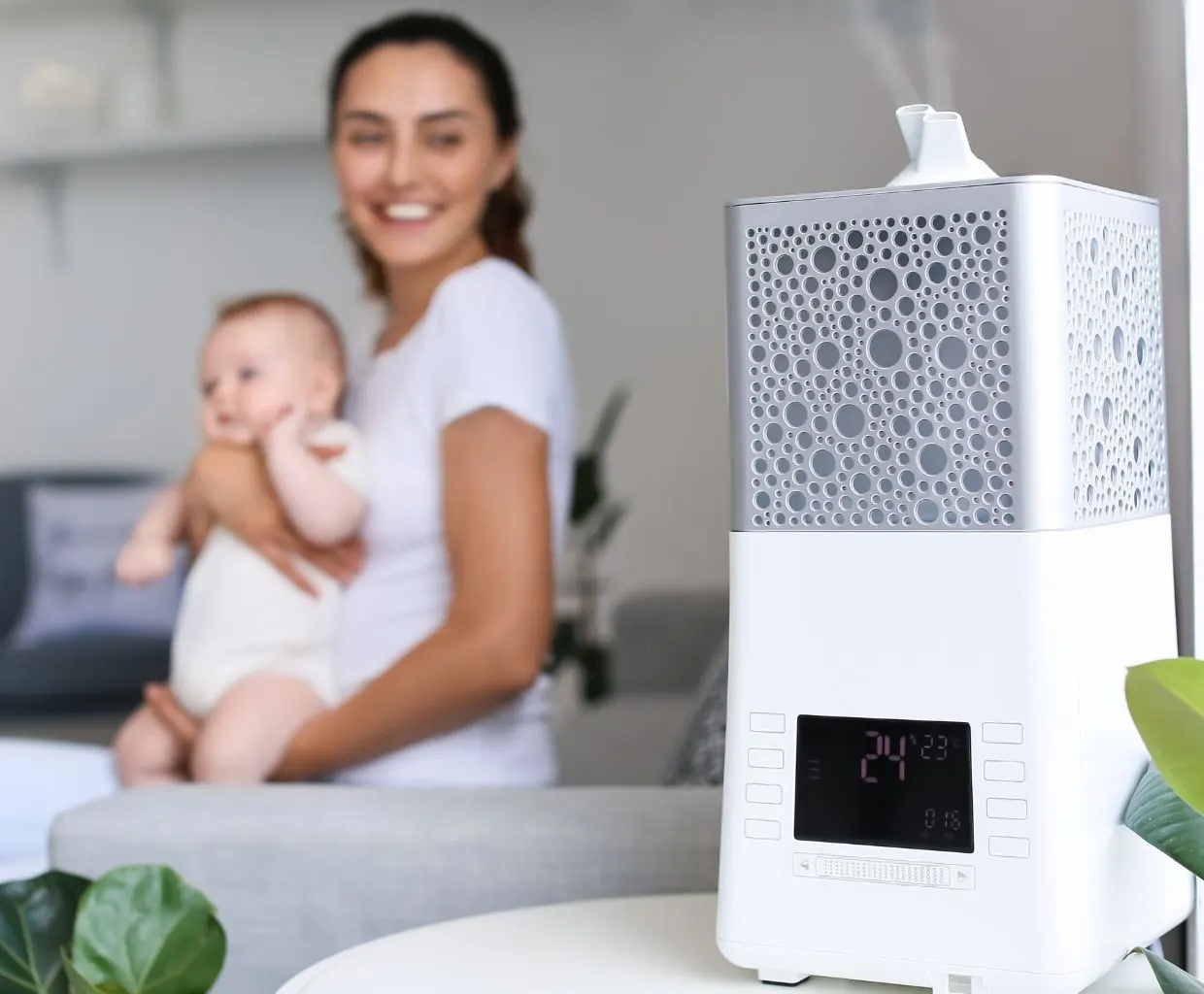
Four cool-mist and evaporative humidifiers for a nursery, picked from maker specs and manuals, plus the humidity range, water, cleaning and placement rules.
9 min read
Humidifiers
Warm Mist vs Cool Mist Humidifier: Safety, Energy, White Dust and Cleaning
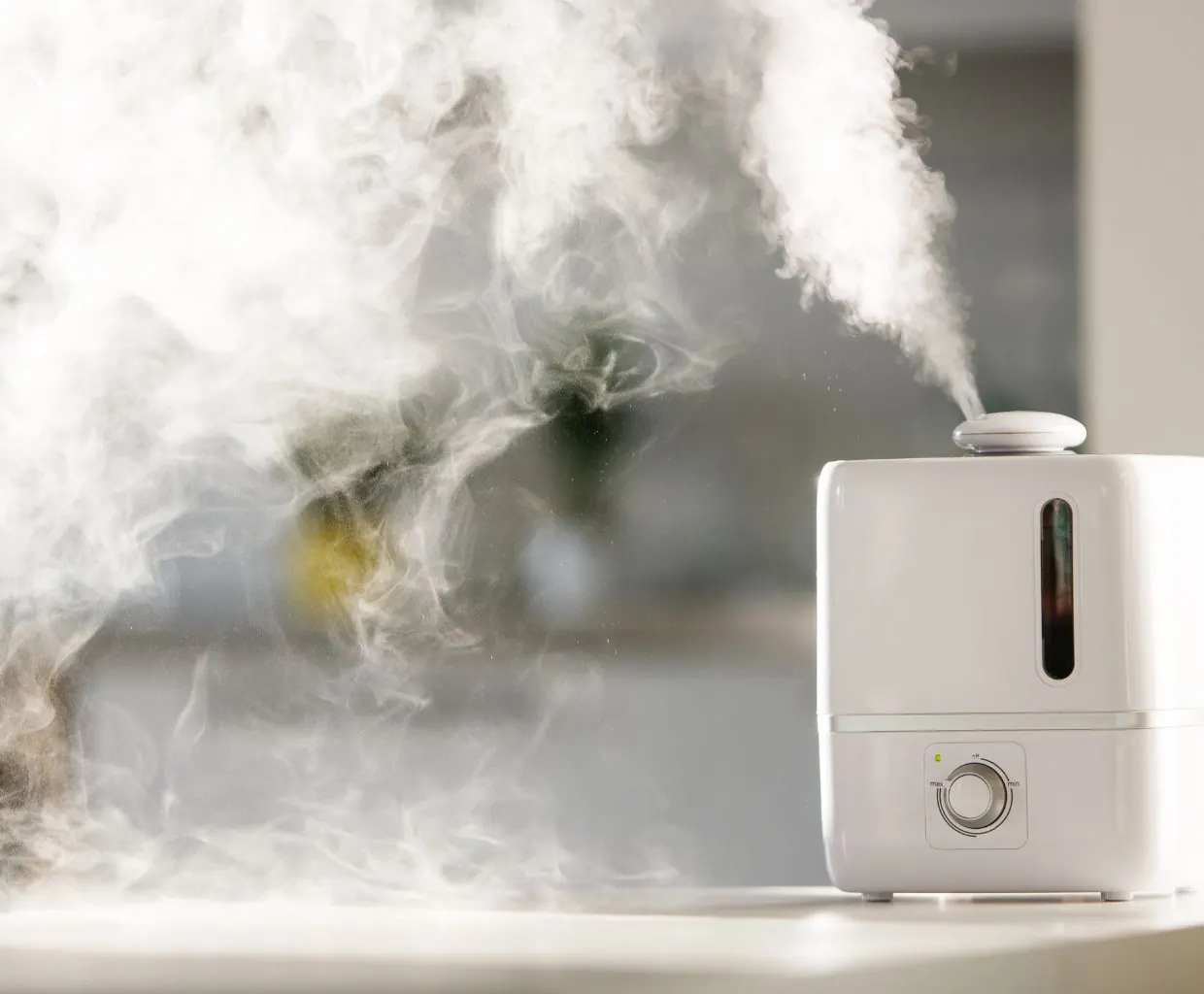
Cool mist is the safer pick for kids and pets and uses far less power. Warm mist puts out little or no white dust from steam. Here's how they compare.
8 min read
Humidifiers
Should You Close the Door When Using a Humidifier?
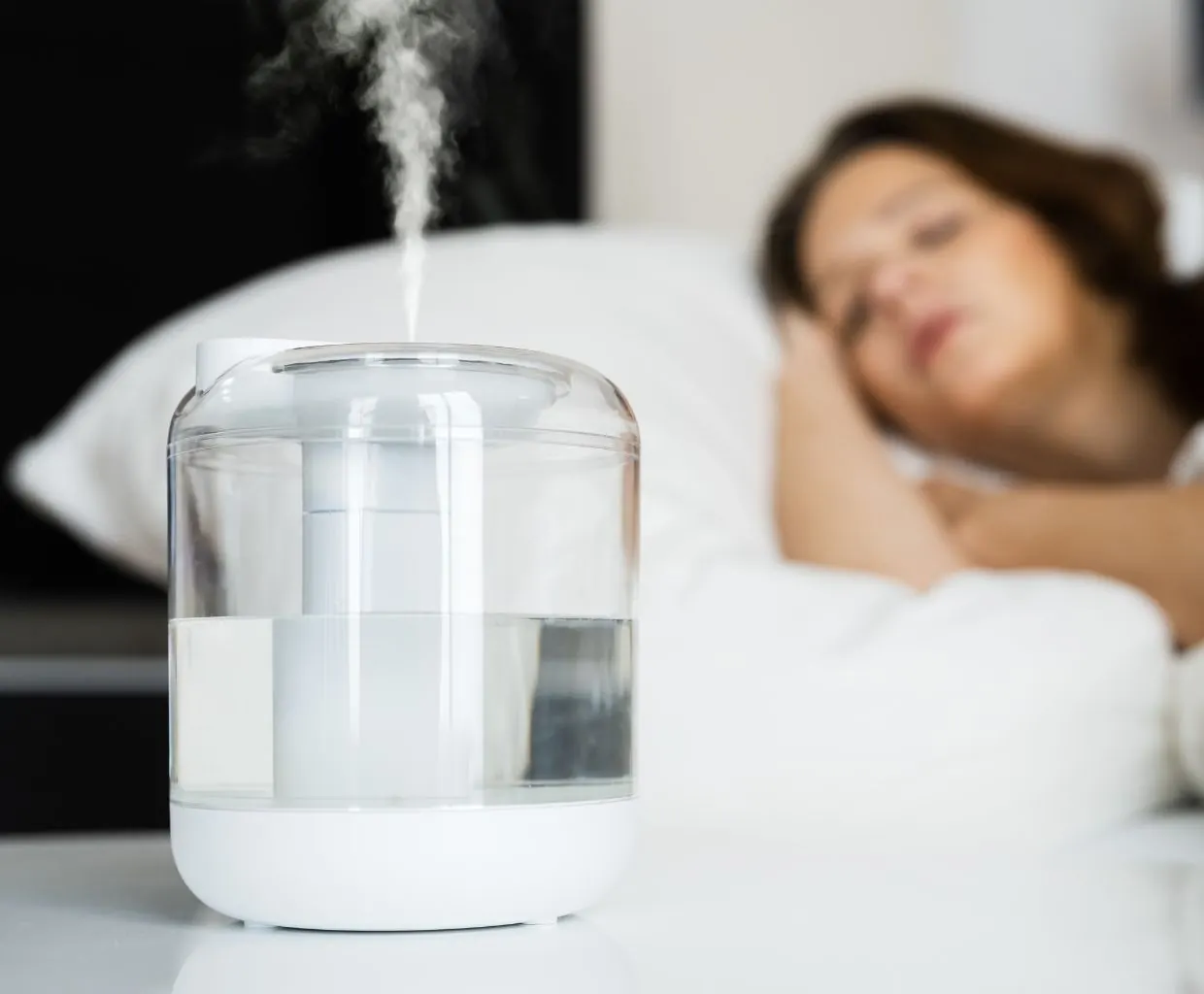
Closing the door makes a humidifier work faster but raises the risk of overshooting and wet windows. When to close it, and safe settings for the night.
5 min read
Humidifiers
Best Humidifiers for the Bedroom in 2026: Quiet, Overnight and Easy to Clean
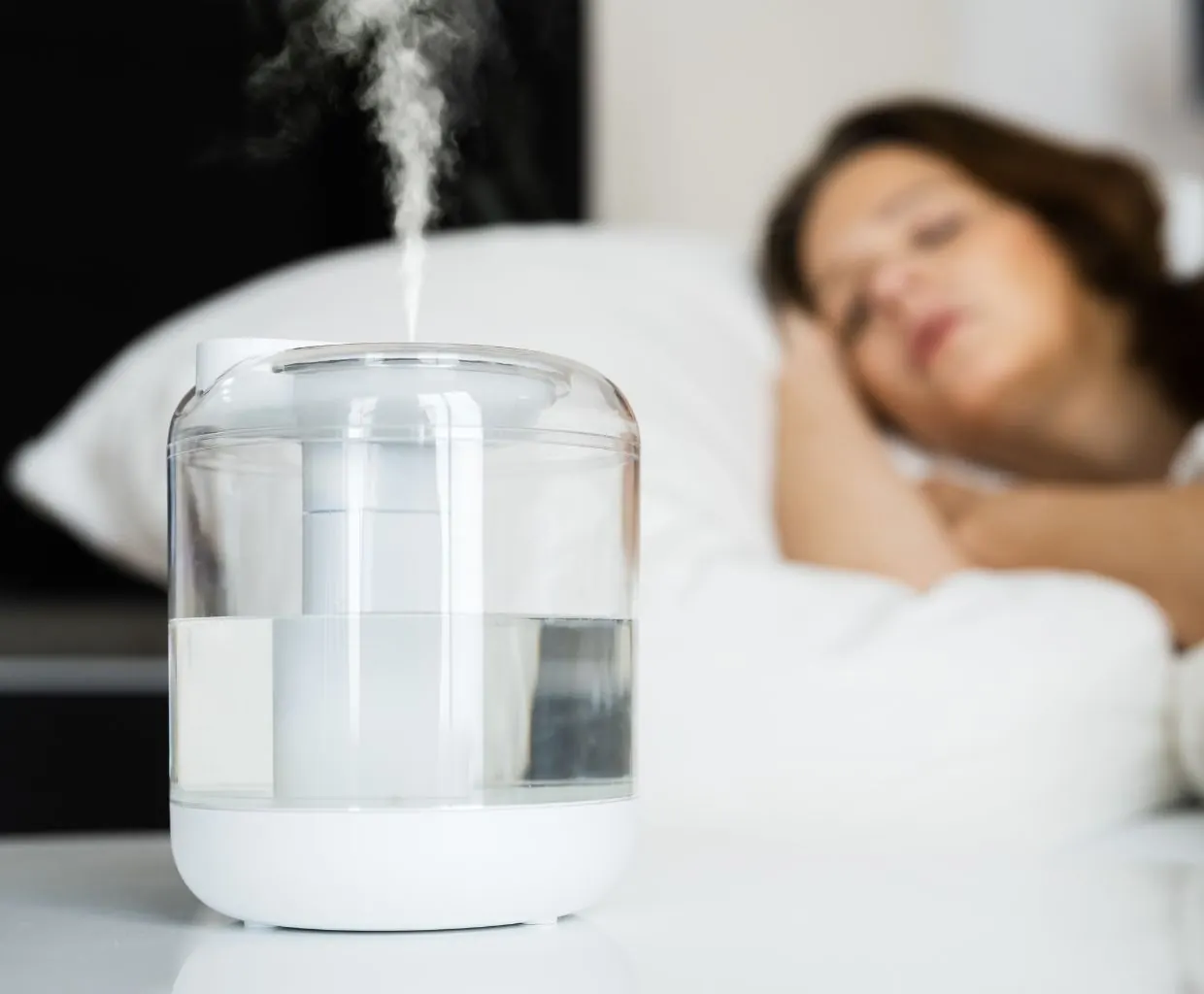
Six bedroom humidifiers picked from maker specs and manuals: published noise levels, overnight runtime, cool or warm mist, white dust and cleaning.
11 min read