Types of Space Heaters: Pros and Cons, Safety and Running Costs
Ceramic, fan-forced, oil-filled, radiant, micathermic and fuel-burning space heaters compared, with the safety data, the running-cost formula and what heat does to indoor humidity.
By Clean Air Guides editorial teamUpdated 12 min read
In this article
There are two families of space heaters: electric ones (ceramic, fan-forced coil, oil-filled radiator, radiant or infrared, micathermic and convection panels) and fuel-burning ones (propane and kerosene). Every electric type turns nearly all of its electricity into heat, so the real differences are how fast you feel it, noise, surface temperature and safety. For most homes, we’d pick an electric heater listed by UL, ETL or CSA, with a tip-over switch and a thermostat.
| Type | How it heats | Pros | Cons | Best for |
|---|---|---|---|---|
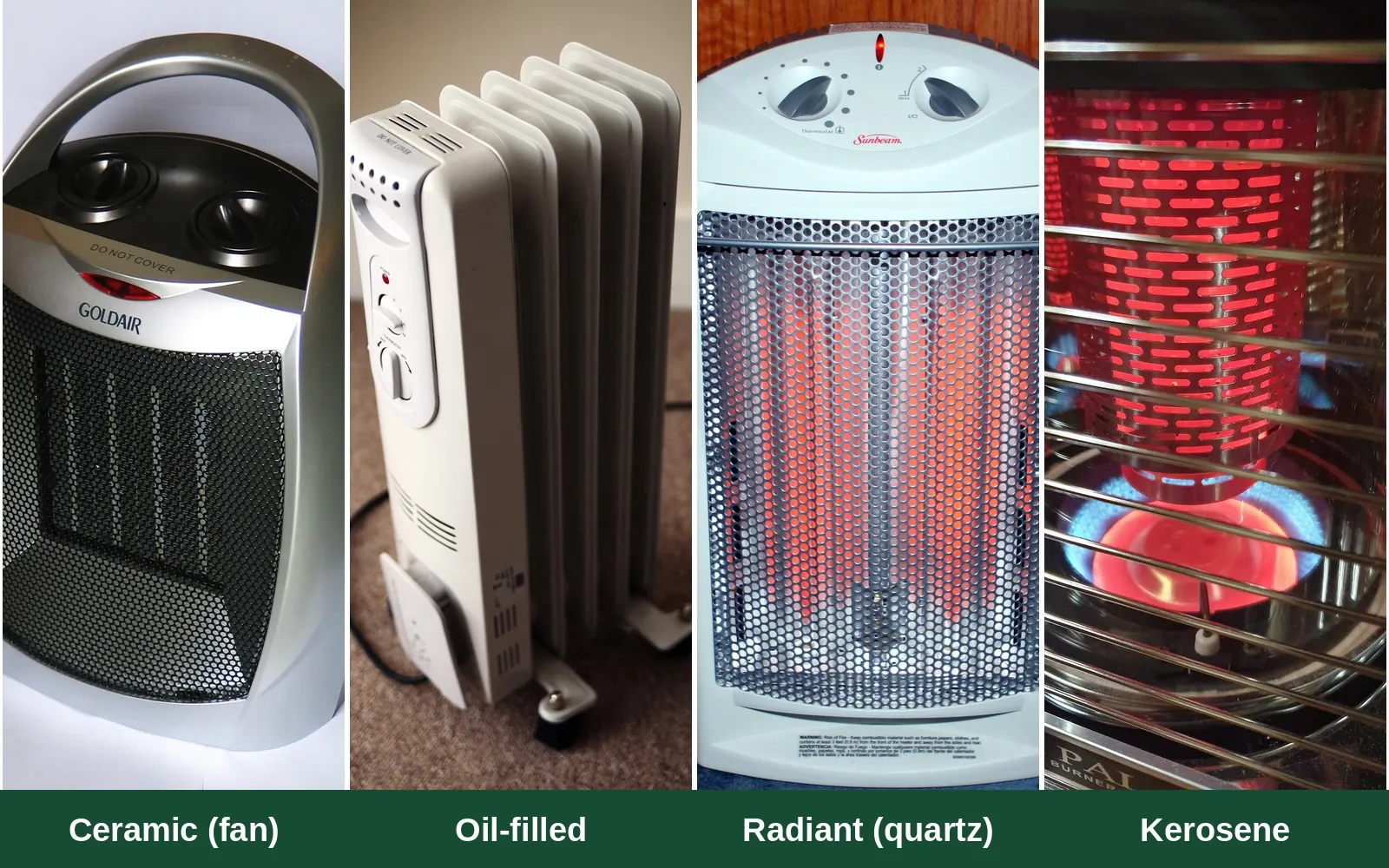
| Ceramic (fan) | Fan blows air over a ceramic PTC element | Compact, warms the air quickly | Fan noise, heat fades as soon as it cycles off | Small rooms, quick warm-ups |
| Fan-forced coil | Fan blows air over a hot wire coil | Simple, fast | Fan noise, glowing coil inside the grille | Short bursts in small rooms |
| Oil-filled radiator | Sealed oil heats metal fins; natural convection | Silent, even heat, stays warm after switch-off | Slow to warm up, heavy, hot surfaces | Bedrooms and living rooms used for hours |
| Radiant (quartz, halogen, carbon infrared) | Glowing element heats people and objects, not the air | Instant warmth, silent | Only warms what it faces, very hot element | Desks, drafty rooms, one person |
| Micathermic panel | Element in mica sheets; radiant plus convection | Slim, quiet, light | Hot panel face; maker claims vary by model | Medium rooms, wall or floor |
| Propane or kerosene | Burns fuel in the room, unvented | Works without power, high output | Carbon monoxide, NO2, fire and fuel risks | Power outages, with a CO alarm and ventilation |
How each type of space heater works, with pros and cons
CPSC’s engineers sort portable electric heaters by how they move heat. Radiant heaters have an element that visibly glows and heats objects or people rather than the air, so the warmth is felt almost at once. Convection heaters heat the air and circulate it, either with a fan (forced convection) or without one (natural convection, as in oil-filled radiators). Fan heaters use nichrome wire, sheathed elements or ceramic PTC elements, a type whose electrical resistance rises as it heats up.
Ceramic space heaters
A ceramic heater is a fan heater with a ceramic PTC element. Because the element’s resistance rises as it heats up, it draws less power as it gets hotter.
- Pros: small, light, and warms the air around you within minutes.
- Cons: the fan makes noise, the heat fades fast once the fan stops, and plastic housings vary in quality. CPSC staff found that some heaters are built with flammable plastic that may ignite and keep burning.
Fan-forced coil heaters
The oldest fan design blows air across a bare or sheathed wire coil.
- Pros: simple and quick to throw heat.
- Cons: fan noise, a hot glowing coil behind the grille, and nothing that stores heat. We’d choose a ceramic or oil-filled model with a thermostat instead.
Oil-filled radiators
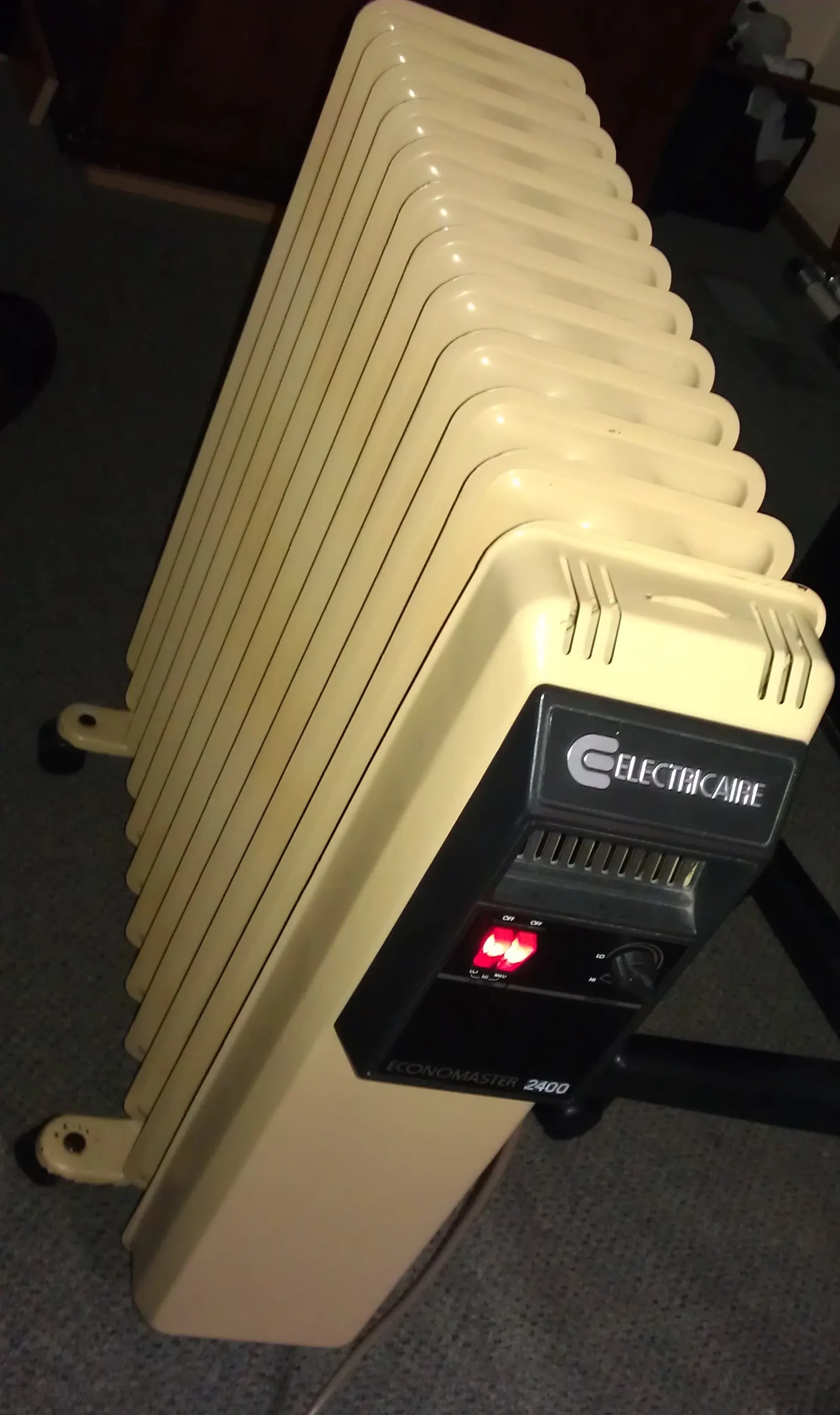
De’Longhi explains that an oil-filled radiator heats oil sealed inside the unit, the heat passes to the metal fins, and the warmed air rises and is replaced by cooler air in a slow convection cycle. The oil is a heat store, not a fuel: De’Longhi says it stays in for the life of the heater and never needs refilling.
- Pros: silent (no fan), even room temperature, keeps releasing heat after it’s switched off. De’Longhi calls them ideal for larger areas that need a constant temperature.
- Cons: De’Longhi says they won’t heat an area immediately and need to run a while first. They’re heavy, and the fins get hot to the touch.
Radiant and infrared heaters (quartz, halogen, carbon)
These are the heaters with a visible glowing element. In CPSC’s description, a radiant heater heats objects or people rather than the air, and the warmth arrives with little delay.
- Pros: instant heat where you sit, no fan noise, a good match for a drafty room where warm air would escape anyway.
- Cons: only what’s in front of it gets warm, and the element runs very hot, so clearance matters most with this type. In CPSC’s review of 2,345 portable electric heater incident reports from 2011 to 2022, most reports didn’t say what kind of heater was involved; of the 627 that did, 263 (42%) described a radiant heater. That share partly reflects how common radiant heaters are, so read it as a reason for care, not a ranking.
Micathermic panel heaters
A micathermic heater wraps its element in thin sheets of mica. Duronic, which makes them, says the panel combines convection and radiant heat. De’Longhi’s HMP1500 mica panel heater, for example, is a 1,500 W unit with 750 W and 1,500 W settings, a thermal shut-off and an internal tip-over switch, and De’Longhi notes it is only suitable for well-insulated spaces or occasional use.
- Pros: slim and light, quiet, mixes the felt warmth of radiant heat with some room-wide convection.
- Cons: the panel face gets hot, and makers’ claims don’t always match the current model (De’Longhi’s HMP1500 page promises “no fan” yet describes a dual fan system), so read the spec sheet.
Convection panel and baseboard-style heaters
Natural convection heaters, including oil-free panels and plug-in baseboard units, warm air that rises and circulates on its own.
- Pros: silent and even heat.
- Cons: slower than a fan heater, and a long baseboard unit needs clear space along the wall in front of it.
Propane and kerosene heaters (fuel-burning)
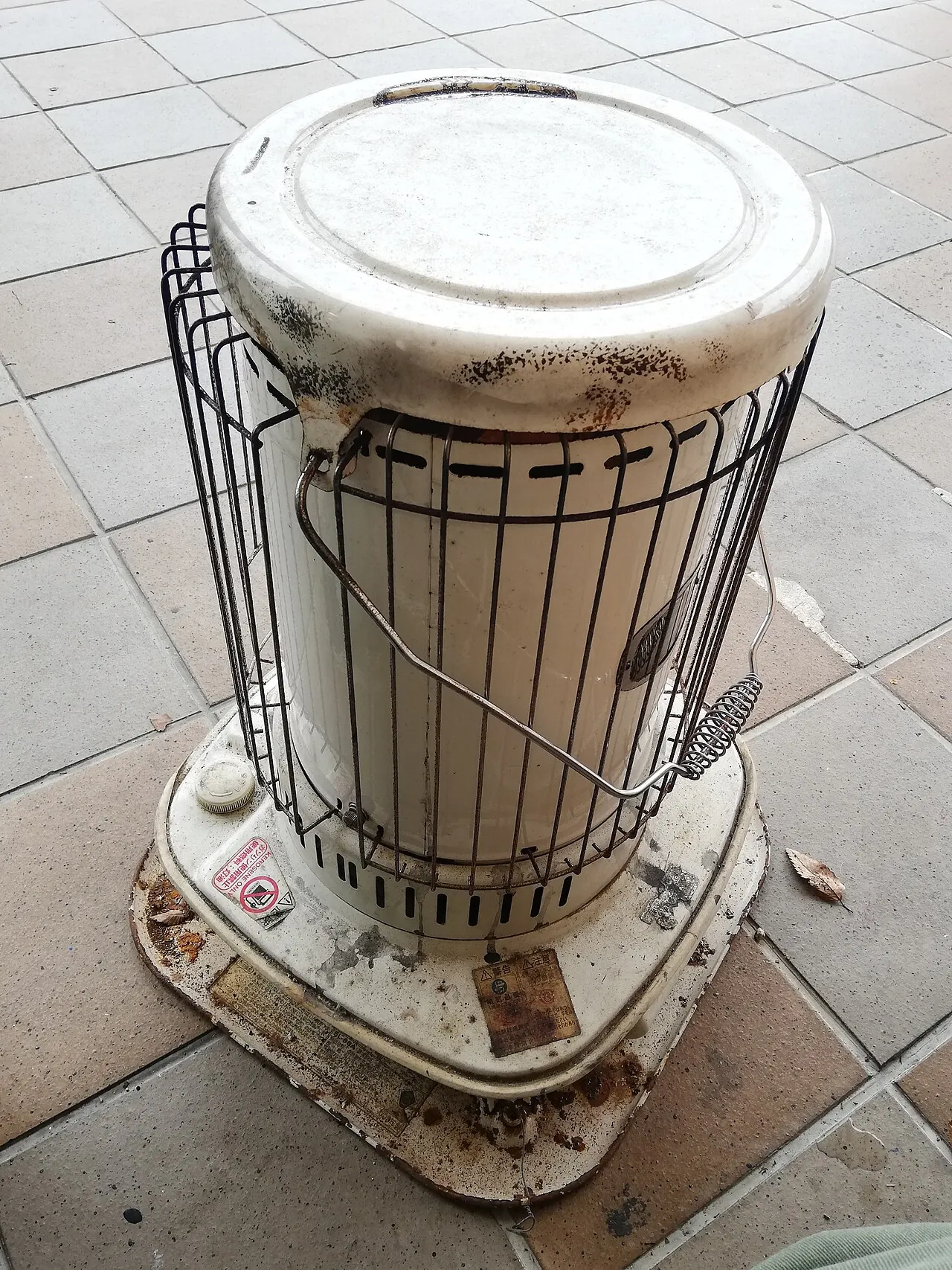
Fuel-burning portables burn propane or kerosene in the room and send their exhaust into it. EPA lists unvented kerosene and gas space heaters among the main indoor sources of carbon monoxide, nitrogen dioxide and particles, and says unvented kerosene heaters may also generate acid aerosols.
- Pros: no electricity needed, so they keep working in a power outage. Some small propane heaters are sold as indoor-safe: Mr. Heater says its Buddy heaters have an oxygen depletion sensor (ODS) and a tip-over shut-off and are CSA certified for indoor use in enclosed spaces with proper ventilation.
- Cons: combustion pollutants, fuel handling and fire risk. CPSC’s kerosene rules are strict: use only water-clear 1-K kerosene and never gasoline, refuel outdoors after the heater is off and cool, keep it at least 3 feet from furniture, and run it with the doors of the room open. EPA adds: open a door to the rest of the house and a window slightly, and treat a persistent yellow-tipped flame as a sign the heater needs adjusting.
Important: Only use a fuel-burning heater that its maker certifies for indoor use, and follow the manual exactly. CPSC says to put carbon monoxide alarms on every level of the home and outside sleeping areas. Never run a generator indoors.
Which type of space heater is best for you?
There’s no single best type; match it to how you use the room:
| Situation | Our pick | Why |
|---|---|---|
| Quick warmth at a desk or reading chair | Radiant (infrared) | Heats you, not the whole room, with no wait |
| A bedroom or living room heated for hours | Oil-filled radiator | Silent, even and stays warm between cycles |
| A small room warmed in a hurry | Ceramic fan heater | Moves warm air fast and costs little |
| A slim heater for a wall or tight corner | Micathermic or convection panel | Thin, quiet, no fan |
| Heat during a power outage | Indoor-certified propane heater, with ventilation and a CO alarm | Works without power; combustion risks need managing |
In our view, the safety features matter more than the type. We’d skip any electric heater without a recognized lab listing, a tip-over switch and overheat protection.
Are space heaters safe? Fire data and the safety checklist
Space heaters and heating stoves are involved in under a third of home heating fires but most of the deaths. NFPA’s figures for 2020 to 2024 show US fire departments responded to an average of 37,365 home fires a year involving heating equipment, with 417 civilian deaths a year. Space heaters and heating stoves together accounted for 30% of those fires but 73% of the deaths and 70% of the injuries. Nearly half of heating fires (46%) happened from December through February.
CPSC’s own estimate for portable heaters, including electric space heaters, is an average of 1,600 fires, 70 deaths and 150 injuries a year from 2020 to 2022. Its 2023 staff assessment of portable electric heaters found:
- Extension cords were often cited as a cause; 265 of the 2,345 incident reports (11.3%) involved one.
- Plugs and cords: where a component was named, the plug came up most (34%), described as hot, melted, smoking or charring the outlet.
- Construction: poor internal connections can overheat, and some heaters use flammable plastic. Heaters that conform to the voluntary standards may be less susceptible to fire.
| Check | What to look for | Why |
|---|---|---|
| Lab listing | A UL, ETL (Intertek) or CSA mark; electric room heaters are tested to UL 1278 | UL says listed portable heaters must pass a tip-over test without starting a fire |
| Tip-over switch | Cuts power if the heater falls | 25 of the 27 heaters CPSC staff took apart had one; 2 had none |
| Overheat protection | A thermal cut-off or high-limit switch | Shuts the element off before parts overheat |
| Clearance | At least 3 feet from drapes, furniture and bedding | CPSC and NFPA both give 3 feet |
| Power | Straight into a wall outlet | CPSC: never an extension cord or power strip |
| Supervision | Off when you sleep or leave the room | CPSC: turn heaters off when sleeping |
Tip: Feel the plug after the heater has run for a while. A plug or outlet that’s hot to the touch is one of the warning signs in CPSC’s incident reports. We’d stop using both until an electrician has checked the outlet.
How much does it cost to run a space heater?
Use the same formula as for any electric appliance:
Cost = watts ÷ 1,000 × hours × price per kWh
Many portable electric heaters are rated 1,500 W on high, De’Longhi’s HMP1500 among them, and CPSC staff measured a 1,500 W maximum even on a heater advertised as 2,000 W. At the July 2026 US average residential price of 18.31 cents per kWh (EIA), a 1,500 W heater running 8 hours uses 12 kWh and costs about $2.20 a day, or about $66 over 30 days. These are our calculations:
| Setting and use | Per day | Per 30 days |
|---|---|---|
| 1,500 W, 4 hours a day | About $1.10 | About $33 |
| 1,500 W, 8 hours a day | About $2.20 | About $66 |
| 750 W (low), 8 hours a day | About $1.10 | About $33 |
| 1,500 W, around the clock | About $6.59 | About $198 |
The real figure is lower when a thermostat cycles the element off. Plug your own wattage, hours and rate into our electricity cost calculator; it’s built for air purifiers, but the formula is the same.
Two facts keep the type debate honest. A US Department of Energy publication notes that electric resistance heating converts nearly 100% of the electricity into heat, and EIA puts 1 kWh at 3,412 Btu, so every 1,500 W electric heater makes about 5,118 Btu an hour, whatever its type. An oil-filled radiator doesn’t make more heat per watt than a ceramic heater; it delivers the same heat more slowly and evenly. In our view, the savings come from heating only the room you’re in and using the thermostat, not from buying a “more efficient” element.
Do space heaters dry out the air? Humidity and air quality
An electric space heater doesn’t remove water from the air, but it lowers the relative humidity. Warm air can hold more moisture, so heating the same air makes its relative humidity fall. South Dakota State University Extension puts it simply: cold winter air holds little moisture, and as it’s heated, its relative humidity becomes very low. That dry air speeds evaporation from your skin, which can make a room feel cooler than the thermostat says.
Here’s the size of the effect: outdoor air at 40°F and 70% relative humidity, warmed to 70°F with no moisture added, drops to about 23% (our calculation with the Magnus formula used in our relative humidity calculator). EPA’s advice is to keep indoor humidity between 30% and 50%, and below 60% to limit mold.
What to do about it:
- Measure first. A hygrometer tells you if the room is really dry; see how to check humidity in your house.
- Add moisture if it’s under 30%. A room humidifier is the direct fix; our guide on what a humidifier does explains the types, and our picks for the best humidifier for a bedroom list quiet models with a humidistat. Keep it a few feet from the heater.
- Don’t overshoot. Aim for the 30% to 50% range in our guide to ideal indoor humidity. Too much moisture in a heated room shows up as condensation on cold windows.
Air quality is the other side. Electric heaters create no combustion gases, while unvented propane and kerosene heaters release carbon monoxide, nitrogen dioxide and particles into the room, which is why EPA ties their use to ventilation. An air purifier can capture particles but not carbon monoxide or nitrogen dioxide, so it’s no substitute for ventilation and a CO alarm. Our guide on how to improve indoor air quality covers source control and ventilation first.
Note: Photo credits. Featured image: our labeled collage of four Wikimedia Commons photos: “Goldair GCH200 ceramic heater” by Benchill (CC BY-SA 3.0), “Oil Heater 5293” by Ashley Pomeroy (CC BY 3.0), “Space heater” by Hardyplants (CC0) and “Kerosene heater in rural Japan” by Syced (CC0). The collage is shared under CC BY-SA 3.0.
Frequently asked questions
What type of space heater is safest?
No type is safe by design alone. For indoor use, an electric heater listed by a recognized lab (UL, ETL or CSA) with a tip-over switch and overheat protection is the safer choice, and unvented propane or kerosene heaters carry the added carbon monoxide risk. Keep any heater 3 feet from anything that can burn and plug it straight into the wall.
What type of space heater is most energy efficient?
Every electric space heater turns nearly 100% of its electricity into heat, so a 1,500 W ceramic heater and a 1,500 W oil-filled radiator make the same heat per hour. The savings come from a thermostat, a lower setting and heating only the room you're in.
Is it safe to leave a space heater on overnight?
CPSC's advice is to turn space heaters off when you sleep. Warm the bedroom before bed, then switch the heater off, and use extra bedding instead.
Can you use a propane or kerosene heater indoors?
Only a model its maker certifies for indoor use, exactly as the manual says. They are unvented, so EPA says to open a door to the rest of the house and a window slightly while one runs. Have working carbon monoxide alarms, and refuel outdoors with the heater off and cool.
Do space heaters dry out the air?
An electric heater doesn't remove water, but warming the air lowers its relative humidity. Outdoor air at 40°F and 70% humidity drops to about 23% once it's warmed to 70°F, which is why rooms feel dry in winter. A humidifier set to 30% to 50% fixes it.
What type of space heater is best for a large room?
For steady heat over hours, an oil-filled radiator or a micathermic panel. De'Longhi says its oil-filled radiators suit larger areas that need a constant temperature, though they take a while to warm up. A fan heater moves warm air around faster but stops heating as soon as it cycles off.
Update log
- : Published at the old /types-of-space-heaters/ address with CPSC 2020-2022 and NFPA 2020-2024 fire data
Related guides

Guides
How to Improve Indoor Air Quality: 9 Steps in the Order That Works
Cut pollution at the source, bring in outdoor air, then filter what's left. Nine EPA-based steps, from humidity and mold to purifiers and radon.
9 min read
Guides
How to Reduce Humidity in Your House: 10 Steps That Work
Measure first, then vent moisture outdoors, run the AC or a dehumidifier and cut indoor moisture sources until humidity stays between 30% and 50%.
7 min read

Guides
Indoor Air Quality Statistics 2026
129 sourced statistics on indoor air, radon, asthma, wildfire smoke and air purifier use, each linked to the page it came from.
36 min read
Guides
Dew Point vs Humidity: What Each Number Tells You at Home
Dew point tells you how much water vapor is in the air. Relative humidity tells you how close the air is to saturation at its current temperature.
10 min read