How Often to Change Your Air Filter: Furnace and HVAC Filter Schedule by Type
How often to change a furnace or HVAC filter: 1-inch filters every 1 to 3 months, deep media filters every 6 to 12 months, with manufacturer schedules and the signs to change sooner.
By Clean Air Guides editorial teamUpdated 6 min read
In this article
Change a standard 1-inch furnace or HVAC filter every 1 to 3 months, and a deep 4- or 5-inch media filter every 6 to 12 months. EPA says manufacturers typically recommend replacement every 60 to 90 days for furnace filters, and ENERGY STAR says to check the filter once a month. Pets, dust, smoke and a fan that runs all the time all shorten that schedule, so the real rule is simple: check monthly and change it when it looks dirty.
This guide covers the filter in your furnace, air handler or return grille. If you’re asking about a portable unit, see our guide on how often to change an air purifier filter. Everything below comes from EPA, ENERGY STAR and the filter makers’ own pages; our research method explains how we work.
Air filter replacement schedule by type
| Filter type | Typical interval | Source |
|---|---|---|
| Standard 1-inch furnace filter | Every 60 to 90 days | EPA, citing manufacturers |
| “Traditional” 1-inch filter | Every 1 to 3 months | AprilAire |
| AprilAire TriPure 1-inch (MERV 11, e.g. A16201) | Up to every 6 months | AprilAire |
| 3-inch return-grille media (Honeywell Home FC40R, MERV 10) | Every 6 to 12 months | Resideo |
| 4-inch media (Honeywell Home FC100A MERV 10, FC200E MERV 13) | Every 6 to 12 months | Resideo |
| 5-inch PopUP media (Honeywell Home, MERV 11) | Every 6 to 12 months | Resideo |
| AprilAire media, MERV 10, 11 or 13 | Once a year | AprilAire |
| AprilAire media, MERV 16 or MERV 13 + carbon | Every 6 months | AprilAire |
Two things stand out. Thicker filters last much longer, because the same airflow is spread across far more pleated media. And within one brand, the higher-efficiency and carbon versions get the shorter interval: AprilAire halves the life of its MERV 16 and carbon media compared with its MERV 13.
Note: These are the makers’ baseline schedules, not guarantees. AprilAire’s own FAQ says some filters “may need to be changed more or less often than others.”
Why 1-inch filters need changing so often
A 1-inch filter has little media to hold dust, so it fills quickly. EPA says that when a filter is dirty and overloaded, it won’t work well. ENERGY STAR adds the cost side: a dirty filter can increase energy costs and damage your equipment, leading to early failure.
Deep media filters solve that by packing far more surface into a cabinet. That’s why Resideo rates its 4-inch MERV 13 FC200E for 6 to 12 months, against the 60 to 90 days EPA cites for typical furnace filters. Our best furnace filter guide compares 1-inch and 4-inch models. If your system has a 1-inch slot and you’re tired of frequent changes, a media cabinet is the usual upgrade; our guide to the best whole house air purifiers compares AprilAire and Honeywell Home cabinets.
When to change your air filter sooner
The calendar is a starting point. These are the situations where we’d check more often than monthly and change early:
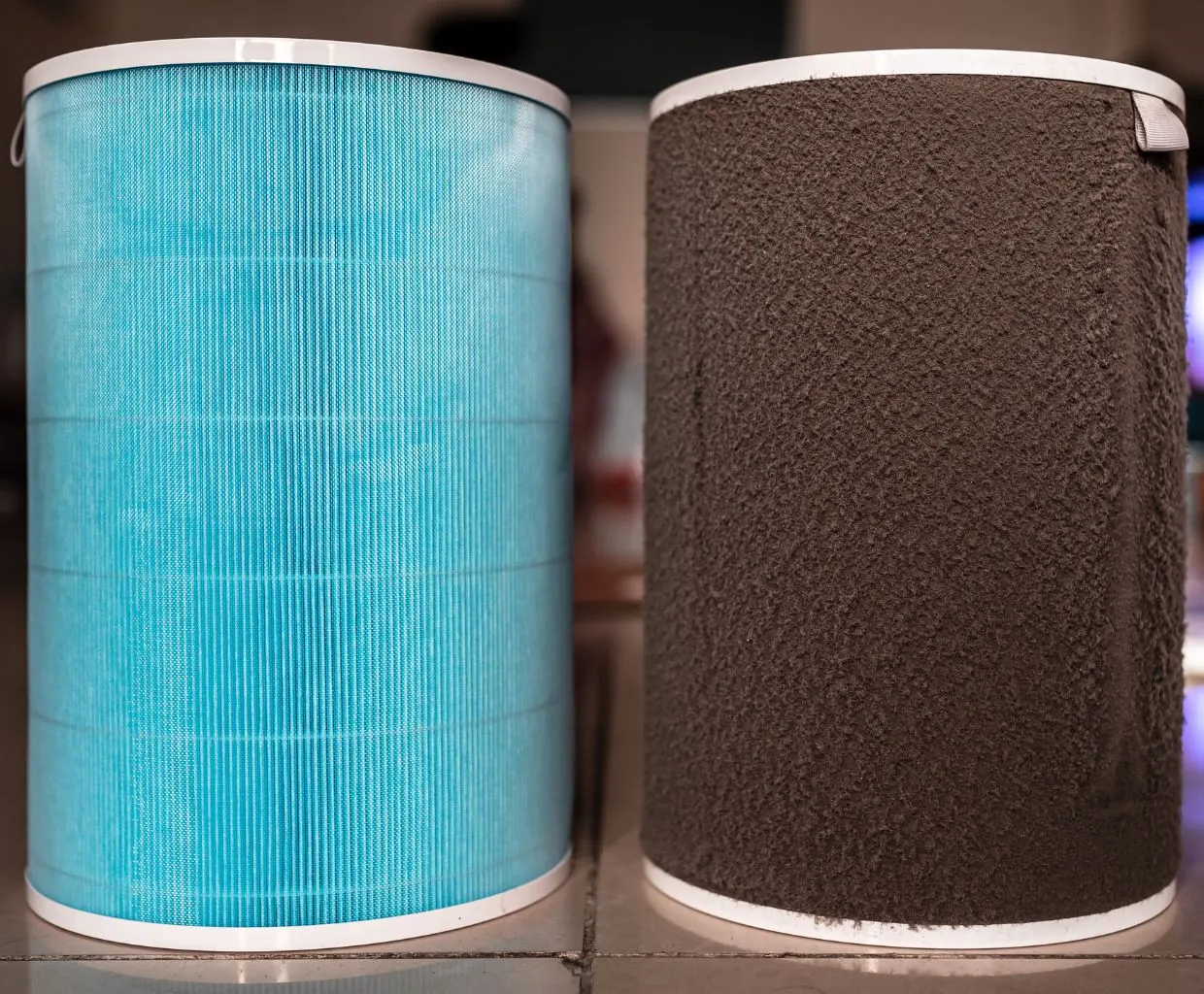
- The filter looks dirty. EPA says that if filters look heavily soiled when you replace them, you should change them more often. AprilAire says to replace its filters when they go from bright white to dark gray, and to change one immediately if dirt starts caking on the surface.
- Your fan runs around the clock. HVAC filters only clean air while the system fan runs, which EPA says is usually less than 25% of the time during heating and cooling seasons. Running the fan continuously cleans more air but loads the filter faster. AprilAire says to check its filters every six months if you run the fan 24/7, even on its once-a-year media.
- Pets. Fur and dander load a filter quickly. No maker we checked publishes a separate pet schedule, so we’d do the monthly check and expect the short end of every range. Our best air purifier for pets guide covers the room-level side.
- Renovation, sanding or a dusty house. Construction dust loads a filter fast. We’d check it weekly during the work and change it afterward. If dust keeps coming back, our guide on why your house is so dusty walks through the usual causes.
- Wildfire smoke. During smoke events, EPA recommends running the system with a MERV 13 or better filter if it can take one. That captures a lot of fine particles, so check the filter after the smoke clears. Our wildfire smoke indoors guide has the full plan.
- Allergies or asthma. A fresh, well-fitted filter does more than an overdue one. If someone at home has allergies or asthma, talk to your doctor about what else will help, and keep to the short end of the schedule.
Tip: Write the date on the filter frame when you install it, and set a monthly phone reminder to pull it out and look.
Which MERV rating to buy
EPA recommends HVAC filters rated at least MERV 13, or as high as your system will accommodate. It says most furnaces and HVAC systems can handle a MERV 13 filter without equipment problems, provided the filter is replaced frequently. That condition matters: a high-MERV filter that’s overdue restricts airflow more than a clean one.
EPA’s technical summary also notes that high-efficiency filters can reduce airflow in systems not designed for them. If your vents seem weaker after switching to MERV 13, ask an HVAC technician whether your blower can handle it or whether a deeper filter would help. Our MERV rating chart shows what each rating captures by particle size.
If your system can take it, a 1-inch MERV 13 filter is the simplest upgrade. You can compare MERV 13 furnace filters on Amazon; check the exact nominal size printed on your current filter before you order.
How to change a furnace filter
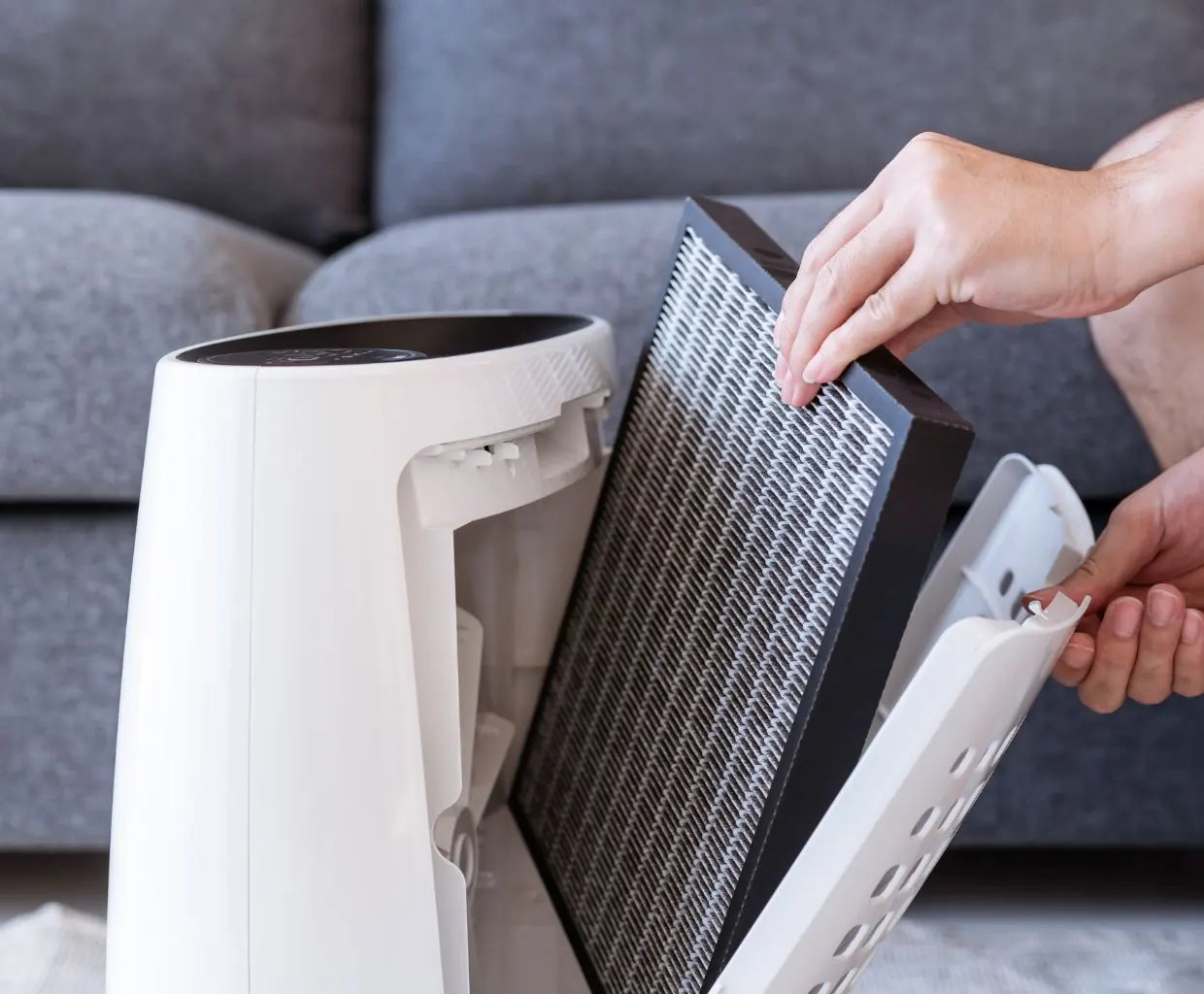
- Turn the system off at the thermostat so the blower doesn’t pull dust past the open slot.
- Find the filter. It’s usually in a slot beside the furnace or air handler, or behind a return-air grille in a wall or ceiling.
- Note the size and airflow arrow on the old filter before you remove it.
- Slide in the new filter with the arrow pointing toward the furnace, in the direction the air flows.
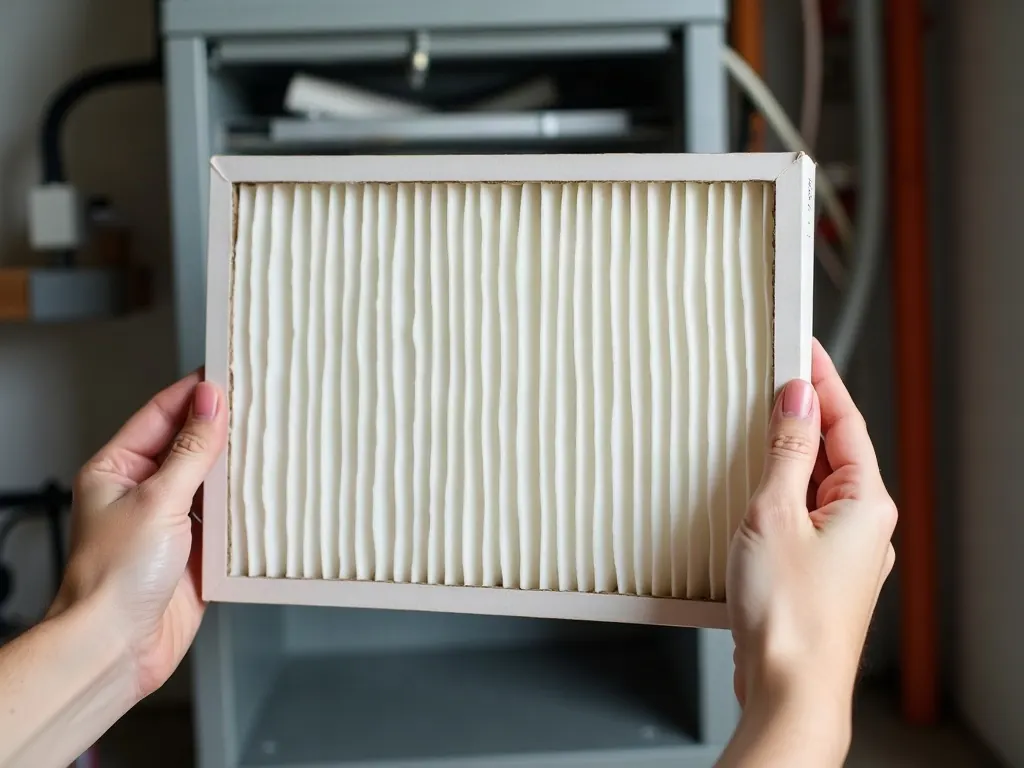
- Check the fit. EPA says the filter should fit snugly so air doesn’t leak around it, and you shouldn’t have to bend or crush it to make it fit. Gaps let air bypass the filter.
- Write the date on the frame and turn the system back on.
Avoid filters that make ozone
EPA advises avoiding furnace and HVAC filters, and portable air cleaners, that intentionally produce ozone, a lung irritant. A plain pleated media filter doesn’t produce ozone. Electronic add-ons such as ionizers or some UV lamps may, and our ozone generator explainer covers why EPA warns against machines built to make ozone.
Our take
For most homes with a 1-inch slot, we’d check the filter every month and change it every 60 to 90 days at the latest, sooner with pets, renovation or smoke. If you have a 4- or 5-inch media cabinet, follow the maker’s 6-to-12-month schedule but still look at it monthly. We’d pick MERV 13 if your system can take it, and keep a spare filter on the shelf so changing it is never the thing you put off.
Frequently asked questions
How often should you change your air filter in your house?
For a standard 1-inch furnace or HVAC filter, every 60 to 90 days is the typical manufacturer guidance EPA cites, and AprilAire says traditional 1-inch filters need replacing every 1 to 3 months. Deeper 4- and 5-inch media filters usually last 6 to 12 months.
How often should I check my furnace filter?
ENERGY STAR's maintenance checklist says to inspect, clean or change the air filter in your furnace, central air conditioner or heat pump once a month. If it's dirty, change it, even if the calendar says you have time left.
What happens if you don't change your air filter?
EPA says a dirty, overloaded filter won't work well, and ENERGY STAR says a dirty filter can raise energy costs and damage your equipment, leading to early failure.
Do pets mean changing the air filter more often?
Usually, because pet hair and dander load the filter faster. Manufacturers don't publish a separate pet schedule, so we'd check the filter monthly and change it as soon as it looks gray or matted, which EPA and AprilAire both treat as the signal.
How often do you change a 4-inch furnace filter?
Resideo (Honeywell Home) says to replace its 4-inch FC100A and FC200E media every 6 to 12 months, and AprilAire says its MERV 10, 11 and 13 media should be changed once a year. AprilAire's MERV 16 and MERV 13 plus carbon media should be changed every 6 months.
Is this the same as an air purifier filter?
No. Portable air purifier filters follow their own schedules, often 6 to 12 months for the HEPA filter and less for carbon. See our guide on how often to change an air purifier filter.
Related guides
Guides
How Often to Change an Air Purifier Filter: Intervals by Brand and Filter Type
Most HEPA filters are rated for 6 to 12 months, carbon filters often less and pre-filters need cleaning every few weeks. Manufacturer intervals by brand, plus the signs a filter is done.
8 min read
Guides
MERV Rating Chart: What MERV 11, 13 and 16 Filters Actually Capture
A MERV rating chart built from ASHRAE 52.2 minimums, plus how MERV compares with HEPA and MPR, which rating suits smoke, allergies and pets, and when your HVAC can't take it.
7 min read
Guides
Furnace Filter Buying Guide (2026): MERV, Size and 6 Picks
Six furnace filters chosen on published ratings and airflow data, plus how to tell if MERV 13 is too much for your system and how to buy the right size.
16 min read
Guides
Why Is My House So Dusty? Causes and Fixes That Work
Most house dust blows in, gets tracked in or is shed indoors. Here is where yours likely comes from and the fixes in the order that pays off most.
8 min read