Diffuser vs Humidifier: What Each Does and Whether a Diffuser Can Humidify
A diffuser spreads scent from a small tank; a humidifier puts real amounts of water into the air. Simple math shows why a diffuser can't do a humidifier's job.
By Clean Air Guides editorial teamUpdated 6 min read
In this article
A diffuser and a humidifier can look alike, and many diffusers even use the same ultrasonic method, but they do different jobs. A diffuser spreads essential-oil scent from a small tank. A humidifier puts enough water into the air to raise a room’s humidity. If your air is dry, you need a humidifier: a diffuser’s output is far too small to make a difference. And if you want scent from a humidifier, the oil goes on an aroma pad, never in the water tank.
Diffuser vs humidifier at a glance
| Essential-oil diffuser | Humidifier | |
|---|---|---|
| Main purpose | Spread fragrance | Raise indoor humidity |
| Tank size | Small: 140 mL on the Pure Enrichment PureSpa Deluxe | Large: 10 L (about 2.6 gallons) on the Levoit OasisMist 1000S |
| Water output | About 14 to 18 mL an hour (our math, below) | Up to 350 mL an hour on the OasisMist 1000S (Levoit manual) |
| Essential oils | Added to the water (3 to 5 drops, per Pure Enrichment) | Never in the tank; aroma pad only, if the model has one |
| Run time | Hours | A day or more per tank |
| Upkeep | Rinse and wipe the small tank | Daily water change, cleaning every third day (EPA) |
What a diffuser does
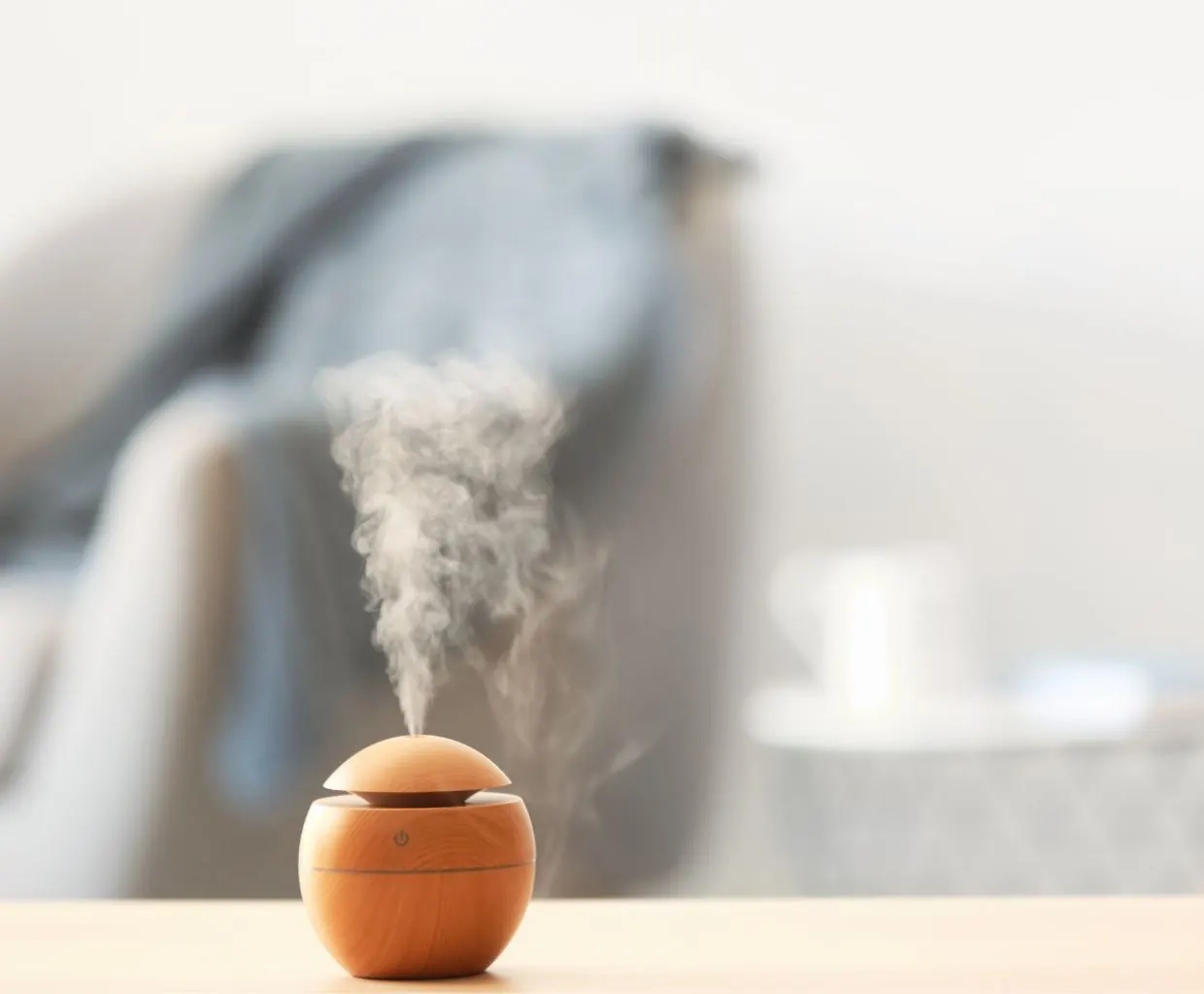
An essential-oil diffuser is a scent device. Pet Poison Helpline sorts them into two groups: passive diffusers such as reeds and candles, which release fragrance without droplets, and active diffusers, nebulizing or ultrasonic, which release tiny oil droplets into the air. The common plug-in type is ultrasonic. Pure Enrichment, for example, calls its PureSpa Deluxe an “ultrasonic aromatherapy oil diffuser” and tells you to add 3 to 5 drops of essential oil to the water tank.
That diffuser holds about 140 mL (4.75 oz) of water and runs 8 to 10 hours on a fill, according to Pure Enrichment, which says it covers rooms up to 250 sq ft. Notice what that room figure is about: fragrance, not humidity. Pure Enrichment doesn’t describe it as a humidifier.
What a humidifier does
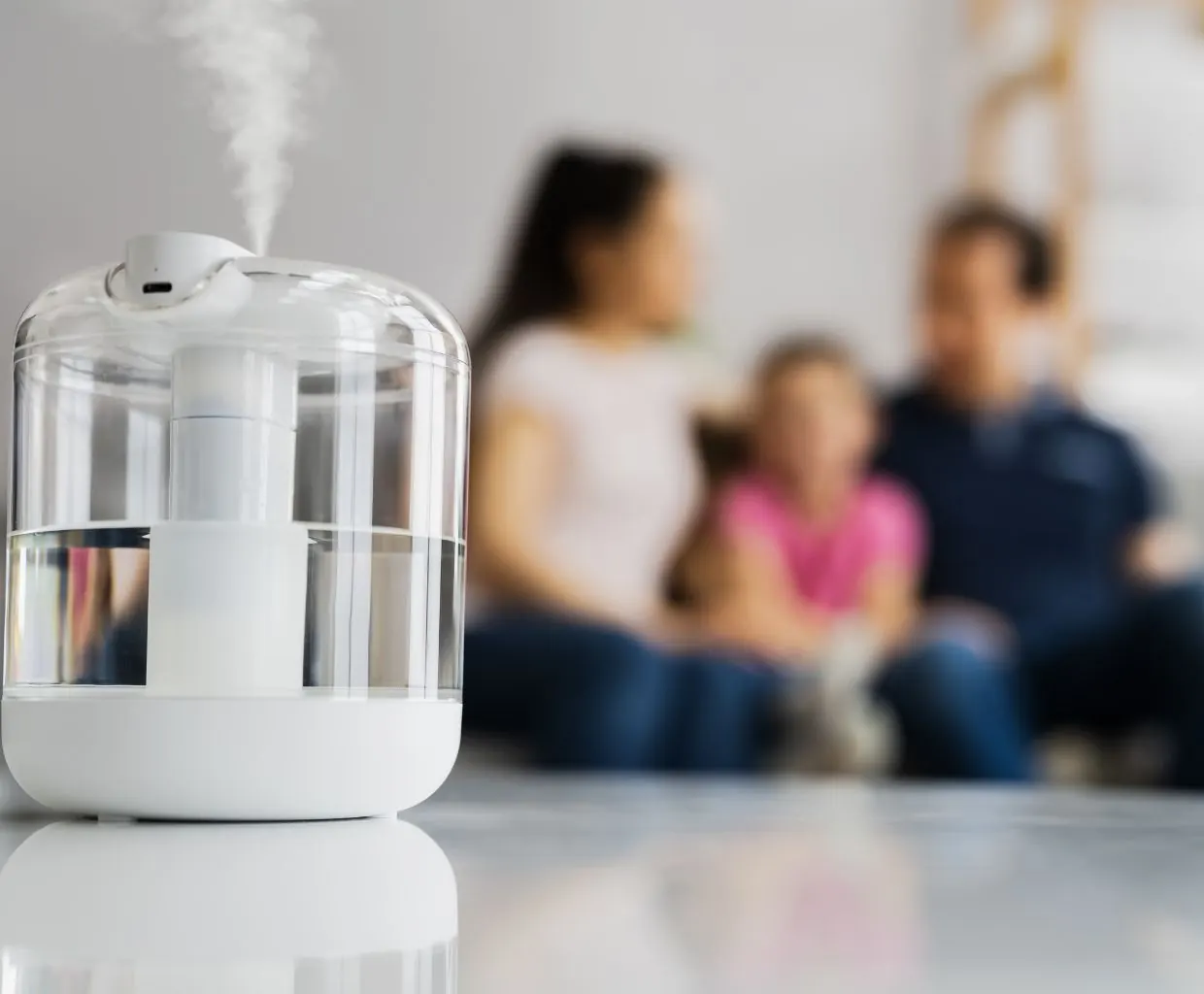
A humidifier exists to add water vapor to the air, and it’s built to move a lot more water. EPA describes the main types: ultrasonic and impeller units make a fine cool mist, evaporative units blow air across a wet wick, and steam units boil the water. Our explainer on what a humidifier does covers each one.
Humidifiers are meant for plain water. That’s the main practical difference from a diffuser, and the next section explains why.
Why essential oils don’t go in a humidifier tank
Makers are close to unanimous:
- Vicks says not to put essential oils or other non-recommended materials in the water tank, because oil can erode the plastic and cause the unit to malfunction.
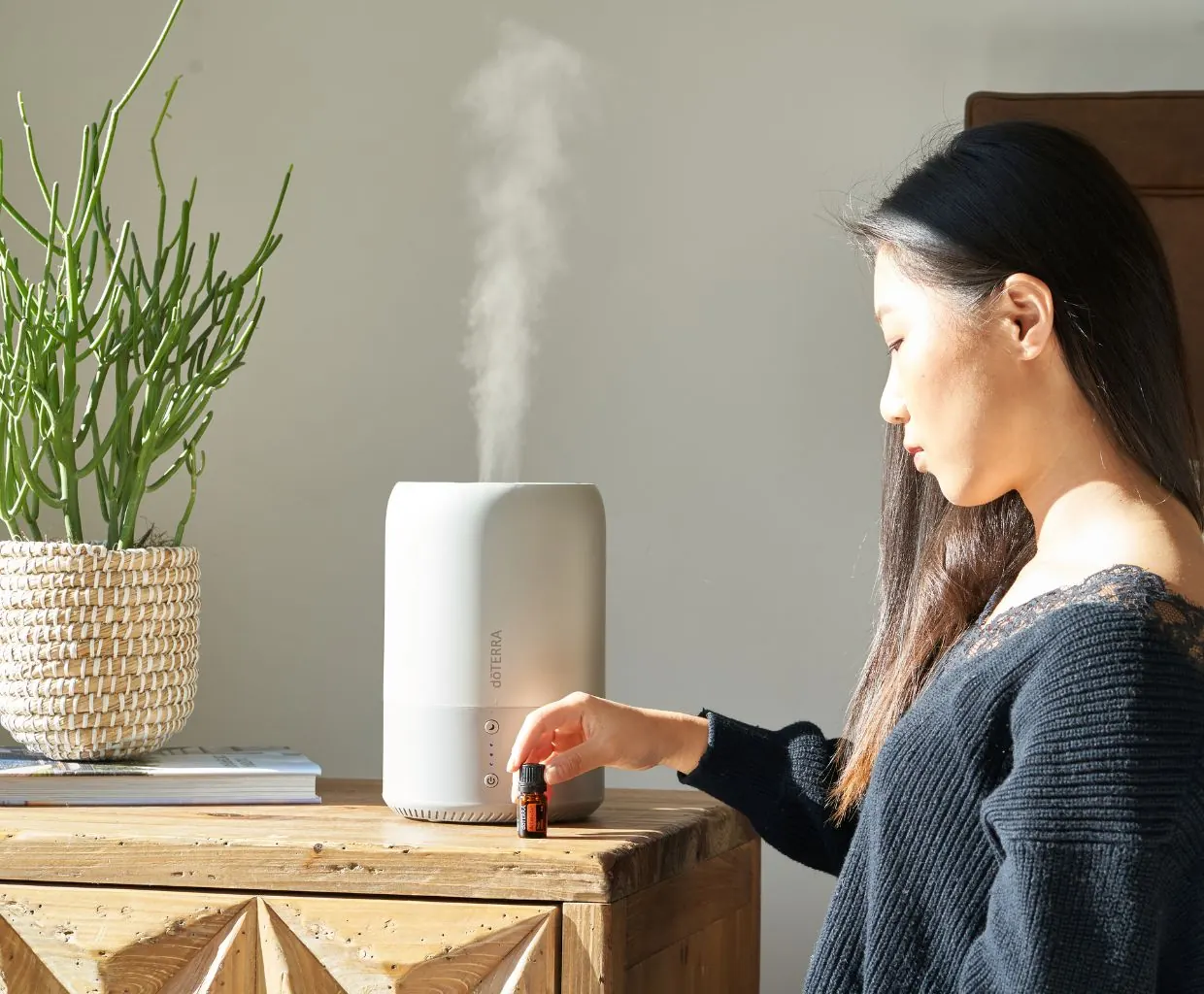
- Levoit says oils in the tank or base will damage the humidifier and cause leaks; oil goes only on the aroma pad.
- HoMedics warns that even a few drops in the tank will damage its UHE-CM65.
- Crane says its humidifiers are for water only, and its warranty is void if oils go in the tank or base.
A diffuser is designed to have oil in its water; a humidifier isn’t. Our guide to essential oils in a humidifier lists what each brand says and which models have aroma pads.
Can a diffuser humidify a room? The simple math
Short answer: no, not enough to notice. Here’s the math, step by step, so you can check it.
1. What a diffuser puts out. The PureSpa Deluxe empties 140 mL in 8 to 10 hours:
- 140 mL ÷ 10 hours = 14 mL per hour
- 140 mL ÷ 8 hours = 17.5 mL per hour
2. What a small bedroom needs. Using our humidifier size calculator: a 180 sq ft bedroom with 8 ft ceilings at 70°F, raised from 30% to 45% with typical US air exchange, needs about 0.32 gallons a day. That’s:
- 0.32 gallons × 3,785 mL per gallon ≈ 1,210 mL a day
- 1,210 mL ÷ 24 hours ≈ 50 mL per hour
3. Compare. At its best, the diffuser supplies 17.5 of the 50 mL an hour the room needs, about a third. And its whole tank (140 mL) is less than an eighth of a day’s need, so it would run dry long before the room got there. In a leakier home, the calculator’s need roughly doubles, and the diffuser’s share shrinks further.
4. Compare a real humidifier. Levoit’s manual rates the OasisMist 1000S at up to 350 mL an hour on its highest setting, about 20 to 25 times the diffuser’s output, from a tank about 70 times larger.
In our view, a diffuser sitting right next to you may make the air around your face feel slightly moister, but it won’t move a hygrometer across the room. If dry air is the problem, a humidifier is the tool. To check what your home actually reads and where it should be, see our ideal indoor humidity guide.
Pet safety: what the ASPCA and Pet Poison Helpline say
This is where diffusers need the most care, and it applies to aroma pads too.
- Cats are especially sensitive. The ASPCA says cats are especially sensitive to essential oils, and that swallowing significant amounts can cause stomach upset, central nervous system depression and even liver damage, while inhaling oils could lead to aspiration pneumonia. Pet Poison Helpline says cats lack a liver enzyme needed to break down essential oils.
- Active diffusers coat fur. Pet Poison Helpline says nebulizing and ultrasonic diffusers release oil microdroplets that can settle on a pet’s fur and be absorbed through the skin or swallowed during grooming.
- Toxic oils. Pet Poison Helpline lists oils known to poison dogs: wintergreen, sweet birch, pine, cinnamon, pennyroyal, eucalyptus and tea tree (melaleuca). For cats, it adds citrus (limonene), ylang ylang, peppermint and clove.
- Short, supervised use. The ASPCA says using a diffuser for a short time in a secured area is not likely to be an issue for most pets, but pets with a history of breathing problems may be better off without diffusers at all. Put the diffuser where pets can’t knock it over.
- Birds. The ASPCA says to avoid diffusers entirely in homes with birds, because their respiratory tracts are very sensitive.
- The cautious line. In a 2020 article, the ASPCA says it would not recommend using any essential oils where pets have access unless they’re supervised or a veterinarian has approved it.
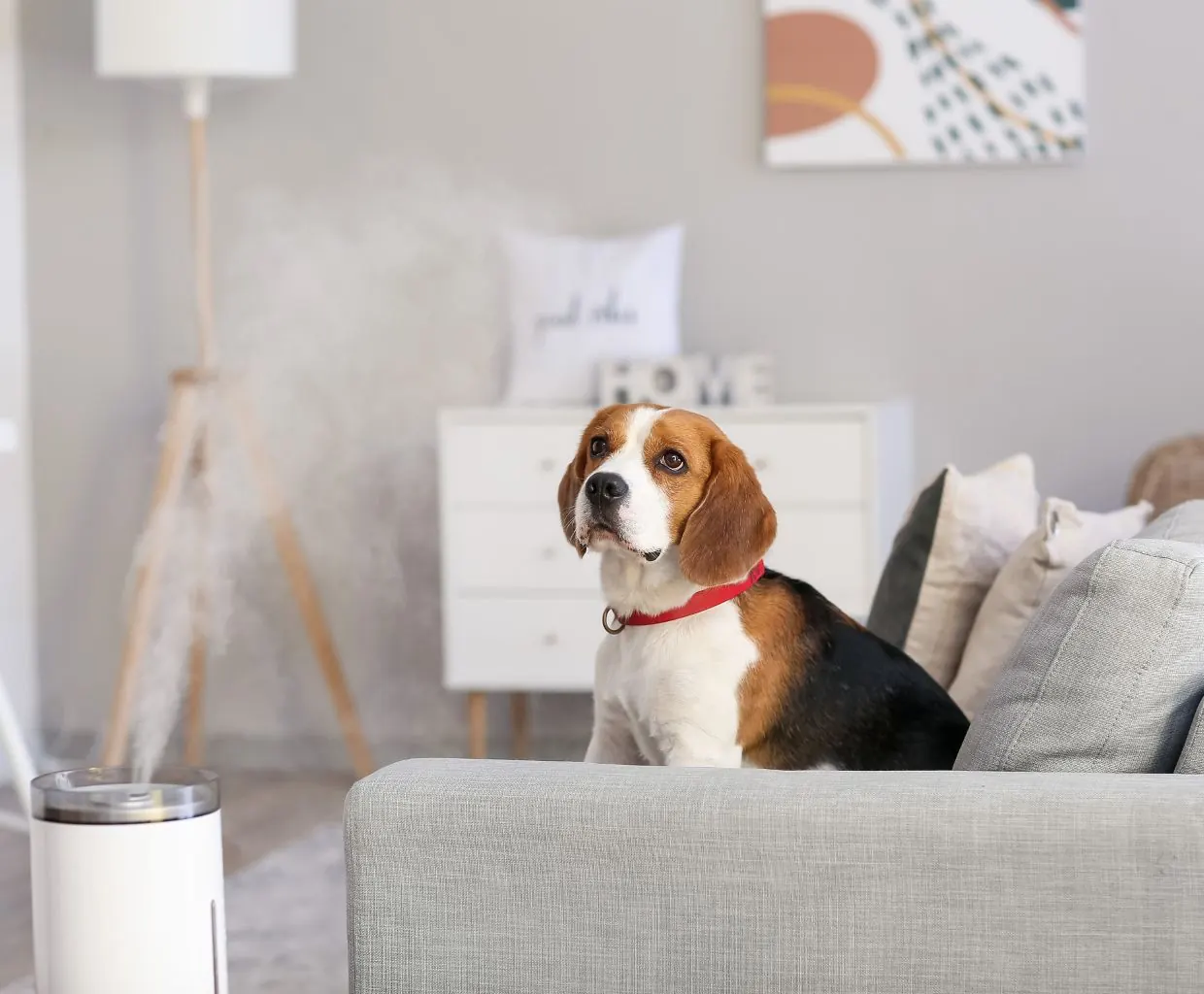
If you think a pet has been exposed, call your vet or the ASPCA Animal Poison Control Center at (888) 426-4435. Plain humidifiers have their own pet considerations, which we cover in are humidifiers safe for dogs.
Which one should you get?
We’d pick a humidifier if your hygrometer reads under 30% in winter or you’re dealing with dry skin and static. Set it to 40% to 50% and clean it on schedule.
A diffuser only makes sense if scent is the goal. In a home with cats or birds, we’d skip it entirely. If you want both humidity and a little fragrance, our pick is a humidifier with a separate aroma pad, with the oil kept out of the water.
Frequently asked questions
What is the difference between a diffuser and a humidifier?
A diffuser is built to spread essential-oil scent and holds only a cup or so of water at most. A humidifier is built to add moisture to a room and moves far more water, but it's meant for water only. Many diffusers use the same ultrasonic method as some humidifiers, just at a much smaller scale.
Can a diffuser be used as a humidifier?
Not in any useful way. A typical diffuser like Pure Enrichment's PureSpa Deluxe empties a 140 mL tank in 8 to 10 hours, about 14 to 18 mL an hour. Our calculator puts a small bedroom's need at roughly 50 mL an hour, and a room humidifier can put out several hundred.
Can I put essential oils in my humidifier instead?
Not in the water tank. HoMedics, Crane, Levoit and Vicks all say oils can damage the unit; Vicks says oil can erode the plastic, and Crane voids its warranty. If your humidifier has an aroma pad or tray, use only that.
Are diffusers safe for cats and dogs?
The ASPCA says briefly using a diffuser in a secured area is not likely to be an issue for most pets, but pets with breathing problems and homes with birds should avoid them, and cats are especially sensitive to essential oils. Many oils, including tea tree, eucalyptus, pine and peppermint, are on Pet Poison Helpline's toxic lists. Ask your vet before diffusing around pets.
Should I get a diffuser or a humidifier for dry air?
A humidifier. A diffuser's output is too small to change a room's humidity. If you also want scent, choose a humidifier with a separate aroma pad and keep oils out of the water.
Related guides
Humidifiers
Can You Put Essential Oils in a Humidifier? What Manuals Say
Not in the water tank. Most makers say oils damage the plastic, cause leaks and can void the warranty. Use an aroma pad if your model has one, and mind your pets.
7 min read
Humidifiers
Are Humidifiers Safe for Dogs and Cats? Risks and How to Use One Safely
Generally yes, if it's clean, out of reach and free of essential oils. The real risks are hot steam, oils that are toxic to dogs and cats, and dirty water.
6 min read
Humidifiers
What Does a Humidifier Do? How It Works, What It Helps and When You Need One
A humidifier adds water vapor to dry indoor air. Here's how each type works, what it can and can't help with, and how to tell if you need one.
6 min read
Humidifiers
Best Humidifiers in 2026: Picks for Every Room, Budget and Mist Type
Six humidifiers picked from maker specs and manuals, from a budget nightstand unit to a 6-gallon evaporative tower, plus how to choose the right type and size.
15 min read