Can You Put Essential Oils in a Humidifier? What Manuals Say
Not in the water tank. Most makers say oils damage the plastic, cause leaks and can void the warranty. Use an aroma pad if your model has one, and mind your pets.
By Clean Air Guides editorial teamUpdated 7 min read
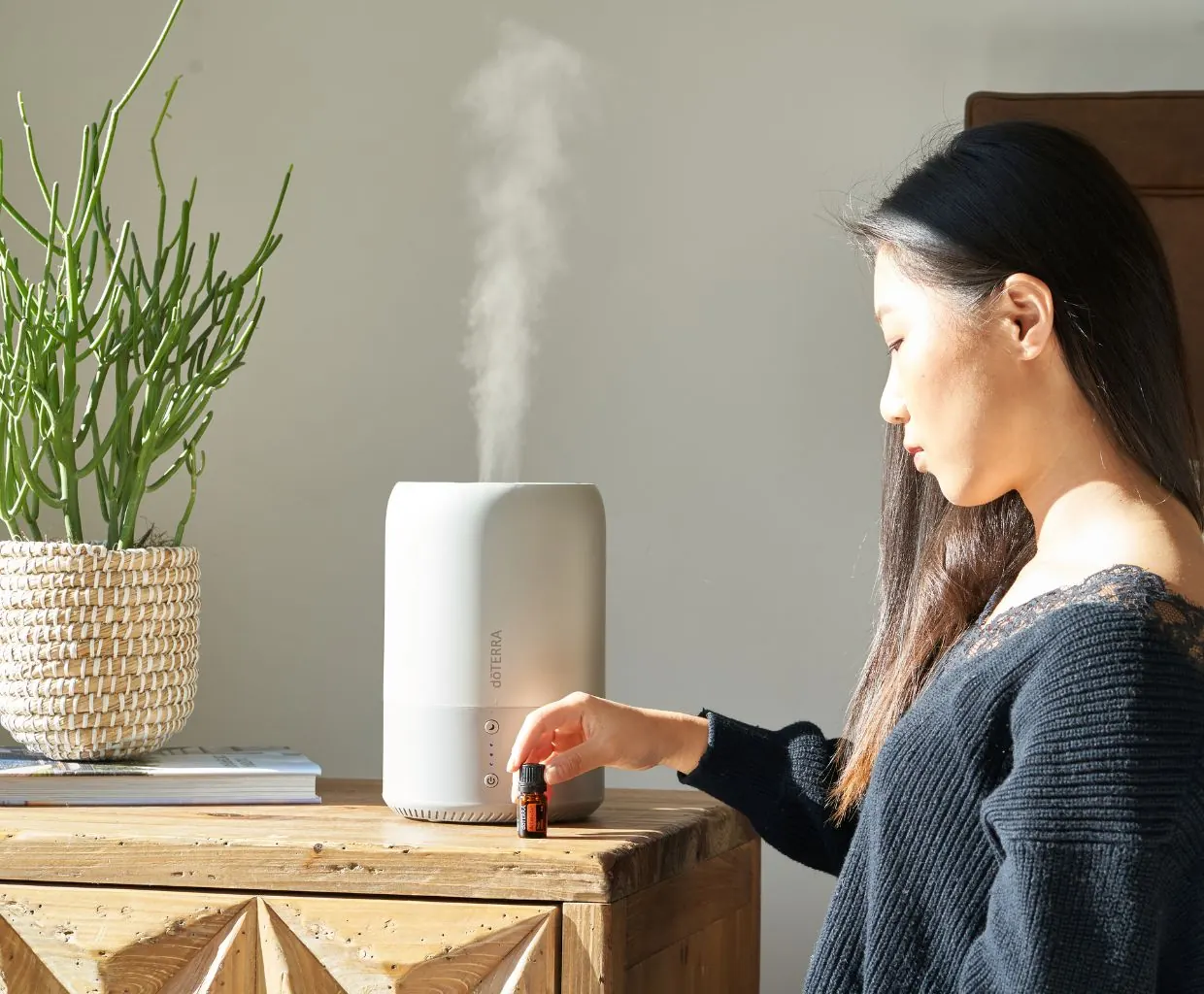
Don’t put essential oils in your humidifier’s water tank. Every major maker in our research, including HoMedics, Crane, Levoit, Vicks, Vornado and AIRCARE, says oils can damage the plastic or seals and cause leaks, and some say it voids the warranty. If your humidifier has an aroma pad, tray or medicine cup, that’s the only place scent belongs. If you have cats, dogs or birds, check the pet cautions below before using any oil.
What manufacturers say about oils in the tank
The answer is close to unanimous. Here’s what the manuals and support pages say, brand by brand:
| Brand (model) | Oils in the water? | What the maker says | Scent option |
|---|---|---|---|
| HoMedics (UHE-CM65, UHE-CMTF91) | No | Even a few drops will damage the unit; never add any additive | Separate essential-oil pad tray on the UHE-CMTF91 |
| Crane (Drop EE-5301 and others) | No | Water only; oils may damage or crack the tank; warranty void if oils go in the tank or base | None named |
| Levoit (Classic 300S, LV600HH) | No | Damages the humidifier and causes leaks | Aroma pad only |
| Vicks (Kaz USA) | No | Oil can erode the plastic and cause malfunction | VapoSteam and VapoPads in designated cups or pads |
| Vornado (EVDC500) | No | Aroma fragrances can crack plastic and void the warranty | None |
| AIRCARE (EP9 pedestal) | No | Never add anything but its bacteriostat; oils can damage seals and cause leaks | None |
| Dreo (HM774S evaporative) | No | Avoid essential oils and liquid medication | None; the HM735S and HM717S have aroma trays |
Crane sums up the shared position: humidifiers are meant for water only. In our view, that settles it for any model whose manual doesn’t explicitly describe a place for oil.
Why oils damage a humidifier
Makers give a few overlapping reasons:
- Plastic damage. Vicks says oil can erode the plastic. Crane says it may crack the tank, and Vornado says fragrances can crack plastic.
- Leaks. Levoit says oils in the tank or base cause leaks, and AIRCARE says they can damage seals. If you’ve already seen water pooling, our guide to humidifier leaking covers the other causes too.
- Ruined parts. HoMedics says even a few drops will damage its ultrasonic unit. Its manual also warns that skin oils can damage the ultrasonic membrane, which is why it says never to touch it.
- Lost warranty. Crane’s warranty excludes damage from putting essential oils directly into the tank and base, and Vornado says fragrances void its warranty.
The same logic applies to other additives. HoMedics says never to add any additive to the water, and Levoit also forbids water-treatment liquids. Our guide on what kind of water to use in a humidifier covers which water and treatments are allowed.
Aroma pads, trays and medicine cups
Some humidifiers have a separate spot for scent that keeps oil out of the water. Examples from the manuals and maker pages:
- Levoit Classic 300S: essential oils go only on the aroma pad.
- Levoit LV600HH: uses aroma pads.
- HoMedics UHE-CMTF91: has a separate essential-oil pad tray; oil never goes in the water.
- Dreo HM735S and HM717S: have an aroma tray, which Dreo says to clean once a week.
- Vicks V745 warm mist: has a medicine cup for Vicks VapoSteam and accepts VapoPads.
If you want scent, we’d only use the pad, tray or cup your manual describes, and only the products it names. Keep the tray clean, as Dreo suggests. On the Vicks V750, the manual says not to use vinegar or bleach on the scent pad heater area, so clean around it carefully.
Note: A scent feature doesn’t change the cleaning routine. The EPA still says to empty, dry and refill portable humidifiers daily. Our guide on how to clean a humidifier has the full schedule.
If you don’t have a scent feature and still want one, it’s a factor to weigh when shopping. Our best humidifier for the bedroom guide notes which picks are cool or warm mist and how each is cleaned.
Humidifier vs essential oil diffuser
A humidifier and a diffuser look alike but do different jobs. A humidifier is built to put a lot of water into the air and, per its maker, water only. A diffuser is built to spread oil.
Pet Poison Helpline and the Merck Veterinary Manual split diffusers into two groups:
- Passive diffusers (reeds, candles) don’t release oil droplets. The main concern is respiratory irritation, unless the oil is spilled or swallowed.
- Active diffusers (nebulizing or ultrasonic) release oil microdroplets that can settle on fur or feathers, where pets can absorb them through the skin or swallow them while grooming.
An ultrasonic humidifier works the same way as an ultrasonic diffuser: the EPA says ultrasonic and impeller humidifiers disperse what’s in the tank, including minerals and microorganisms, very efficiently. That’s why we’d treat oil added to an ultrasonic humidifier like an active diffuser running for hours, with far more water and far less control. The Merck Veterinary Manual suggests running diffusers for under 30 minutes, keeping pets out of the room while diffusing and ventilating afterward. A humidifier left on overnight doesn’t fit that advice.
Essential oils and pets
This is where the stakes are highest. Pet Poison Helpline lists oils known to poison dogs and cats:
| Oil | On the dog list | On the cat list |
|---|---|---|
| Tea tree (melaleuca) | Yes | Yes |
| Eucalyptus | Yes | Yes |
| Wintergreen, sweet birch | Yes | Yes |
| Pine, cinnamon, pennyroyal | Yes | Yes |
| Citrus (limonene), ylang ylang | No | Yes |
| Peppermint, clove | No | Yes |
A “No” in the dog column isn’t a safe pass: it only means the oil isn’t on this particular list, and lists differ between veterinary sources.
Other points from veterinary sources:
- Cats are especially at risk. Pet Poison Helpline and Merck say cats lack, or are deficient in, a liver enzyme needed to break down essential oils.
- Tea tree oil is the most commonly reported essential-oil poisoning in pets, according to Merck. The ASPCA says concentrated tea tree oil may cause problems with only 7 or 8 drops.
- Breathing problems and birds. The ASPCA says pets with a history of breathing problems may be best off avoiding diffusers altogether, and homes with birds should avoid essential oil diffusers entirely.
- Signs of inhalation exposure listed by Merck include watery eyes and nose, drooling, vomiting, coughing, wheezing and trouble breathing.
Important: If you think your pet was exposed, call your veterinarian, the ASPCA Animal Poison Control Center at (888) 426-4435 or Pet Poison Helpline at 1-800-213-6680 right away.
We cover humidifier safety for pets more broadly in are humidifiers safe for dogs. Placement matters too: the ASPCA says to keep diffusers where pets can’t knock them over, and the same goes for humidifiers (see where to put a humidifier). Talk to your vet before using any essential oil in a home with pets.
What about people?
We didn’t find official US health guidance on essential oils in humidifiers specifically, so we won’t claim a benefit or a specific harm. A few related points are on record:
- The EPA lists air fresheners among household sources of volatile organic compounds (VOCs), and lists eye, nose and throat irritation and headaches among VOC health effects. The page doesn’t single out essential oils.
- The EPA says to rinse a humidifier with several changes of water after any cleaner, so chemicals aren’t dispersed into the air. In our view, the same caution makes sense for anything else you might add.
If you use a humidifier for a stuffy nose, plain water is what the research covers; see does a humidifier help with congestion. If you have asthma or another lung condition, talk to your doctor before adding any scent to the air.
If oil already went into the tank
Don’t panic, but don’t keep running it either:
- Turn the humidifier off and unplug it.
- Empty the tank and base.
- Clean it with the method your manual gives. Levoit, for example, descales with 3 cups (710 mL) of distilled white vinegar in the tank.
- Rinse with several changes of water, as the EPA advises after any cleaning agent.
- Check the tank and its seams for cracks; Crane lists cracks as a cause of tank leaks.
- If it leaks, mists poorly or smells of oil after cleaning, contact the manufacturer before using it again.
Frequently asked questions
Can you put essential oils in a humidifier?
Not in the water. HoMedics, Crane, Levoit, Vicks, Vornado and AIRCARE all say not to add essential oils to the tank. If your model has an aroma pad or tray, put the oil there only.
What happens if you put essential oils in a humidifier?
Makers say oils can damage the unit: Vicks says oil can erode the plastic, Crane says it may damage or crack the tank, and Levoit says it causes leaks. Crane's warranty is void if oils go into the tank or base.
Is a humidifier the same as an essential oil diffuser?
No. A humidifier is built to add water vapor to a room and is meant for water only. A diffuser is designed to spread oil, and Pet Poison Helpline and the Merck Veterinary Manual note that active (ultrasonic and nebulizing) diffusers release oil microdroplets into the air.
Are essential oils in a humidifier safe for cats and dogs?
Many oils are toxic to pets, including tea tree, eucalyptus, pine, cinnamon, pennyroyal, wintergreen and sweet birch, and cats are especially sensitive. The ASPCA says pets with breathing problems and homes with birds should avoid diffusers. Talk to your vet before using any scent around pets.
Can I put Vicks VapoSteam in my humidifier?
Only in a model built for it, and only in the designated medicine cup or pad. Vicks says VapoSteam and VapoPads go in those cups or pads, never in the water tank.
What should I do if I already put oil in the tank?
Empty the unit, clean it the way your manual describes, rinse it with several changes of water and check the tank for cracks. If it leaks or misbehaves afterward, contact the manufacturer.
Related guides
Humidifiers
Are Humidifiers Safe for Dogs and Cats? Risks and How to Use One Safely
Generally yes, if it's clean, out of reach and free of essential oils. The real risks are hot steam, oils that are toxic to dogs and cats, and dirty water.
6 min read
Humidifiers
What Kind of Water to Use in a Humidifier: Distilled, Tap or Boiled?
Distilled water is the best choice for ultrasonic humidifiers. Many evaporative and steam models are fine with tap water. Here is what the EPA and manuals say.
6 min read
Humidifiers
How to Clean a Humidifier: Daily Rinse, Descaling and Disinfecting
Empty and dry it daily, descale and disinfect it every third day, and follow your manual. Step-by-step, with brand notes for HoMedics, Crane, Dyson and more.
10 min read
Humidifiers
Best Humidifiers for a Baby in 2026: Cool Mist, Quiet and Easy to Keep Clean
Four cool-mist and evaporative humidifiers for a nursery, picked from maker specs and manuals, plus the humidity range, water, cleaning and placement rules.
9 min read