Cylindrical vs. Flat Intake Air Purifiers for Pets: Which Design Actually Traps More Fur?
A 360-degree cylinder doesn't pull in more fur than a flat front at the same CADR. What differs is wall clearance and how easily the pre-filter comes clean.
By Clean Air Guides editorial teamUpdated 13 min read
Our picks at a glance
- Top pickCheck price
Open-plan pet area (cylinder)
The highest AHAM-verified CADR here, intake all the way around, for a living room that opens onto the kitchen.
- CADR 394 smoke (AHAM)
- 606 sq ft
- ENERGY STAR
- Check price
Mid-size room (cylinder)
AHAM-verified for 363 sq ft with a laser dust sensor, if the unit can stand in open floor space.
- CADR 234 smoke (AHAM)
- 363 sq ft (AHAM)
- ENERGY STAR
- Check price
Front intake, washable pre-filter
Coway Airmega Mighty2 AP-1512N
A pre-filter you pull out and rinse, no ionizer, and one combined carbon and HEPA filter a year.
- CADR 240 smoke (Coway)
- Washable pre-filter
- CARB: Mechanical
- Check price
Front intake, pellet carbon
AHAM-listed for 392 sq ft with a washable mesh pre-filter and carbon pellets behind the front grille.
- CADR 253 smoke (AHAM)
- 392 sq ft (AHAM)
- Pre-filter: every 14 days
- Check price
Cylinder with a washable pre-filter
A round design whose fabric pre-filter sleeve comes off for washing, rated for a large room.
- CADR 435 smoke (Blueair)
- 674 sq ft (Blueair)
- Washable pre-filter
Prices change often; Amazon shows the current price. As an Amazon Associate, Clean Air Guides earns from qualifying purchases.
In this article
- At a glance: cylinder vs flat intake
- How do cylindrical and flat intakes pull in pet hair?
- How does fur build up on each type of pre-filter?
- Can you put a 360-degree purifier against a wall?
- Where should each type go in a pet-dense room?
- Which design is easier to clean when fur mats up?
- Does either shape handle litter box and wet dog odor better?
- Does heavy shedding strain the motor and lower CADR over time?
- The verdict: which intake design for your home?
- Levoit Core 600S-P
- Levoit Core 400S-P
- Coway Airmega Mighty2 AP-1512N
- Winix 5520
- Blueair Blue Pure 211i Max
For cat and dog owners, a cylindrical (360-degree) air purifier doesn’t trap more fur than a flat front-intake model with the same CADR. No standard rates intake shape, and matched models score within AHAM’s own test precision. The differences that matter are practical. Cylinders need open floor space, about 15 inches on every side in Levoit’s manuals. Flat-intake units usually have a pre-filter you can pull out and rinse. In a heavy-shedding home, we’d let pre-filter cleaning decide.
If you’re still choosing a model, our best air purifier for pets roundup ranks specific units. This page is about the design question. Everything below comes from the AHAM directory, EPA and the makers’ manuals, in line with how we research. We don’t run our own lab trials.
At a glance: cylinder vs flat intake
| Cylindrical (360°) | Flat intake (front or side) | |
|---|---|---|
| Where air enters | All around the lower body | One face (two on the Coway Airmega 400) |
| Wall clearance in the manuals we read | At least 15 in on all sides (Levoit) | At least 8 in (Coway AP-1512HH) or 12 to 18 in (Winix 5520) |
| Pre-filter | Usually part of the cartridge, brush or vacuum only (Levoit) | Usually a separate washable screen (Coway, Winix) |
| Odor stage | Carbon layer inside the same cartridge | Separate carbon filter or combined carbon and HEPA |
| Best spot | Open floor, middle of a room | Near a wall or furniture, facing the room |
How do cylindrical and flat intakes pull in pet hair?
Both designs pull room air through a filter with a fan. They differ only in where that air enters. A cylinder spreads its intake around the whole lower body, so the same airflow comes in through a larger opening, more slowly at any one spot. A flat unit draws everything through one face, so the air at that grille moves faster.
That sounds like it should matter for fur, but basic airflow physics limits the effect. Suction at any intake fades within a short distance of the grille, so neither design reaches out across the room to grab hair. Room-scale cleaning comes from the purifier circulating the room’s air over and over, and AHAM’s room-size model assumes the room’s air is completely mixed. This is general physics, not a measured result for these models.
What you can measure is CADR. AHAM’s AC-1 test rates the complete unit in a 1,008 cu ft test chamber with three test particles: smoke (about 0.1 to 1 µm), dust (0.5 to 3 µm) and pollen (5 to 11 µm). Pollen is the closest stand-in for large pet particles. Here’s how similar-sized models compare:
| Model | Intake | Smoke / dust / pollen CADR (cfm) | Source | Room size |
|---|---|---|---|---|
| Levoit Core 400S-P | Cylinder | 234 / 233 / 257 | AHAM | 363 sq ft |
| Winix 5520 | Front grille | 253 / 252 / 247 | AHAM | 392 sq ft |
| Coway Mighty2 AP-1512N | Front cover | 240 / 242 / 249 | Coway | ~360 sq ft (our calc) |
| Coway AP-1512HH | Front cover | 233 / 246 / 240 | Coway | 361 sq ft |
| Levoit Core 600S-P | Cylinder | 394 / 398 / 433 | AHAM | 606 sq ft |
| Blueair Blue Pure 211i Max | Cylinder | 435 / 452 / 450 | Blueair | 674 sq ft |
| Coway Airmega 400 | Two flat sides | 376 / 384 / 409 | ENERGY STAR | 583 sq ft |
In the mid-size group, pollen CADRs span 240 to 257 cfm, a 17 cfm gap. AC-1 states its own precision for pollen as ±25 cfm. So on the largest particle AHAM tests, the cylinder and the flat fronts sit within the test’s stated precision of each other. (Two of those figures come from Coway rather than AHAM, so treat the comparison as close, not exact.)
Shed hair itself is a different story. A strand of fur is a long fiber, far bigger than a 5 to 11 µm pollen grain, so much of what pets shed lands on floors and furniture, where only a vacuum gets it. A purifier’s job in a pet home is mostly the fine stuff: dander, dust and the tufts that do drift past. Our what is CADR guide explains the rating in more detail.
How does fur build up on each type of pre-filter?
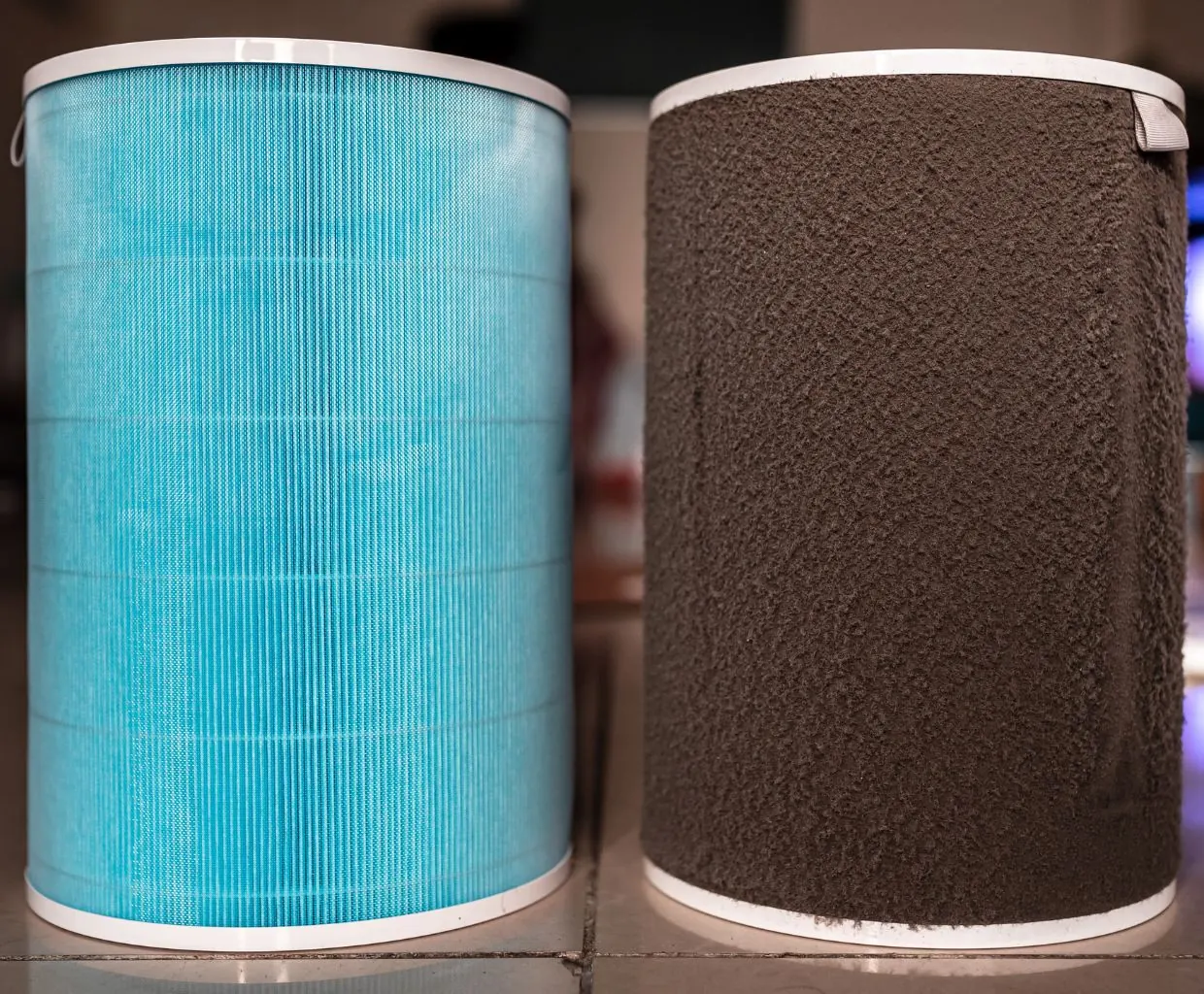
Every model here puts a coarse pre-filter in front of the fine filter to catch hair and lint. Coway’s manual says its pre-filter removes “human hair, pet hair, and so on.” Levoit’s Core 400S-P manual says its pre-filter captures “dust, lint, fibres, hair, and pet fur.”
The construction is where they split:
- Levoit cylinders (Core 300-P, 400S-P): the manuals call it the “outer pre-filter,” a layer of the single filter cartridge. Both manuals say not to clean the filter with water. The Core 600S-P also uses one cartridge with nothing washable.
- Coway and Winix flat units: the pre-filter is a separate screen behind the front cover or grille. Coway’s is washable and vacuumable, and Winix’s 5520 pre-filter is washable.
- Blueair 211i Max: a cylinder with a washable fabric pre-filter sleeve, sold separately for around $13.
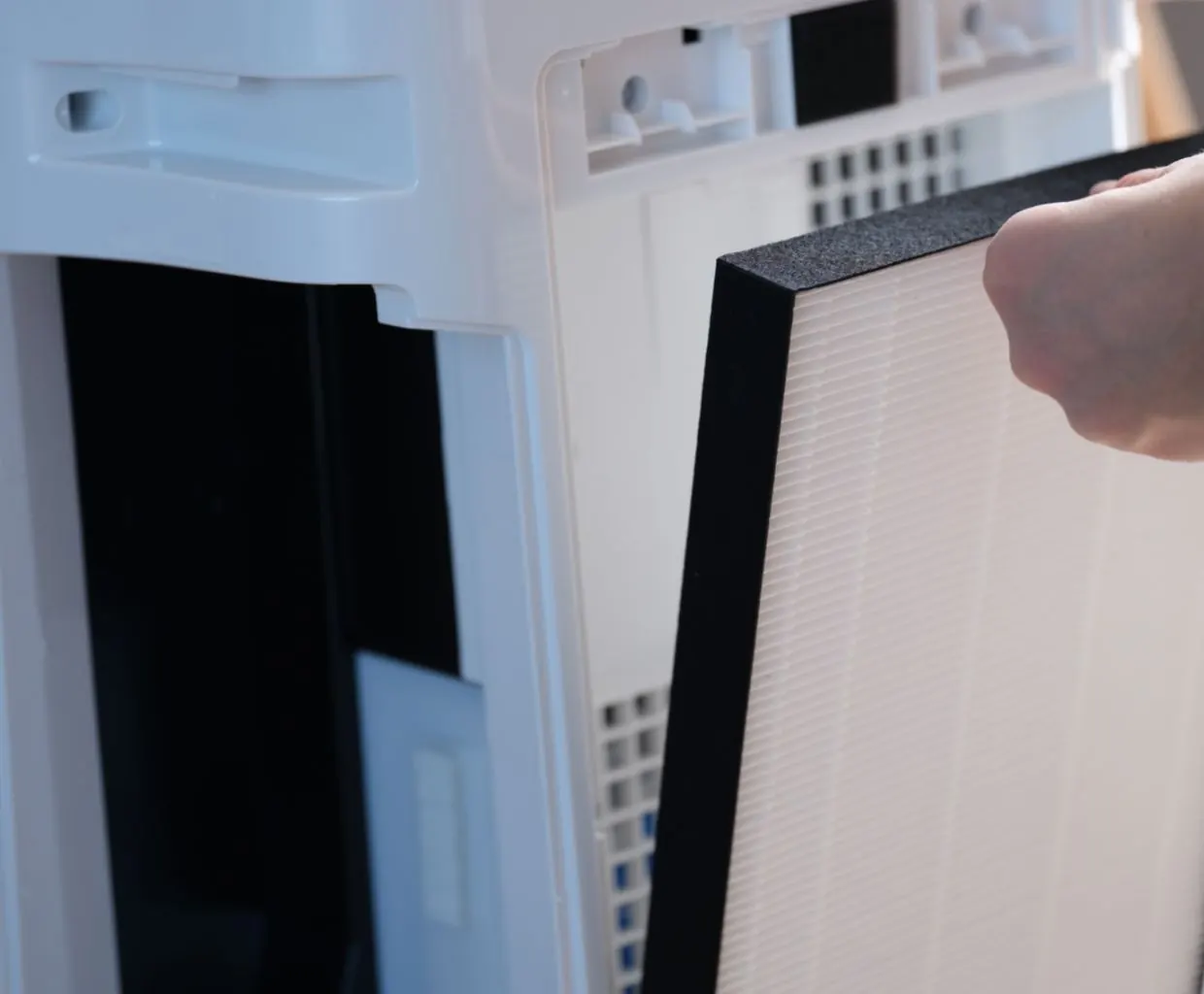
Does fur mat more on a curve than on a flat screen? We found no published data either way, and we wouldn’t guess. Levoit’s own troubleshooting table does name the failure: under “airflow is significantly reduced,” the Core 400S-P manual says the pre-filter “may be clogged by large particles, such as hair or lint, blocking airflow.” The fix it gives is to clean the pre-filter, then replace the filter if that doesn’t help.
Can you put a 360-degree purifier against a wall?
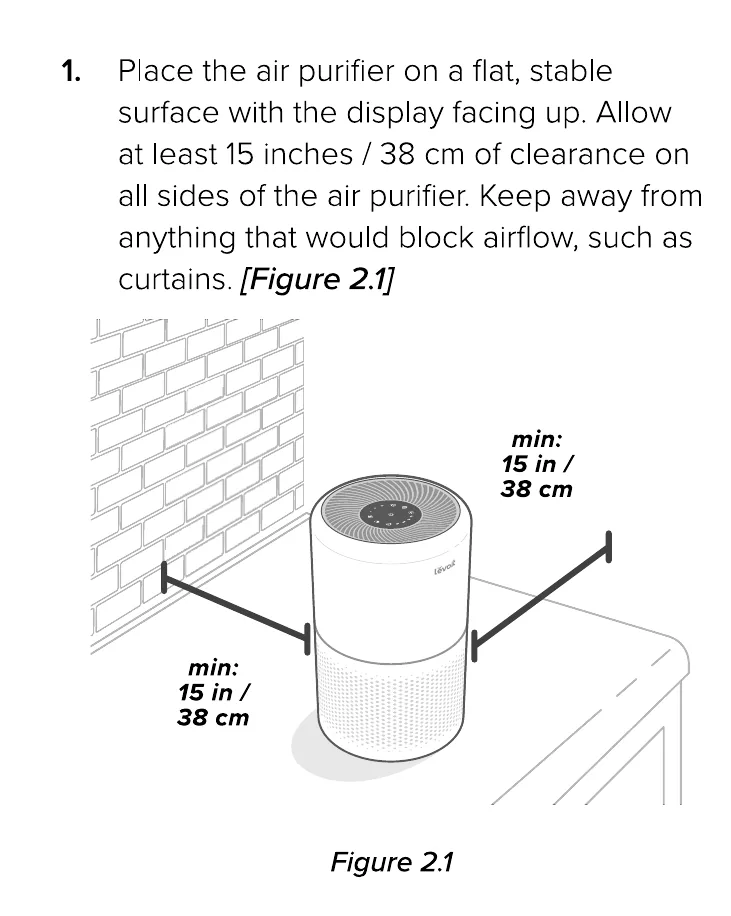
No, and the flat-front models need space too. A cylinder that draws air from all sides loses part of its intake if one side faces a wall, and Levoit’s manuals are explicit about it.
| Model (manual) | Intake | Distance from walls | Pre-filter care |
|---|---|---|---|
| Levoit Core 300-P | Cylinder, lower body | At least 15 in (38 cm), all sides | Soft brush or vacuum hose every 2 to 4 weeks; no water |
| Levoit Core 400S-P | Cylinder | At least 15 in (38 cm), all sides | Soft brush or vacuum hose every 2 to 4 weeks; no water |
| Coway AP-1512HH | Front cover, outlet on top | At least 20 cm (about 8 in); 30 to 60 cm open above | Remove; vacuum or wash every 2 to 4 weeks, dry fully |
| Winix 5520 | Front grille | 12 to 18 in; not closer than 12 in | Washable; clean every 14 days |
Winix adds a reason: closer than 12 inches may cause condensation on the wall. Coway’s 8 inches is the smallest gap in the manuals we read, which makes a flat-front unit the easier fit along a baseboard. It still isn’t flush against it. Check your own model’s manual, since these figures don’t carry over to sister models. The Mighty2 manual, for example, isn’t one we’ve read.
Where should each type go in a pet-dense room?
AHAM’s room sizes assume well-mixed air, and a real living room with a dog bed in one corner isn’t that. In our view, the best spot is between the main source (the pet bed, the cat tree, the litter area) and where people sit, with the clearance the manual asks for.
- Cylinder: out in open floor space, such as beside a sofa end or in the middle of a play area. That’s where its all-around intake works as designed.
- Flat intake: backed toward a wall at the manual’s distance, with the intake facing the room and the pets’ area.
Open-plan spaces are where both designs fall short most often, because the purifier is cleaning everything the room opens onto. AHAM’s 2026 white paper gives the scale: a unit with a 100 cfm smoke CADR suits about 155 sq ft (80% reduction), but in a 750 sq ft space it manages roughly 1 air change an hour and a 45% reduction. Measure the whole open area and run it through our air purifier size calculator. Our guide on where to put an air purifier covers heat, outlets and cords around pets.
Which design is easier to clean when fur mats up?
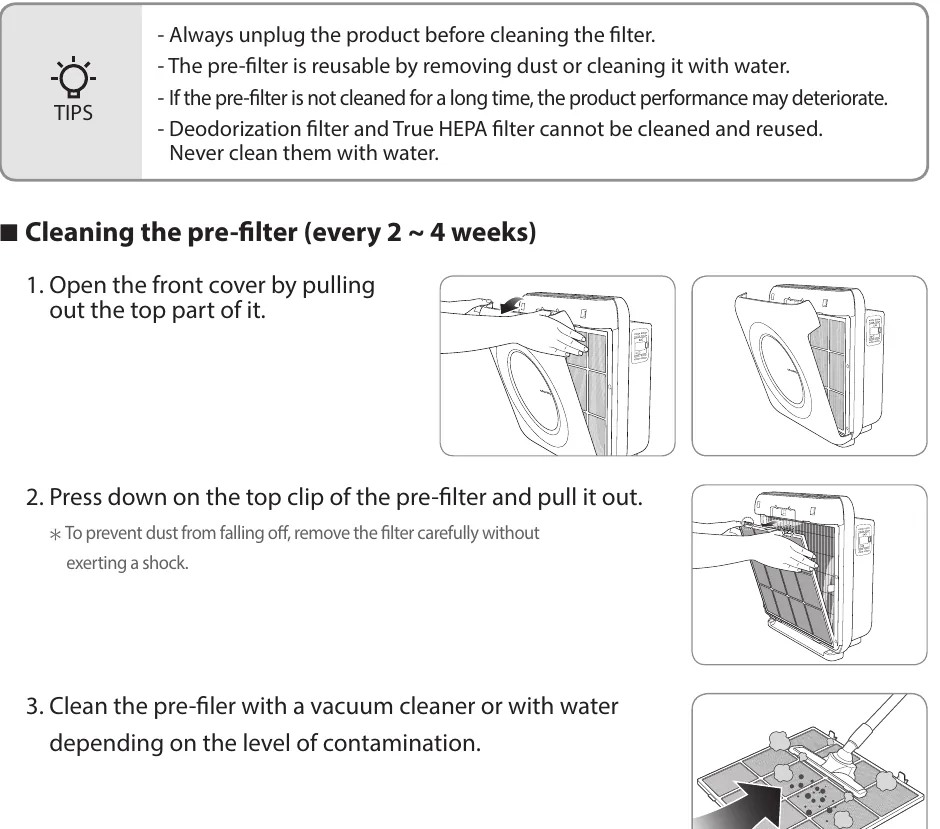
The removable screen wins. Coway’s AP-1512HH manual has you open the front cover, unclip the pre-filter, and clean it “with a vacuum cleaner or with water depending on the level of contamination.” It adds: “If the pre-filter is not cleaned for a long time, the product performance may deteriorate.”
On a Levoit cylinder you flip the unit, twist off the base cover and lift out the cartridge. Then you clean the outer pre-filter with a soft brush or vacuum hose. Water is off the table, so fur that has worked into the mesh stays there until the whole cartridge goes. Levoit says to replace it every 6 to 8 months on the Core 300-P and every 12 months on the Core 400S-P, sooner with heavier use. Both manuals list the same warning signs: more noise, less airflow, unusual odors or a visibly clogged filter.
Tip: In shedding season, we’d clean at the short end of the manual’s range (every 2 weeks rather than 4). Levoit says heavy use or high pollution can mean replacing filters sooner, and Coway says its cycles depend on the operating environment.
If cleanable parts are your top priority, our air purifier with washable filter roundup lists more models.
Does either shape handle litter box and wet dog odor better?
We can’t say that either one does, and no maker here publishes the data that would settle it. Odor removal depends on how much activated carbon the air passes through. EPA’s technical summary says thicker media stays effective longer, while thin carbon-impregnated layers “saturate quickly.” None of the five picks publishes a carbon weight or bed depth, cylinder or flat.
Two limits apply to both shapes:
- Ammonia: EPA lists ammonia among the gases activated carbon is “not especially effective against.” Levoit’s Core 400S-P manual says its carbon filters ammonia and is customized for “pet odours in a multi-pet household.” That’s a manufacturer claim EPA’s general guidance doesn’t back, so we’d keep expectations modest.
- Source first: the Cornell Feline Health Center advises scooping clumps daily and keeping one litter box per cat plus one. No purifier replaces that.
What you can compare is format. The Winix 5520 uses carbon pellets in a separate stage, the Core 600S-P uses carbon pellets inside its cartridge, and the Coway AP-1512HH has a separate carbon filter Coway says to replace every 6 months. For litter rooms specifically, our air purifier for cat litter guide favors heavy-carbon units. Our HEPA vs carbon filter explainer covers what each stage does.
Does heavy shedding strain the motor and lower CADR over time?
Every rated CADR assumes clean filters at top speed. EPA notes that the box figure is usually the highest achievable value and that a dirty, overloaded filter won’t work well. A pre-filter matted with fur adds resistance, the fan moves less air, and the effective CADR in your room drops below the rating. Levoit’s manuals list “decreased airflow” and “increased noise” as signs to act. Coway warns that skipping pre-filter cleaning hurts performance.
What isn’t published: how fast CADR falls under a given amount of fur, whether one intake shape loads more evenly than the other, or how a clogged pre-filter affects motor life. No manufacturer here gives those figures, and we found no independent test of them. The practical defense is the same for both designs: size the purifier above the room’s minimum so it can run on a middle speed, and clean the pre-filter on schedule.
Note: Several of these units have charged-air features. The Coway AP-1512HH has an ionizer and the Winix 5520 has PlasmaWave; both switch off. The Blueair 211i Max uses electrostatic charging with no documented off switch. EPA advises avoiding air cleaners that intentionally produce ozone. All five picks are CARB-certified.
The verdict: which intake design for your home?
| Your home | Better fit | Why |
|---|---|---|
| Open-plan living area, purifier can stand in the open | Cylinder | Full intake works with 15 in of space all around; big AHAM-verified CADRs |
| Small room, unit has to sit near a wall | Flat intake | Coway’s AP-1512HH manual allows about 8 in; Winix 12 in |
| Several cats or a heavy-shedding dog | Flat intake with washable pre-filter | Pull it out and rinse it instead of brushing a fixed mesh |
| You want a cylinder but also a washable pre-filter | Blueair 211i Max | Removable fabric sleeve |
| Litter box odor is the main complaint | Either, with more carbon | Shape matters less than carbon amount and scooping |
Allergies are a medical question as well as an air one. If someone in the home reacts to the pets, talk to a doctor, and ask your vet about litter box problems that suddenly get worse.
Levoit Core 600S-P
The cylinder we’d pick for an open-plan pet area. AHAM lists 394 smoke, 398 dust and 433 pollen CADR for about 606 to 611 sq ft, and it’s ENERGY STAR certified. Nothing on it is washable, and its Original filter costs around $60. CARB lists one variant (LAP-C601S-WUSR) as electronic, though Levoit advertises no ionizer. It’s around $300. Check the Levoit Core 600S on Amazon or replacement filters.
Levoit Core 400S-P
For a mid-size room with space around it. AHAM lists 234 smoke, 233 dust and 257 pollen CADR for 363 sq ft, with a 12-month filter at around $50. It needs 15 inches on every side and a brush for its pre-filter. It’s around $220. Our Levoit Core 300 review covers the smaller sibling for bedrooms. Check the Levoit Core 400S on Amazon or replacement filters.
Coway Airmega Mighty2 AP-1512N
Our front-intake pick for multi-pet homes. Coway rates it at 240 smoke, 242 dust and 249 pollen CADR. It has a washable pre-filter, a combined carbon and HEPA filter Coway rates for up to a year (around $70 to $80), and no ionizer (CARB: mechanical). It’s around $270. The older AP-1512HH has spotty stock; our Coway AP-1512HH review compares the two. Check the Coway Mighty2 on Amazon or the Mighty2 filter set.
Winix 5520
A flat-front alternative with carbon pellets. AHAM lists 253 smoke, 252 dust and 247 pollen CADR for 392 sq ft. Winix says to clean the washable pre-filter every 14 days and replace Filter Q (HEPA plus carbon) about yearly, at around $50 to $80. Leave PlasmaWave off. It’s around $200 on sale. Check the Winix 5520 on Amazon or Winix Filter Q.
Blueair Blue Pure 211i Max
The cylinder for people who want to wash the pre-filter. Blueair rates it at 435 smoke CADR for 674 sq ft on 46 W (ENERGY STAR lists 443 smoke and 687 sq ft). The fabric pre-filter is washable. The main filter lasts up to 9 months and costs around $70 to $90. The trade-off is electrostatic charging you can’t turn off. It’s around $350. Check the Blueair 211i Max on Amazon or spare pre-filters.
Frequently asked questions
Does a 360-degree air purifier suck up more dog hair than a flat-front model?
Not on any published evidence. AHAM's CADR test rates the whole unit, whatever the intake shape, and similar-sized cylindrical and flat models land within AHAM's own test precision on pollen, its largest test particle. Pick by CADR, then by how easy the pre-filter is to clean.
Can you push a 360-degree cylindrical air purifier against a wall in a pet room?
No. Levoit's Core 300-P and Core 400S-P manuals ask for at least 15 inches (38 cm) of clearance on all sides. Flat-front models need space too: Coway asks for at least 20 cm (about 8 inches) for the AP-1512HH, and Winix says no closer than 12 inches for the 5520.
Why do cylindrical filters clog faster with pet hair in multi-cat households?
There's no published data showing that they do. The documented difference is cleaning: on Levoit's cylinders the pre-filter is part of the cartridge and can only be brushed or vacuumed, never washed, so hair that works into the mesh stays until the whole filter is replaced.
Which air purifier intake design is easiest to vacuum clean when fur mats up?
A removable, washable pre-filter, which most flat-intake models have. Coway's AP-1512HH manual says to pull the pre-filter out and clean it with a vacuum or water every 2 to 4 weeks. Blueair's cylindrical 211i Max is an exception on the round side, with a washable fabric pre-filter sleeve.
Do I need a carbon filter for litter box smell?
Carbon helps with some odors, but EPA says activated carbon isn't especially effective against ammonia and that thin carbon layers saturate quickly. Daily scooping matters more. See our cat litter guide for models with more carbon.
Related guides
Air Purifiers
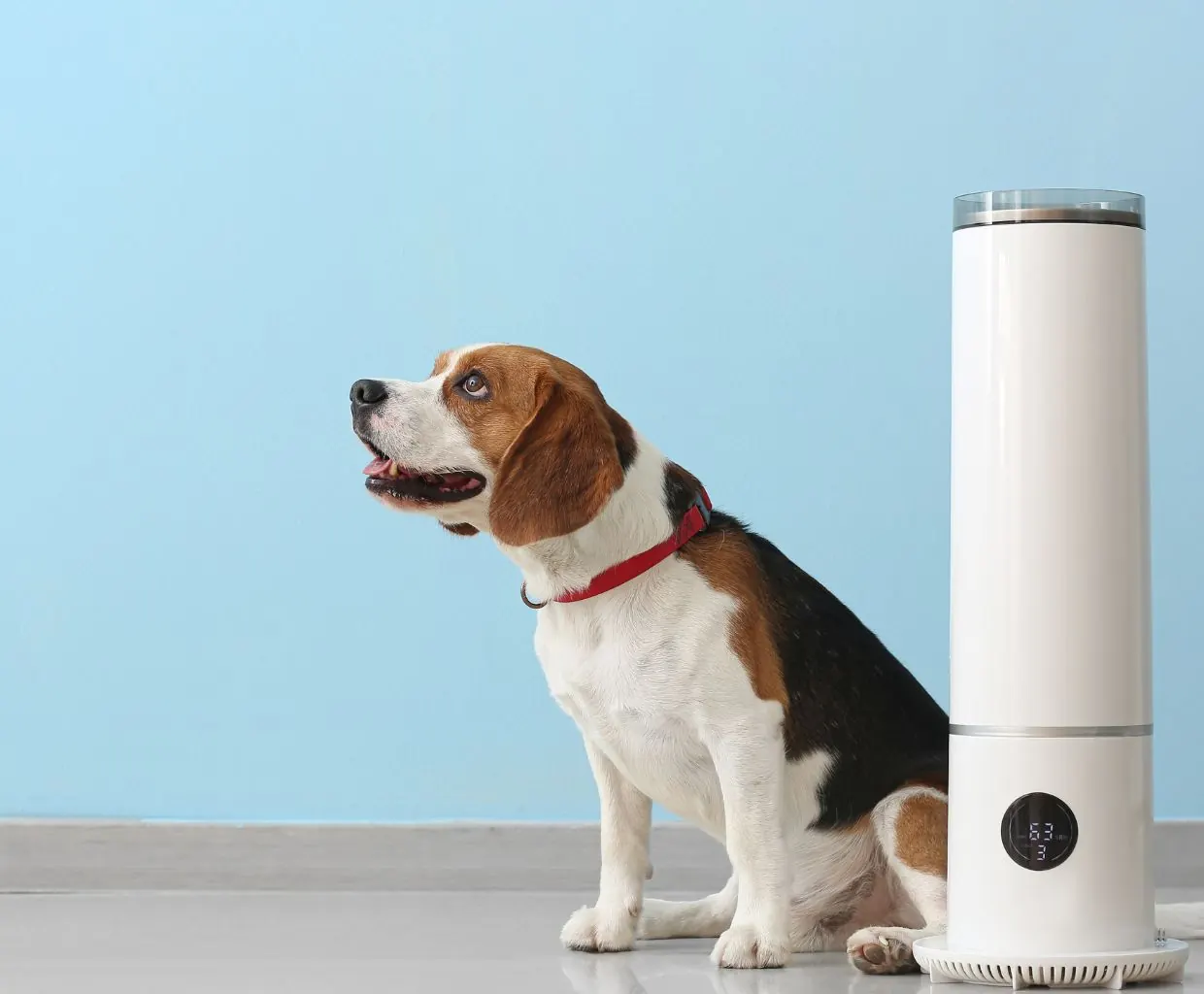
Best Air Purifiers for Pets in 2026: Hair, Dander and Odor
Seven current air purifiers for homes with dogs and cats, picked on verified CADR, washable pre-filters for hair, carbon for odor and real filter costs.
21 min read
Air Purifiers
Best Air Purifiers for Dust in 2026: Fine Dust, Big Rooms and Pre-Filters
Six current air purifiers for dusty homes, picked on verified dust CADR, HEPA filters, cleanable pre-filters and real room sizes, plus what else to do about dust.
14 min read

Air Purifiers
Best Air Purifiers for Cat Litter in 2026: Odor, Litter Dust and Placement
Five purifiers for the room with the litter box, picked on odor media, ionizer-free filtration and room size, plus what carbon can and can't do about ammonia.
13 min read
Air Purifiers
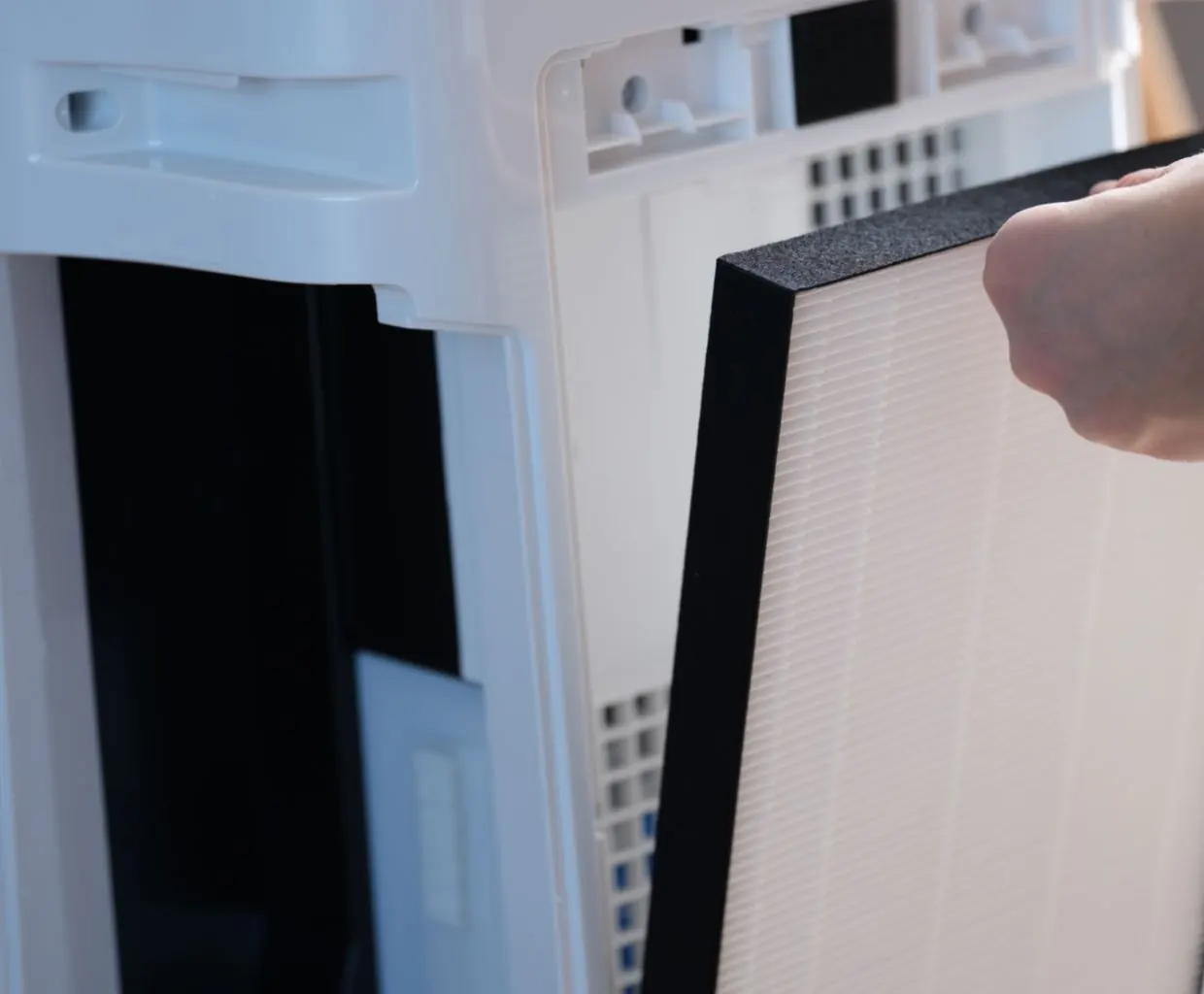
Best Air Purifiers With Washable Filters in 2026: What You Can Really Rinse
Six air purifiers with washable filters or pre-filters, picked from AHAM, ENERGY STAR and maker data, plus why true HEPA is never washable.
15 min read