Humidifier for Snoring: Can It Help, and When to See a Doctor
A humidifier may ease snoring linked to a dry or stuffy nose, but it doesn't treat other causes or sleep apnea. What health sources say and how to use one at night.
By Clean Air Guides editorial teamUpdated 6 min read
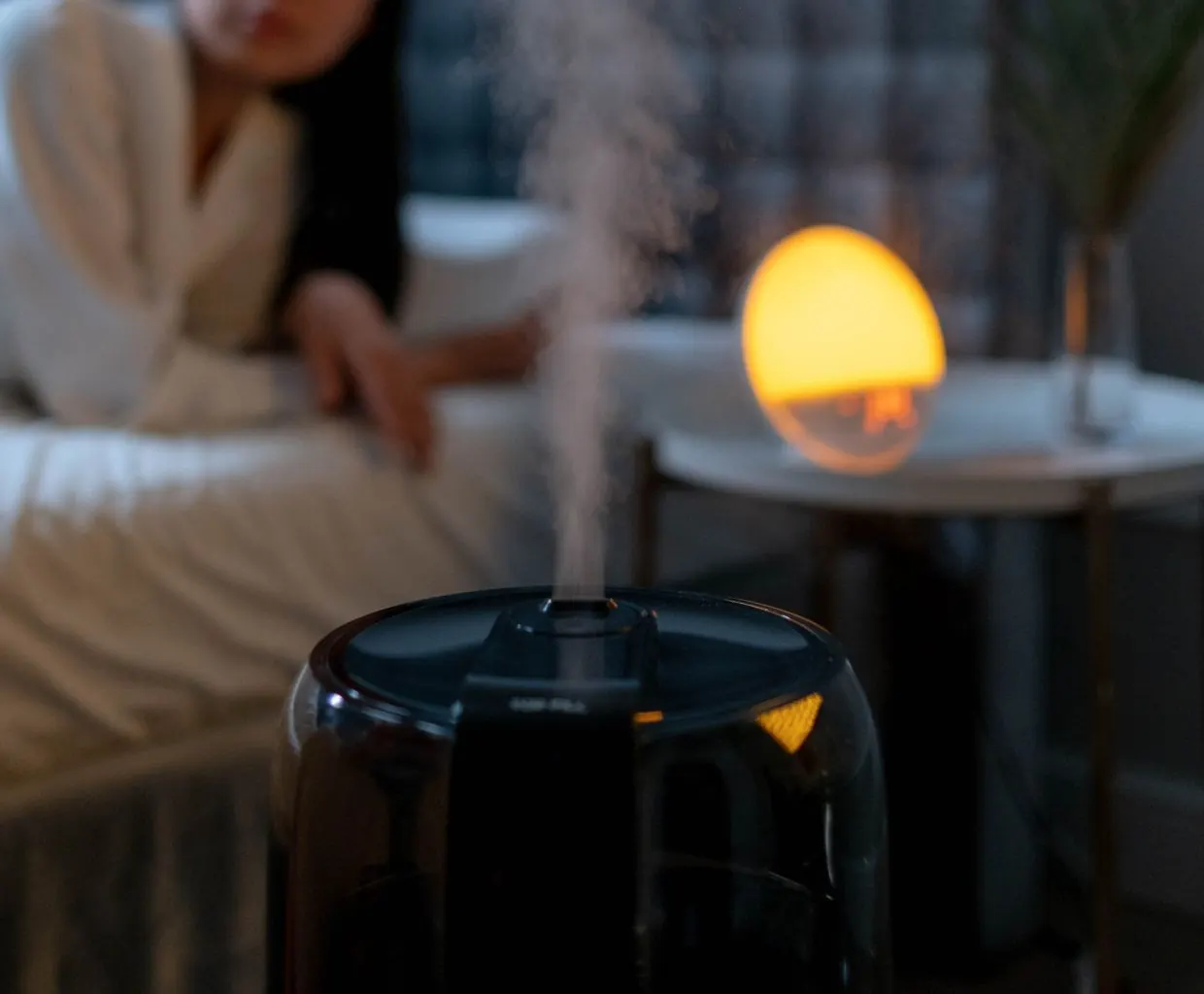
A humidifier may help a little with snoring, but only when a dry or stuffy nose is part of the cause. Harvard Health lists “a humidifier or medication for swollen nasal tissues” among the ways to address nasal issues behind snoring, and MedlinePlus says dry air can irritate the airways in the nose and throat. It won’t fix snoring caused by weight, sleep position, alcohol or the shape of your airway, and it does nothing for sleep apnea. If your snoring is loud, comes with gasping or leaves you tired during the day, talk to your doctor.
We don’t give medical advice. Here’s what the main health sources say, and how to use a humidifier safely if you try one.
Why people snore
MedlinePlus explains snoring simply: it’s the sound you make when your breathing is partly blocked during sleep, as tissues at the top of the airway vibrate. Its list of causes is long, and most have nothing to do with the air in your bedroom:
- Excess weight, with extra tissue in the neck pressing on the airway
- A crooked or bent nasal septum, or nasal polyps
- A stuffy nose from a cold or allergies
- A long or swollen soft palate or uvula, a large tongue, or swollen tonsils and adenoids (a common cause in children)
- Poor muscle tone in the throat from aging, or from sleeping pills, antihistamines or alcohol at bedtime
- Swelling in the last month of pregnancy
Cleveland Clinic also lists age, alcohol, sedatives, weight and sleep position, suggests sleeping on your side, and says nasal congestion from allergies and colds can block airflow. That’s the one item on these lists that a humidifier can touch, and only indirectly.
Where a humidifier fits
None of the health sources we checked calls a humidifier a snoring treatment. The connection runs through the nose:
| Source | What it says |
|---|---|
| Harvard Health | To address nasal issues, use saline rinses for a stuffy nose, minimize allergens in the bedroom, and consider a humidifier or medication for swollen nasal tissues |
| MedlinePlus, humidifiers | Dry air can irritate and inflame the airways in the nose and throat; a humidifier can help relieve a stuffy nose |
| MedlinePlus, snoring | Lists a stuffy nose from a cold or allergies as a cause; its self-care tips don’t mention humidifiers |
| Cleveland Clinic | Lists congestion from allergies and colds as a cause; suggests side sleeping, raising your head and nasal strips; doesn’t mention humidifiers |
So, in our view, a humidifier is worth trying if your snoring gets worse in winter, when indoor air is dry, or when you have a cold, and you wake with a dry or blocked nose. If you snore just as much in humid summer weather, dry air probably isn’t the issue. For the congestion side of this, our guide on whether a humidifier helps with congestion covers what MedlinePlus, CDC and Mayo Clinic say in more detail.
If allergies are what block your nose at night, moisture won’t remove the allergen. Harvard Health’s advice to minimize bedroom allergens points to cleaning and, for airborne pollen and pet dander, a HEPA purifier; our best air purifier for allergies roundup covers that route.
Snoring and sleep apnea: when to see a doctor
This is the part not to skip. MedlinePlus says snoring can be a sign of a serious sleep disorder called sleep apnea, in which breathing stops completely or partly for more than 10 seconds and often restarts with a snort or gasp. NHLBI lists frequent loud snoring among sleep apnea symptoms, along with:
- Breathing that stops and starts, or gasping for air, during sleep (often noticed by a partner)
- Daytime sleepiness and tiredness
- Dry mouth, headaches or insomnia
- Waking often at night to urinate
MedlinePlus also advises talking to your provider if you have trouble with attention, concentration or memory, wake up unrested, feel very drowsy during the day, have morning headaches, or have tried self-care without improvement. Harvard Health says to see a doctor if you or your bed partner suspect sleep apnea. A humidifier can’t diagnose or treat any of this, and it shouldn’t delay that conversation. A doctor may refer you for a sleep study.
Important: MedlinePlus notes that drug-free nasal strips may help snoring but do not treat sleep apnea. The same applies to a humidifier. If you use a breathing device your provider prescribed, keep using it as directed.
If you use a CPAP machine with a built-in humidifier, follow its manual. CDC notes that most CPAP makers recommend distilled water for those humidifiers.
How to use a humidifier for snoring safely
If you decide to try one, the safety rules matter more than the model, because a humidifier runs for hours a few feet from your face.
Choose cool mist. MedlinePlus advises always using a cool-mist humidifier, especially for children, because warm-mist units can cause burns if someone gets too close. Our warm mist vs cool mist humidifier comparison explains the trade-offs between types.
Set 40% to 50%, not higher. MedlinePlus suggests setting the unit to 40% to 50%. EPA and CPSC recommend keeping homes between 30% and 50%, and EPA says not to humidify above 50%, because higher humidity may encourage the growth of biological organisms. Mayo Clinic adds that condensation from too much humidity can trigger the growth of dust mites and molds, both of which can bother an allergic nose. A unit with a built-in humidistat, or a hardware-store hygrometer, takes the guesswork out. Our guide to ideal indoor humidity covers the seasonal ranges.
Watch the windows. If water condenses on windows, walls or pictures, EPA says to move the humidifier, lower its setting or run it less. On cold nights a bedroom can hit that point well below 50%; the dew point calculator shows where yours will start to fog.
Place it a few feet from the bed. MedlinePlus suggests several feet (about 2 meters) from the bed. Use a flat, waterproof surface and don’t point the mist at bedding, curtains or walls. EPA says not to let the area around the unit get damp.
Use distilled water in an ultrasonic unit. EPA says ultrasonic and impeller humidifiers disperse the most minerals and microorganisms into the air, and recommends bottled water labeled “distilled”. Our guide to what water to use in a humidifier covers the alternatives.
Keep it clean
A dirty humidifier can do more harm than dry air. CPSC says bacteria and fungi often grow in humidifier tanks and can be released in the mist, and that breathing dirty mist may cause lung problems ranging from flu-like symptoms to serious infection, which is of special concern for people with allergies or asthma.
The routine from EPA and Mayo Clinic for portable units:
- Every day: unplug, empty the tank, wipe all surfaces dry and refill with fresh water. Don’t top up old water.
- Every third day: scrub the tank, remove scale and film, and use the maker’s recommended cleaner, or 3% hydrogen peroxide if the manual gives none. Rinse well.
- Before storage: Mayo Clinic says to drain and clean the unit, and to clean it again before you use it next season.
Our step-by-step guide on how to clean a humidifier walks through descaling and disinfecting. EPA’s advice if you notice breathing symptoms you link to the humidifier: stop using it and contact a physician.
Choosing a humidifier for the bedroom
For overnight use, look for a quiet unit with a humidistat or auto mode, a tank that lasts the night, and a design that is easy to empty and clean every day. Our best humidifier for bedroom roundup compares published noise ratings, runtimes and humidity controls for exactly this job.
We’d keep expectations modest. If a humidifier at 40% to 50% leaves you with a less dry nose and quieter nights, good. If the snoring stays loud, or you or your partner notice pauses in breathing or gasping, that’s a question for your doctor, not for a different humidifier.
Frequently asked questions
Does a humidifier help with snoring?
It may help when a stuffy or swollen nose is part of the problem. Harvard Health suggests considering a humidifier or medication for swollen nasal tissues, but no source we found presents a humidifier as a treatment for snoring itself.
What humidity is best for sleeping?
MedlinePlus suggests setting a humidifier to 40% to 50%, and EPA and CPSC recommend keeping homes between 30% and 50%. EPA says not to humidify above 50%.
Can snoring be a sign of sleep apnea?
Yes. MedlinePlus says snoring can be a sign of sleep apnea, and NHLBI lists frequent loud snoring among its symptoms, along with breathing that stops and starts, gasping and daytime sleepiness. Talk to your doctor if you notice these.
Should I use a cool-mist or warm-mist humidifier in the bedroom?
MedlinePlus advises a cool-mist humidifier, especially around children, because warm-mist units can cause burns if someone gets too close. Either type needs daily emptying and regular cleaning.
Can a humidifier make snoring worse?
A dirty or overused one can cause other problems. CPSC says germs that grow in humidifier tanks can be released in the mist, and Mayo Clinic says condensation from too much humidity can trigger the growth of dust mites and molds, which matters if allergies stuff up your nose.
Related guides

Humidifiers
Does a Humidifier Help With Congestion? What Health Sources Say
MedlinePlus, CDC and Mayo Clinic list a clean, cool-mist humidifier as comfort care for a stuffy nose. Here's what it can and can't do, and how to use one safely.
6 min read
Humidifiers
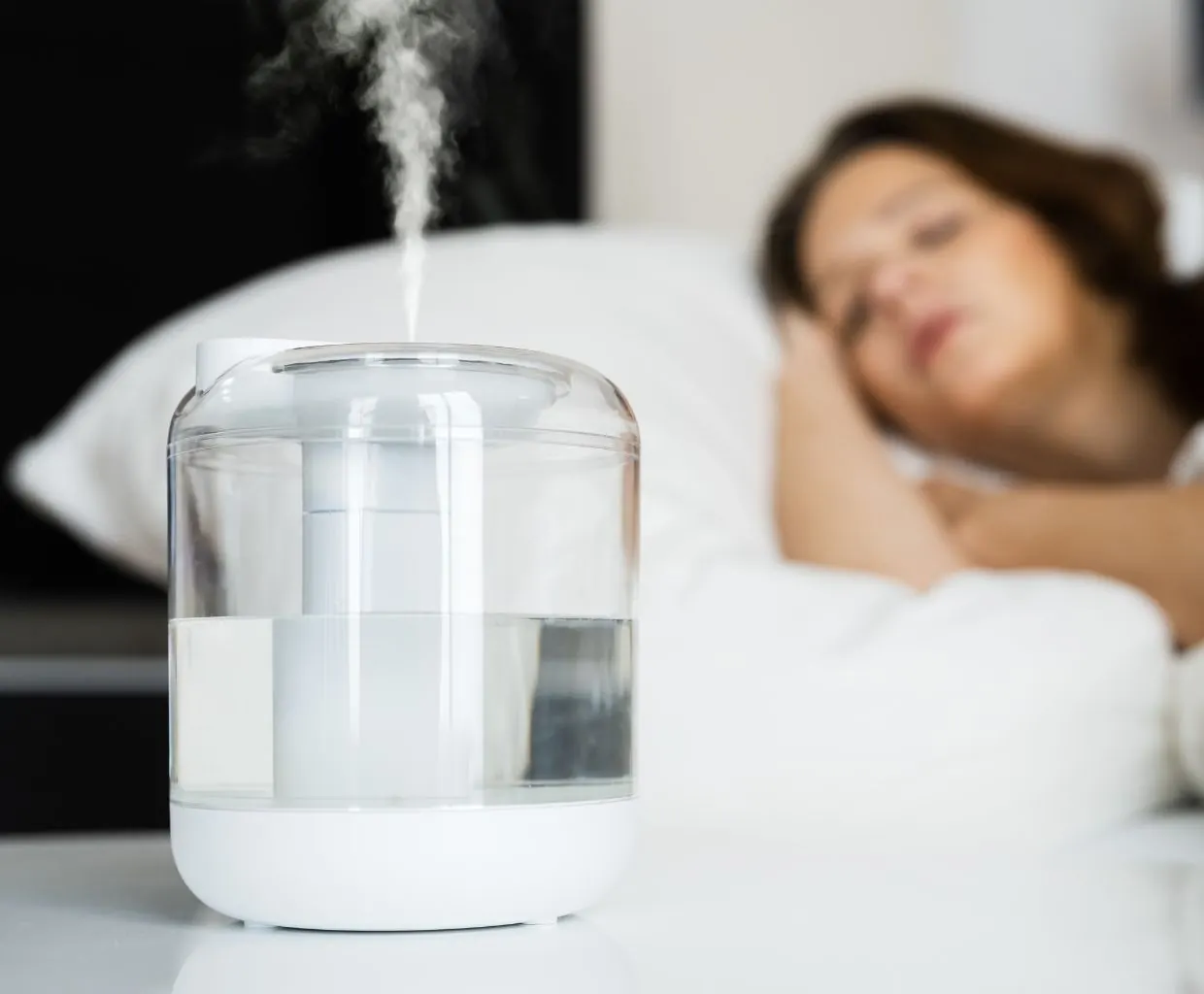
Should You Close the Door When Using a Humidifier?
Closing the door makes a humidifier work faster but raises the risk of overshooting and wet windows. When to close it, and safe settings for the night.
6 min read
Humidifiers
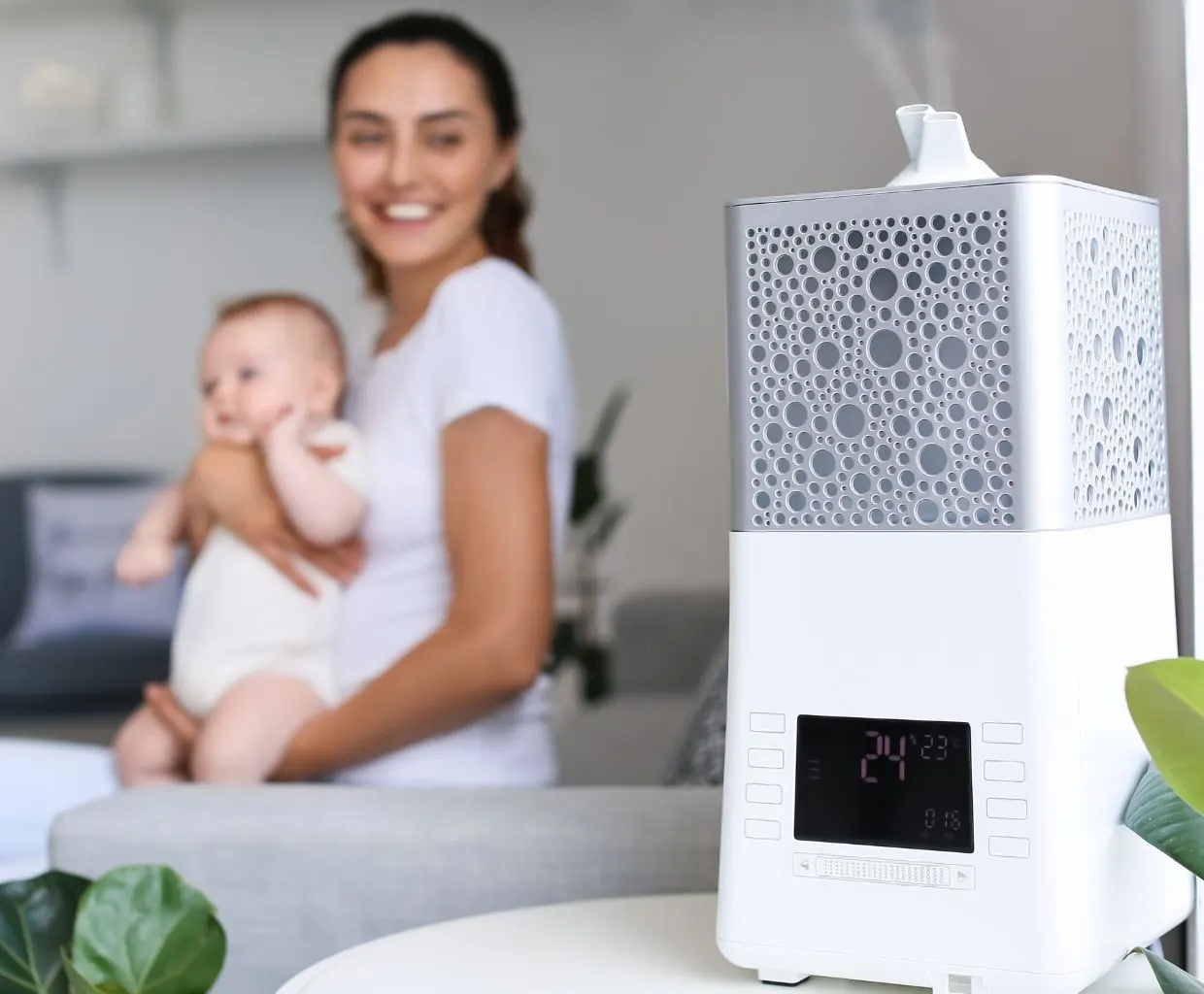
Best Humidifiers for a Baby in 2026: Cool Mist, Quiet and Easy to Keep Clean
Four cool-mist and evaporative humidifiers for a nursery, picked from maker specs and manuals, plus the humidity range, water, cleaning and placement rules.
10 min read
Humidifiers
Best Humidifiers for the Bedroom in 2026: Quiet, Overnight and Easy to Clean
Six bedroom humidifiers picked from maker specs and manuals: published noise levels, overnight runtime, cool or warm mist, white dust and cleaning.
11 min read