What Kind of Water to Use in a Humidifier: Distilled, Tap or Boiled?
Distilled water is the best choice for ultrasonic humidifiers. Many evaporative and steam models are fine with tap water. Here is what the EPA and manuals say.
By Clean Air Guides editorial teamUpdated 6 min read
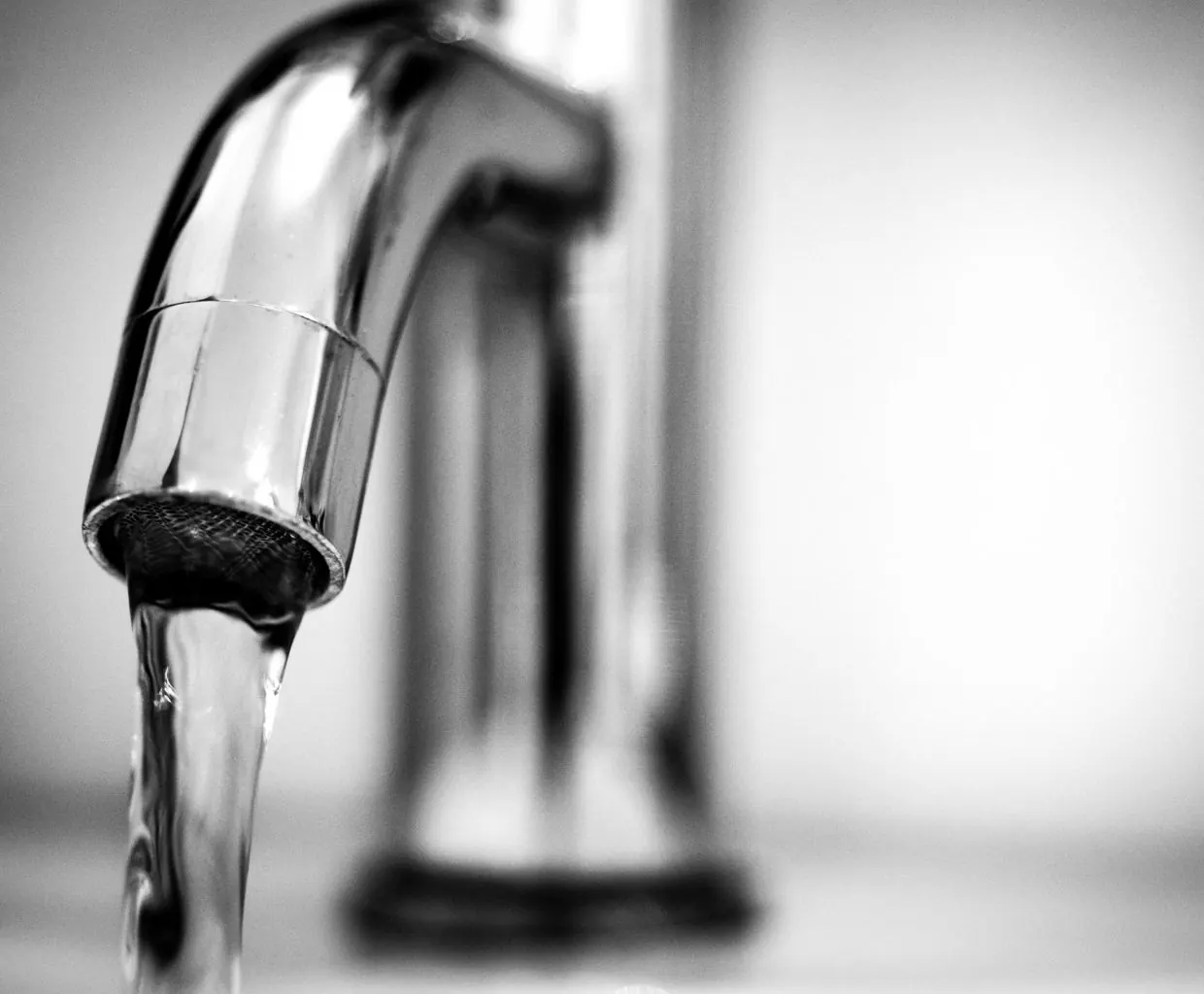
Use distilled water in an ultrasonic or impeller (“cool mist”) humidifier. The EPA, CPSC and MedlinePlus all recommend it, because these units throw tap-water minerals into the air as white dust and build up scale where germs grow. Evaporative and steam humidifiers are less fussy, and several manufacturers say tap water is fine for them (see our best evaporative humidifier picks). Whatever you use, your humidifier’s manual has the final say.
Which water is best? A quick comparison
| Water | Minerals removed? | For ultrasonic and impeller units |
|---|---|---|
| Distilled | Most; EPA calls distillation the most effective method | Best choice |
| Demineralized (deionized or reverse osmosis) | Most, but on average fewer than distillation | Good second choice |
| “Purified” | Depends: may be made by any of the methods above | Check the label |
| Tap | No | Causes white dust and scale |
| Pitcher or fridge-filtered | Not one of the demineralizing methods EPA names | Don’t count on it |
| Spring, artesian or mineral | No, EPA says they are not treated to remove minerals | Not a substitute |
| Boiled, then cooled | Kills germs, but minerals stay in | Doesn’t stop white dust |
Distilled water
The EPA recommends bottled water labeled “distilled”. It still contains some minerals, but likely fewer than most tap water, and distillation is the most effective way to remove them. CPSC and MedlinePlus also say to use distilled rather than tap water. If you go through a lot of it, a few gallon jugs of distilled water at a time is the simplest way to keep a supply.
Demineralized and “purified” water
Deionization and reverse osmosis remove most minerals but, the EPA says, are generally less effective than distillation. Bottled water labeled “purified” may be made by any of these processes, so read the label. CPSC lists “distilled or demineralized” together as the water to use. Mayo Clinic suggests bottled water labeled “distilled” or “purified”.
Tap water
Tap water carries dissolved minerals. In an ultrasonic or impeller unit, the EPA says those minerals are dispersed very efficiently into the air. They also build up scale inside the unit, and the EPA calls slowing scale growth the most compelling reason to avoid tap water, because scale can be a breeding ground for microorganisms. The harder your water, the faster both problems show up.
Filtered water
A pitcher or refrigerator filter is designed to improve drinking water. None of our sources lists these filters as a way to demineralize water, so we’d treat filtered water like tap water for an ultrasonic unit unless the filter is reverse osmosis or deionization. Dyson is one maker that recommends filtered water for best performance in its Purifier Humidify+Cool, which uses an evaporator rather than ultrasonic mist.
Spring and bottled water
Bottled water is not automatically low in minerals. The EPA says water labeled “spring”, “artesian” or “mineral” has not been treated to remove them. We’d skip it: it costs more than tap water and gives you the same white dust.
Boiled water
The CDC lists distilled water or water that was boiled and then cooled for humidifiers. Boiling kills germs, but it doesn’t remove dissolved minerals, so boiled tap water still leaves white dust and scale in an ultrasonic unit. Always let it cool: never pour boiling or hot water into a humidifier (see water temperature below).
What is white dust?
White dust is the mineral content of the water, left behind on furniture and floors after the mist dries. The EPA notes that some people are bothered by a “white dust” that may appear on surfaces when ultrasonic or impeller units are used. CPSC says these minerals settle as fine white dust that may contain particles small enough to reach the lungs; it says the health effects are not clear and depend on the types and amounts of minerals. HoMedics calls white dust mineral residue from hard water, not a defect. Our guide to humidifier white dust goes into more detail. Heavy mist can also leave a room hazy. Our guide to a humidifier making the room foggy covers that problem.
Which humidifier types care about the water?
- Ultrasonic (a vibrating disc makes mist) and impeller (a spinning disc throws water) humidifiers: the EPA says these generally disperse the most minerals and microorganisms. Distilled water matters most here.
- Evaporative (a fan blows air through a wet wick or filter) and steam or warm mist humidifiers (water is heated): the EPA says these generally disperse fewer pollutants, if any, and are not expected to disperse substantial amounts of minerals. The minerals stay behind in the wick or on the heating element instead, so these parts need descaling or replacing more often with hard water.
The EPA also points out that any type can grow microorganisms if it holds standing water. Distilled water reduces scale, but it doesn’t replace changing the water daily. Our guide on how to clean a humidifier has the full routine. If you’re shopping and have hard water, an evaporative unit avoids white dust; we compare both types in our guide to the best humidifier for a large room.
What manufacturers say
Manufacturer advice varies, mostly by humidifier type:
| Model (type) | Water guidance |
|---|---|
| HoMedics UHE-CM65 (ultrasonic) | Distilled water recommended in hard-water areas or if you use a water softener |
| Levoit Classic 300S and LV600HH (ultrasonic) | Purified or distilled water; the LV600HH manual says tap-water minerals cause white dust |
| Dreo HM755S and HM735S (ultrasonic) | Purified or distilled; tap water not recommended |
| Levoit Superior 6000S (evaporative) | Tap water is fine; no distilled water needed |
| AIRCARE EP9 (evaporative) | Softened water allowed but builds minerals faster; distilled or purified extends wick life |
| Vicks V745 (warm mist) | Fill with clean, cool tap water |
In our view, the pattern is clear: if your humidifier makes a visible cool mist, buy distilled water; if it’s evaporative or steam, follow the manual and expect to descale or swap wicks more often in a hard-water area.
Demineralization cartridges
Some ultrasonic humidifiers come with a demineralization cartridge or filter. The EPA’s second choice after distilled water is to use one if it is supplied with or recommended for your unit. It cautions that how well these devices remove minerals may vary widely, and that white dust appearing means they aren’t removing them. HoMedics says to replace its UHE-HDC4 cartridge every 30 to 40 fillings, sooner with very hard water, and to switch to distilled water if white dust persists with a new cartridge. The EPA also notes that where tap water is very hard, distilled water may cost less than cartridges.
Water temperature
Use cool or room-temperature water, never hot:
- HoMedics says clean, cool (not cold) water, and its UHE-CM18 manual says not to use water above 86°F.
- Levoit says room-temperature, not hot, water. Its Classic 300S manual adds that very cold water can reduce mist output for a while.
- Crane, AIRCARE and Dreo all say not to use hot water.
Salt, oils and other additives
Don’t add anything your manual doesn’t call for. Crane says not to add salt, medication or essential oils to the water. HoMedics says never to add any additive, never to use water-softening additives, and that even a few drops of essential oil will damage the unit. Levoit says essential oils and water-treatment liquids damage its humidifiers and cause humidifier leaking; scent goes on the aroma pad only. Our guide to essential oils in a humidifier covers what other manuals say. A few evaporative brands do sell their own treatments: AIRCARE recommends its EPA-registered bacteriostat, while Vornado’s guide says water conditioners must not be used. That’s why we’d only use a treatment made for your exact model.
Keeping the room between 30% and 50% relative humidity, the range the EPA and CPSC recommend, matters as much as the water. See our guide to the ideal indoor humidity, and how to check humidity in your house with a hygrometer.
Frequently asked questions
Can I use tap water in my humidifier?
It depends on the type. The EPA says ultrasonic and impeller humidifiers are very efficient at putting tap-water minerals into the air, so it recommends distilled water for them. Some evaporative and steam models are fine with tap water: Levoit says the Superior 6000S doesn't need distilled water, and the Vicks V745 manual says to fill it with clean, cool tap water.
Is boiled water OK for a humidifier?
The CDC lists water that was boiled and then cooled as an option, because boiling kills germs. Boiling does not take dissolved minerals out of the water, so it won't prevent white dust or scale. Let it cool first: manuals warn against hot water.
Is purified water the same as distilled water?
Not necessarily. The EPA says water labeled 'purified' may be made by distillation, deionization or reverse osmosis. Distillation removes the most minerals; the other two remove most but leave more behind.
Can I use spring water in a humidifier?
It's not a substitute for distilled water. The EPA says bottled water labeled 'spring', 'artesian' or 'mineral' has not been treated to remove minerals.
Can I put salt in my humidifier?
No. Crane's manual says not to add salt, medication or essential oils to the water, and HoMedics says never to add any additive. Only use additives your manual specifically calls for.
Related guides
Humidifiers
Humidifier White Dust: What It Is and How to Stop It
White dust is tap-water minerals thrown into the air by ultrasonic and impeller humidifiers. Here is what the EPA and CPSC say and how to stop it.
7 min read
Humidifiers
Warm Mist vs Cool Mist Humidifier: Safety, Energy, White Dust and Cleaning
Cool mist is the safer pick for kids and pets and uses far less power. Warm mist puts out little or no white dust from steam. Here's how they compare.
8 min read
Humidifiers
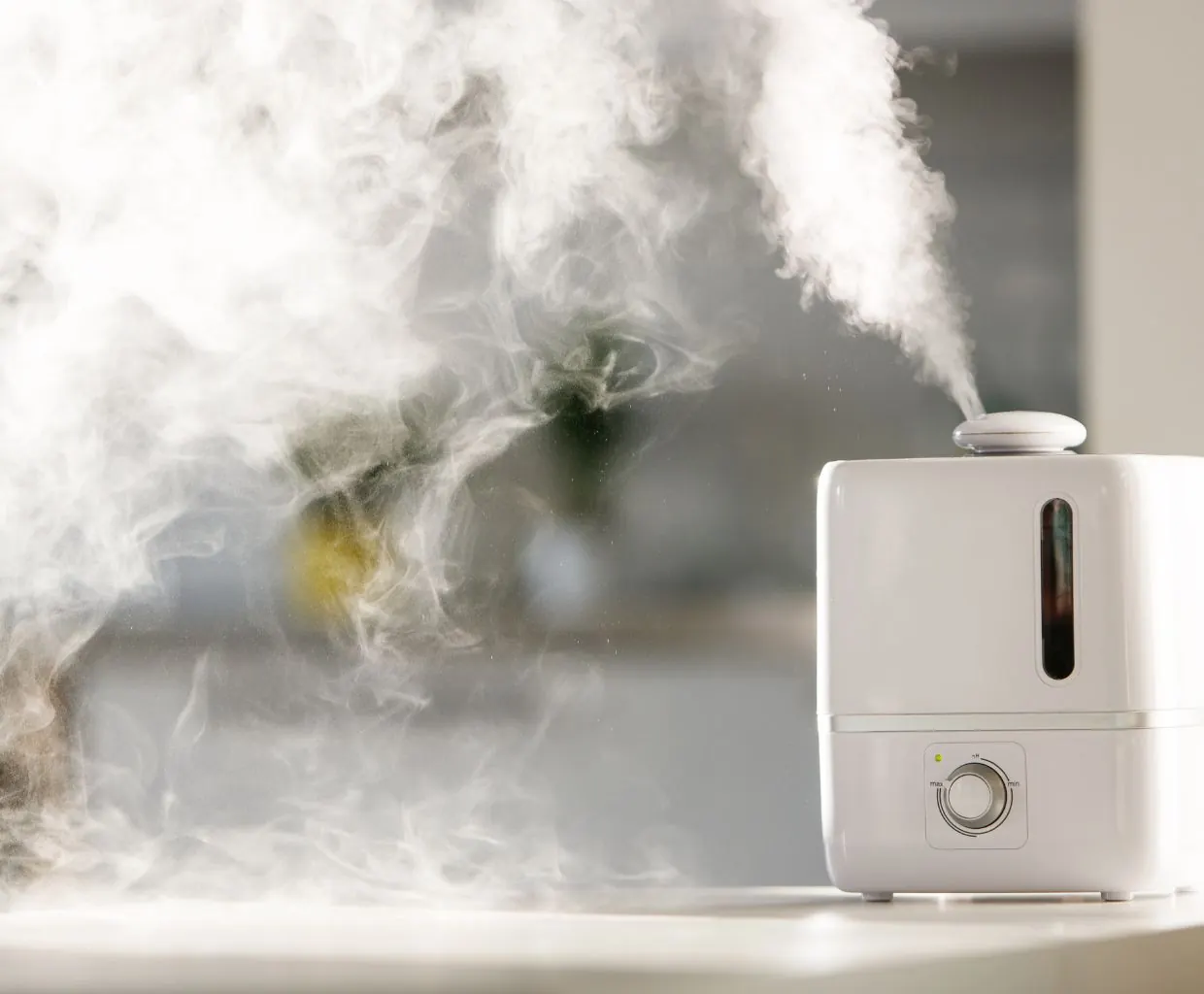
Why Is My Humidifier Making the Room Foggy? Causes and Fixes
A little mist above the nozzle is normal. A haze that fills the room means too much output, air near its dew point or tap-water minerals. Here's the fix.
6 min read
Humidifiers
Levoit OasisMist 1000S Review: Output, Water, Cleaning and How It Compares
A research-based look at the Levoit OasisMist 1000S ultrasonic tower: 350 mL/h, a 10 L tank, 300 to 600 sq ft, Auto mode, water choice, cleaning and rivals.
8 min read