Should You Close the Door When Using a Humidifier?
Closing the door makes a humidifier work faster but raises the risk of overshooting and wet windows. When to close it, and safe settings for the night.
By Clean Air Guides editorial teamUpdated 5 min read
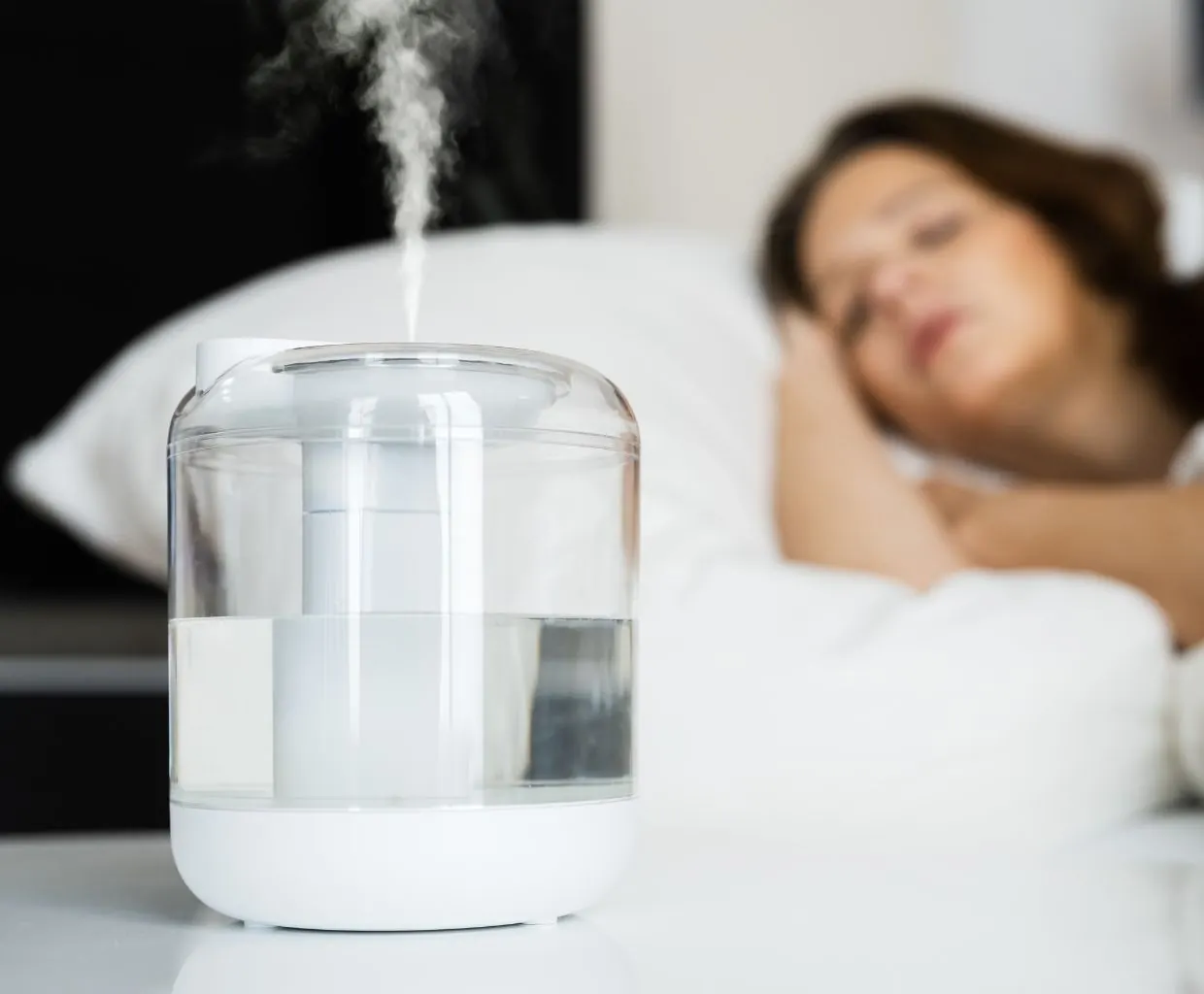
It depends on how strong the humidifier is for the room. Close the door when the humidifier is modest for the space and you want one room, usually a bedroom, humid quickly. Leave it open or ajar when the unit is powerful for the room, when the windows start to fog, or when you want moisture to reach more of the home. Either way, keep an eye on a hygrometer and stay at or below 50%, the EPA’s limit for humidifying. New to running one? Start with how to use a humidifier.
What changes when you close the door
A closed door shrinks the space the humidifier has to fill. Less air means less water is needed for the same rise in humidity, so the room gets there faster. It also means the humidity keeps climbing if the humidifier doesn’t switch itself off.
The difference is big. A University of Minnesota Extension fact sheet uses an example house of 10,000 cubic feet, where about 4 pounds of water raised the humidity from 20% to almost 40% for a while. Scaled down, a closed 12 x 12 ft bedroom needs only about 210 mL (7 fl oz) for the same jump, which a typical humidifier delivers in about an hour once you allow for air leakage. We show the full math in how long it takes for a humidifier to work.
Makers see both sides. Dreo’s FAQ says too much ventilation can make the mist seem low and suggests closing doors and windows. Levoit’s manuals go the other way when there’s too much moisture. If condensation forms around the humidifier or on the windows, they say to turn down the mist, turn the unit off, or open a door or window.
| Door closed | Door open | |
|---|---|---|
| Humidity rise | Faster | Slower |
| Risk of going over 50% | Higher | Lower |
| Window condensation in that room | More likely | Less likely |
| Moisture reaching the rest of the home | Little | Some |
| Best when | The unit is modest for the room | The unit is strong for the room |
We’d close the door for a bedroom at night if the humidifier has a humidistat, and leave it ajar if it doesn’t.
When an open door makes sense
With the door open, the humidifier is trying to humidify the whole house, and a whole house loses a lot of water. In the Minnesota fact sheet’s example house, air leakage at 1 air change per hour on a 0 °F day carries away 50 to 106 pounds of water a day, depending on the indoor humidity. That’s roughly 6 to 13 gallons, far more than a tabletop unit puts out. So an open door mostly makes sense when the humidifier is big for the room, when the room is already near 50%, or when the windows in that room are fogging. In those cases, spreading the moisture around is exactly what you want.
Match the humidifier to the room
Whether a closed door helps or hurts comes down to output versus space. Makers publish their own room ranges, for example:
- Levoit Classic 300S: effective range of 215–505 sq ft.
- Levoit LV600HH: effective range of 430–753 sq ft. Levoit notes that larger rooms will see less effect.
- HoMedics UHE-CMTF91: 426 sq ft, which HoMedics bases on an AHAM HU-1-2016 measurement.
These are manufacturer claims, and there’s no independent sizing chart for portable humidifiers. Still, they’re a useful guide, and we’d size for the room you actually use rather than the whole floor:
- Small unit, big room: close the door so the humidifier only has to serve the room you’re in.
- Big unit, small room: leave the door open or turn the output down. Honeywell’s HUL520 manual lists mist set too high for the room size as a cause of moisture around the unit.
- Whole floor or open plan: a tabletop unit won’t keep up with the door open. See the best humidifier for a large room.
Watch for the signs of too much moisture
A closed room overshoots quietly. The EPA’s warning signs are water condensing on windows, walls or pictures, and a damp area around the humidifier. If you see them, move the humidifier, lower its humidistat setting or run it less. Don’t let carpets, drapes or bedding get damp.
Windows are usually the first surface to get wet in winter, because the glass is the coldest thing in the room. Our dew point calculator shows the humidity your windows can handle at a given temperature. If the room turns hazy instead, read why a humidifier makes a room foggy.
In our view, a hygrometer is the cheapest insurance against a closed-door overshoot. For the full range by season, see our guide to the ideal indoor humidity.
Using a humidifier at night with the door closed
A few rules make a closed-door bedroom setup safe:
- Use a humidistat, set at 50% or lower. MedlinePlus suggests 40–50%. Without one, check a hygrometer in the morning and lower the setting if the room ended above 50%.
- Keep it several feet from the bed. That’s MedlinePlus’s advice (about 2 meters). CHOP suggests about 3 feet from a child.
- Choose cool mist for kids’ rooms. Mayo Clinic advises against steam vaporizers in homes with children, because spilled hot water can cause burns. CHOP reports that the American Academy of Pediatrics recommends cool mist too. The same burn risk applies to curious pets, which we cover in are humidifiers safe for dogs.
- Start with fresh water every night. The EPA says to empty, dry and refill portable humidifiers daily.
We’d also keep the door slightly open on the coldest nights, when the windows have the least headroom.
Will a humidifier help with snoring or a dry throat?
This is a common reason people run a humidifier in a closed bedroom, so we checked. We didn’t find guidance from a health authority in our research that recommends a humidifier to treat snoring, so we won’t claim it helps. The closest advice we found is Mayo Clinic’s: a cool-mist humidifier may ease a child’s stuffy nose during a cold. That’s about congestion, not snoring.
If you wake up with a dry throat, a hygrometer will tell you whether the bedroom air is actually dry. Below 30% is drier than any official range. Loud or persistent snoring is worth raising with your doctor rather than solving with a gadget.
Note: A humidifier that runs every night needs cleaning to match. The EPA says to clean portable units every third day. Our guide on how to clean a humidifier covers the routine.
Frequently asked questions
Should you close the door when using a humidifier?
Close it if the humidifier is modest for the room and you want that room humid quickly, such as a bedroom at night. Leave it open or ajar if the unit is powerful for the room, if the windows fog, or if you want moisture to reach more of the home.
Is it OK to sleep with a humidifier on and the door closed?
Yes, as long as the humidity stays at or below 50%, the EPA's limit for humidifying. A humidistat or a hygrometer check in the morning tells you whether the room is overshooting.
How far should a humidifier be from the bed?
MedlinePlus advises several feet, about 2 meters. Children's Hospital of Philadelphia suggests keeping a humidifier about 3 feet from a child.
Can a humidifier make a closed room too humid?
Yes. Signs include condensation on the windows, a damp area around the unit or a foggy haze. Levoit's manuals say to lower the mist, turn the unit off, or open a door or window when that happens.
Do humidifiers help with snoring?
We didn't find health-authority guidance in our research that recommends a humidifier for snoring, so we can't say it helps. If snoring is loud or persistent, talk to your doctor.
Related guides
Humidifiers
How Long Does It Take for a Humidifier to Work? A Rough Estimate
In a closed bedroom, a typical humidifier raises the humidity noticeably in about an hour. A whole house takes far longer. Here's the math.
6 min read
Humidifiers
How to Use a Humidifier: Setup, Settings, Water and Daily Care
Set it on a flat, waterproof spot, fill it with the right water, aim for 30–50% humidity and empty it every day. A step-by-step guide from setup to storage.
8 min read
Humidifiers
Where to Put a Humidifier: Best Spot in the Bedroom and Every Room
Put it in the room you use most, on a firm, waterproof surface a few feet from the bed, walls and curtains, with the mist aimed into open air. Here's what manuals say.
7 min read
Humidifiers
Ideal Indoor Humidity: What Level to Aim For in Every Season
Aim for 30–50% relative humidity, and lower in a cold snap. What the EPA and others say, how to read a hygrometer and when to run a humidifier.
7 min read